▼ Summary
– The Oura Ring 5 is primarily an aesthetic update (smaller and lighter) over the Ring 4, with the same sensors, battery life, and no exclusive software features, making an upgrade unnecessary for most current Oura users.
– The Ring 5 has a narrower size range, lacking sizes 4, 5, 14, and 15, and no ceramic option is available, which is disappointing for accessibility and durability.
– The charging case is a $99 accessory sold separately and is not compatible with the Ring 4’s case, while the Ring 5 itself is more durable than the non-ceramic Ring 4 but still prone to nicks.
– New software updates for the Ring 5, including GLP-1 Insights, Health Radar, and a medical AI chatbot, are not exclusive to this model and have made the Oura app feel cluttered and overwhelming with data.
– The reviewer notes that the Oura Ring remains the best smart ring on the market, but its shift toward maximalist features contradicts the simple, streamlined experience that originally attracted users, leading to data fatigue.
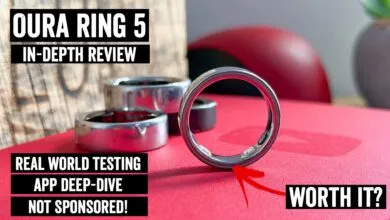
If you are reading an Oura Ring 5 review on The Verge, you likely fall into one of two groups: first-time buyers seeking a smartwatch alternative, or existing Oura users wondering if an upgrade is worthwhile. For newcomers, this is an excellent casual health tracker and the best smart ring currently available,though it is not your top choice if you obsess over fitness minutiae. For current owners, the answer is simple: you do not need to upgrade.
This assessment stems from the fact that the Oura Ring 4 launched less than two years ago, with the ceramic edition following less than a year ago. Both represented major leaps over the Oura Ring Gen 3, in software and sensor technology alike. In contrast, the Ring 5 is primarily an aesthetic refresh. Think of it as a smaller, lighter version of the Ring 4. The sensors remain identical, battery life is roughly unchanged, and no software features are exclusive to the Ring 5. While the miniaturized design is an engineering achievement, from a consumer standpoint it is not such a dramatic improvement that I would recommend spending a minimum of $399,on top of the $6 monthly subscription,if your current ring works perfectly.
Still not convinced? Here are additional reasons to hold off. Unless your current ring is genuinely uncomfortable due to particularly small fingers, the size difference is negligible. If the finish on your ring is heavily scratched, I would actually suggest the ceramic Oura Ring 4. My test unit of the Ring 5 proved more durable than the non-ceramic Ring 4, yet it still acquired a few nicks after about six weeks of wear. (I am rough on rings, so if you are more careful, this may not apply.) That said, if you have funds in an FSA/HSA or simply do not mind the cost, do what makes you happy. Since the Oura app now supports pairing multiple rings, you can easily swap between devices, so your older ring does not have to become e-waste.
My primary hardware complaint with the Oura Ring 5 concerns sizing. During my initial hands-on, Oura informed me that the Ring 5 would have a narrower size range than its predecessor. Sizes 4, 5, 14, and 15 are unavailable. The company explained this is because they are still evaluating demand, given the Ring 4’s expanded range is relatively new. This is disappointing from an accessibility perspective. In my view, it further reinforces that functionally, there is little difference between the 4 and 5 for consumers. (Alternatively, Oura may have found it particularly challenging to fit all components into the smaller sizes.) I am also disappointed that there is no ceramic option for the Ring 5.
I acknowledge that sizing is inherently difficult with smart rings. Fingers swell, and weight changes can affect fit. For this reason, you should still try the latest sizing kit. For example, I have lost a fair amount of weight, and while a size 9 fits me perfectly in the Ring 5, my size 9 Ring 4 now feels looser.
Another quibble is Oura’s decision to sell the charging case as a $99 accessory rather than including it as the default charger. Cases are simply superior to docks, especially if you have a mischievous cat that knocks the dock off your nightstand. It is also frustrating that if you already bought a charging case for the Ring 4, you will need to purchase another for the Ring 5, as they are not forward- or backward-compatible due to generational sizing differences.
But enough about hardware. Oura typically bundles new rings with a host of software updates, and this launch is no exception. The new features include:
- GLP-1 InsightsNone of these features are exclusive to the Ring 5, and most are optional. While I do not object to the individual features individually, their collective effect has made the Oura app feel significantly more cluttered.I began long-term testing the Oura Ring back in 2019. At that time, the app was relatively simple: log in and check three main scores,activity, readiness, and sleep. After several redesigns and feature launches, the Oura app is now verging on data overload. For instance, the new nighttime breathing metric has long been measured, but it now provides insight into your “prevailing pattern” over 30 days, along with associated factors like demographics, weight, activity levels, sleep regularity, and average sleep duration. It tells you which factors need improvement and which you are handling well. That sounds reasonable in isolation, but finding this metric is confusing, buried among several other screens.There is now far more reading in the Oura app, more metrics, and more AI insights. More is not always better. I miss when Oura was more streamlined.Health Radar mostly operates in the background, only surfacing insights to your Today tab,which I appreciate. However, I have not experienced any significant health changes in the past six weeks, so I cannot yet verify its accuracy.The most useful update for me personally has been GLP-1 Insights, though it will be more beneficial if you are newer to the medication. I receive weekly dose reminders and can specify where I inject (e.g., which arm, leg, or abdomen). I can also tag symptoms, and an AI summary provides context about whether what I am experiencing is normal. My main complaint is that to get the best experience, you must track and tag symptoms daily. That is less helpful seven months into my journey and less useful if you experience unusual side effects. (For example, Oura’s AI insights had no advice for my ear popping,a symptom not directly linked to GLP-1s but reported by many users.)I have written extensively about my skepticism toward AI chatbots in fitness tracking apps. My opinion remains unchanged. However, I appreciate that connecting to an actual doctor is easier within the Oura app. (Note: The medical AI chatbot is included in your subscription, but any consultations or resulting prescriptions cost extra.) I found this most appropriate for quick questions that do not warrant a doctor visit but need more reliability than Dr. Google. For serious care, I still recommend finding a primary care physician you trust.Ultimately, I keep returning to the idea that less is more with Oura. This was already the best smart ring, and it still is,especially in hardware. But the main reason people choose smart rings over smartwatches is the promise of a simpler experience: zero notifications, basic metrics, and a streamlined approach to health tracking. Many of the new features are optional, but the clutter is not. I understand that Oura may be trying to deliver more value to subscribers by loading the ring with features. I simply question whether that is necessary. People flocked to Oura because it was not a maximalist device. As it stands now, I am starting to feel data fatigue from the wearable I once turned to for relief from information overload.