Oura Ring 5 Review: Smaller Size, Still Worth the Upgrade?
▼ Summary
– The Oura Ring 5 is significantly smaller than the Ring 4, with reduced width, thickness, and weight, but battery life is only a slight improvement, averaging 6-7 days in testing.
– The ring is best for discreet daily life and sleep tracking, but it is woefully behind in sports tracking, lacking live heart rate display and failing to send heart rate data to platforms like Strava.
– Heart rate accuracy during workouts is often good, but struggles during high-impact activities like trail running descents due to cadence lock.
– The core value of the Oura Ring 5 is for users who want sleep and activity metrics without wearing a watch or band; it offers no advantage for those already using a fitness wearable.
– The app recycles trending charts extensively, and new features like improved HRV accuracy are minor; the only tangible upgrade from previous models is the smaller size.
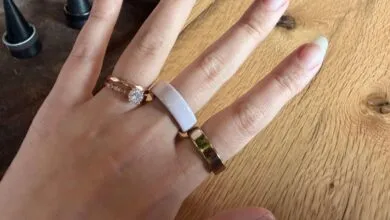
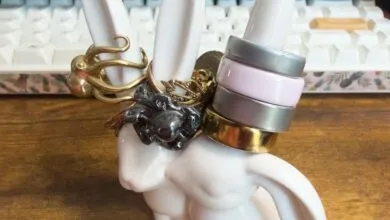
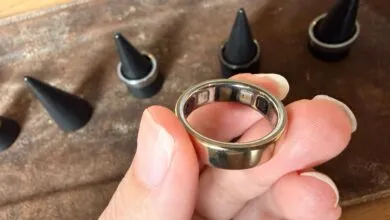
The latest Oura Ring 5 arrives with a dramatically smaller footprint than its predecessor, and that difference is immediately obvious. The ring has slimmed down from 7.9mm to 6.1mm in width and from 2.8mm to 2.28mm in thickness, while weight drops to just 2 grams. Battery life also sees a marginal improvement, though much of that gain may simply come from the unit being new rather than a worn-in battery. Several new features have been introduced, but they are also available to owners of recent Oura rings, so they are not exclusive to the Ring 5.
I have spent nearly a month testing the Oura Ring 5 across swimming, cycling, running, strength training, and everyday life. The ring excels at passive daily tracking, which has always been its strongest suit. However, it is worth emphasizing that the Oura Ring 5 is now significantly behind even basic wearables when it comes to sports tracking. The gap is so wide that I had forgotten just how far behind they are, even before considering accuracy.
The core appeal of any smart ring remains the same: you do not want to wear a watch or smart band. If you already own one of those devices, there is no compelling reason to buy an Oura Ring in 2026. Even budget alternatives outperform it.
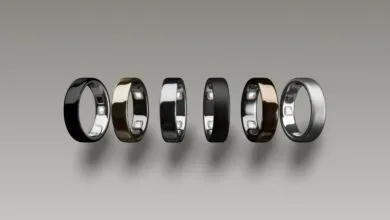
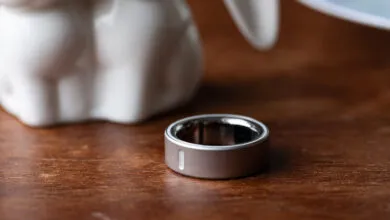
The most notable physical change is the size reduction. The ring has become 40% smaller by volume, depending on the model. The sensor array has also been redesigned, decreasing from 18 to 12 light pathways but increasing brightness by four times. Oura claims this results in a 12% improvement in nighttime HRV accuracy and up to a 19% improvement in workout accuracy. Pricing has increased by $50 to a base of $399, while the subscription remains at $5.99 per month.
The unboxing experience is straightforward. You first receive a sizing kit with dummy rings to wear for 24 hours before ordering the actual ring. Oura recommends wearing it on the index finger, but you can use any finger as long as it does not rotate freely. The final box contains the ring, a new charging dock with USB-C, a USB-C to USB-C cable, and documentation.
Daily life tracking is where the Oura Ring 5 shines. It quietly and discreetly monitors your activity without requiring a wrist-worn device. The smaller size makes it even more comfortable for all-day wear. All data is collected in the Oura app, which has been redesigned over the past year. The app splits information into a row of scores along the top,Readiness, Sleep, Activity, Heart Rate, Stress,and a scrolling feed of detailed displays below. Some users may find this layout dilutes the data clarity.
The Readiness Score synthesizes factors like resting heart rate, HRV, sleep, and activity trends. These trends are based on your personal historical data, not population averages. Oura uses a three-month baseline for HRV, which is longer than most competitors that use a 90-day period. This means the ring requires at least two to three weeks of data to become useful, and ideally two to three months for a solid baseline.
Sleep tracking remains a core strength, though the advantage over competitors has largely faded. Oura pioneered sleep tracking in the 2015-2018 era, but today there is no meaningful difference between Oura and other wearables for core sleep stats. The ring accurately detects sleep and wake times, but sleep stage accuracy is still below medical-grade standards. Instead, focus on total sleep, sleep debt, and sleep consistency metrics, which are the most actionable.
The Sleep Debt feature is particularly useful, as it shows your cumulative sleep deficit. HRV trending is also valuable for predicting upcoming illness, as values drop significantly one to two days before symptoms appear. However, factors like alcohol consumption or intense workouts can produce similar drops, so it is important to consider context.
Activity tracking is straightforward but limited. The ring automatically detects movement, steps, and workouts, but you can also start a manual workout. Strava sync is available, but it is bidirectional, which may not suit everyone. The Heart Rate and Stress section summarizes existing data, plotting heart rate and stress levels throughout the day. Oura classifies workouts as high-stress events but does not include them in the stressed time totals, which is a reasonable compromise.
Battery life in my testing averaged six to seven days per charge, depending on usage. With one to two hours of daily workouts, I consistently got six to seven days before needing a recharge. This is within the claimed six to nine days, but definitely not reaching the upper end.
The Vitals and My Health sections essentially re-display the same data from other parts of the app, adding trend lines and color-coded summaries. The VO2Max estimate of 38 is hilariously inaccurate, as most devices place my actual VO2Max around 56 to 58. The Sleep Chronotype classification is also flawed, as it simply forces a category based on your average wake time rather than detecting your actual chronotype.
Sports tracking is the Oura Ring 5’s weakest area. The ring is simply not designed for serious workout monitoring. While the company added some new features, they are minimal. You can now see slightly more data during manual workouts, but you cannot view heart rate data live unless you pair an external Bluetooth heart rate strap. Even then, Oura does not send heart rate data to third-party platforms like Strava. If you use an external HR sensor, the entire workout file is not sent anywhere, which is baffling in 2026.
Heart rate accuracy during workouts is actually quite good in many cases. On indoor cycling and road runs, the ring closely matched chest straps and other sensors. However, on trail runs with steep descents, accuracy often degraded due to cadence lock, a common issue with optical HR sensors. Despite reasonable accuracy, the lack of data export to Strava and other platforms undermines the feature entirely.
In summary, the Oura Ring 5 is the best Oura ring to date, primarily due to its smaller size. If you already own an Oura ring, the size reduction is the only tangible improvement you are likely to notice. The claimed accuracy gains are difficult to perceive, and the sports features remain woefully inadequate. The ring excels at its core purpose: discreet, passive tracking of sleep and daily activity for people who do not want to wear a watch or band. If you already wear a smartwatch or fitness band, or if you care about sports tracking, the Oura Ring is not the right choice. The app feels repetitive, with 80% of its content being recycled trend charts. Oura seems to have plateaued in innovation, relying on integrations rather than meaningful new features. The Oura Ring 5 has value for its target audience, but it is not a universal upgrade.
(Source: DC Rainmaker)