Vercel CEO: Why AI models must be separated from agents
▼ Summary
– Vercel sees 6 million deployments daily, half triggered by coding agents, and over 1 trillion tokens flow through its AI gateway each day.
– CEO Guillermo Rauch identifies two killer apps for agents: coding agents and internal corporate agents that securely access data and provide audit trails.
– Vercel’s Eve framework allows agents to be defined with natural language instructions and skills, while Vercel Sandbox cages agents with policies on data access and export to prevent data leakage.
– Companies are moving away from single-lab partnerships to using multiple AI models (OpenAI, Anthropic, Gemini, open models) based on price/performance for production.
– Vercel competes with AI labs (e.g., OpenAI) as they add hosting capabilities, but sees this as an opening to position itself as the AWS of the AI generation, promoting open protocols.
Known for its cloud infrastructure that enables developers to deploy agents without worrying about server management, Vercel has quietly emerged as a pivotal player in AI software. The company now processes 6 million deployments daily, half initiated by coding agents, and handles over 1 trillion tokens through its AI gateway each day.
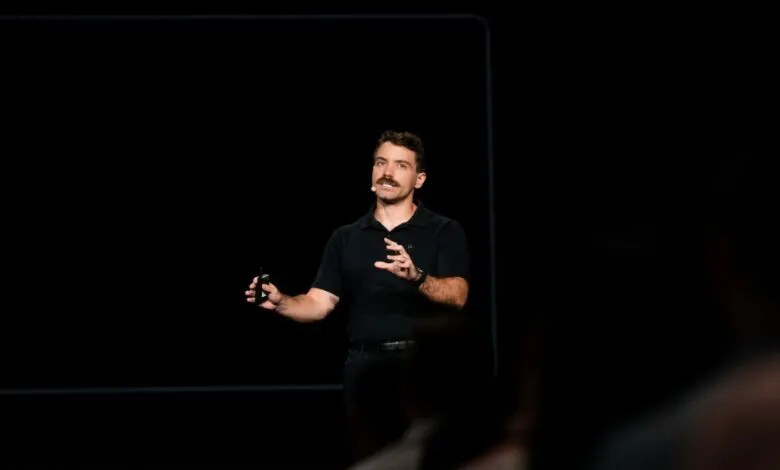
Following the company’s ShipNYC conference last week, we spoke with Vercel CEO Guillermo Rauch about the current state of AI and how platform companies like his find themselves competing with major AI labs. Below is a lightly edited version of that conversation.
There’s a noticeable shift in the community this year , fewer pilot programs and a stronger emphasis on making things work reliably at scale. I imagine you’ve seen that with clients, but what has that journey looked like inside Vercel?
Last year was all about prototyping. The mentality was: the sky’s the limit, let agents loose, everyone can build. We embraced that, and we learned a lot because we had hundreds of agents organically developed and deployed across the company. Then we hit the realities of running agents in production, and some serious challenges emerged.
The biggest takeaway for me was identifying the two killer use cases for agents. First, coding agents , they’re driving massive token utilization worldwide. But when you generate that much software, you need a place to put it. The second killer app is the internal agent that helps run your company. The real challenge there is security: how do you safely access data? How do you audit an agent’s actions? How do you maintain a complete trail of every tool call and access control the agent used to complete a task?
To address this, we built a framework called Eve, where you can define an agent’s instructions and skills in natural language. Another tool is Vercel Sandbox, which essentially puts the agent in a cage. It still has the freedom to express its intelligence, but you can enforce policies on what data it can access and what data can leave the sandbox.
What specific problems does that help prevent?
For Sandbox, the main benefit is data control. A real risk I constantly think about with AI is this: if you install a coding IDE like Devin or Cursor in the wrong environment, it might train on your entire codebase. I remember discussing this with the president of Airbus. They have decades of highly specialized C++ code for aerospace engineering. Someone installs the wrong developer tool, and suddenly all that code is sent to the cloud for training.
Can you elaborate on that second killer use case? We’re all familiar with coding agents, but what does an internal corporate agent actually look like in practice?
We have a sales rep here in our office who works on install base , her job is growing existing accounts. The bottleneck for people like her has never been creativity, intelligence, or relationship-building skills. It’s been data access. She wants to ask: “Which accounts are growing fastest? Give me the five accounts that added the most seats in the last two weeks so I can prioritize.” She couldn’t ask that question before. She had to wait for a Q1 project to build a new sales dashboard.
That bottleneck existed at Vercel for years. It was incredibly frustrating because on the R&D side, we’re one of the fastest-moving companies in the world. But on the sales side, I was completely incompetent , I had never even opened Salesforce before starting here.
Now I feel like I can actually have impact across the entire company. Eve works for our customer-facing agents and also improves internal productivity. It’s the same technology, just APIs. Agents are forcing companies to open up, and that will have dramatic long-term consequences. So many SaaS giants built their empires by trapping your data, and that model is fundamentally incompatible with agents.
How are client relationships with the big AI labs evolving?
Last year, many companies picked a single lab partner , they said they’d build everything on OpenAI or Anthropic. Now they understand how the stack works: model, harness, data platform, sandbox, gateway , every piece is plug and play. You can use OpenAI, Anthropic, or Gemini. We’re seeing a lot of Gemini growth, even though it doesn’t make headlines as often, because people are optimizing for production. When you prioritize production, you look at price/performance, and Gemini offers excellent price/performance characteristics. Open models like Deepseek and GLM-5.2 are also taking off. The data doesn’t lie.
But there are areas where you directly compete with the labs, right? Just recently, OpenAI released tools that let you publish directly to the web without leaving their enclave.
It’s a natural step for them to host small websites. And it’s actually a great opportunity for us, because now people will think of ChatGPT as a tool for making websites. Then, when they ask the model about web hosting, it recommends us. But you’re right , as models or platforms add more capabilities, they inevitably compete with existing infrastructure platforms.
I believe we’re at a decision point: will the model and the agent be coupled or separated? Do you get all your intelligence from one provider? Or do you take a module, a library, or a building block from one place and build on top of it? That approach is more aligned with how software engineering has always worked, and that’s exactly what we’re bringing to market. We aim to be the AWS of this generation, so we’re fighting for a world of open protocols.
(Source: TechCrunch)

![Guillermo Rauch speaks at Human[X] conference, gesturing with his hand.](https://digitrendz.blog/wp-content/uploads/2026/04/Vercel-founder-Guillermo-Rauch-390x220.webp)