Thea Energy raises $100M, becomes top-funded fusion startup
▼ Summary
– Thea Energy raised a $100 million Series B, led by U.S. Innovative Technology Fund, bringing total private investment to $130 million.
– The funding will expand manufacturing of its unique small magnets and begin construction of the Eos demonstration reactor in 2025.
– Thea’s rectangular magnets are tunable like pixels, using software to create a stellarator-shaped magnetic field inside a simpler physical structure.
– The company aims to complete the Eos demonstration reactor by 2030 and a commercial version, Helios, by 2034.
– Thea’s small magnets offer a manufacturing advantage, but it still relies on 12 larger magnets for most plasma confinement.
Thea Energy has secured a $100 million Series B funding round, led by U.S. Innovative Technology Fund, positioning the startup among the most well-capitalized players in the fusion energy space. This oversubscribed round significantly boosts the company’s ability to move toward a commercial reactor.
The fresh capital will fuel expanded manufacturing of Thea’s distinctive smaller, tunable magnets and kick off construction of Eos, a “power plant relevant” demonstration device, slated to begin next year. The startup previously closed a $20 million Series A in early 2024. With this latest injection, total private investment now stands at $130 million.
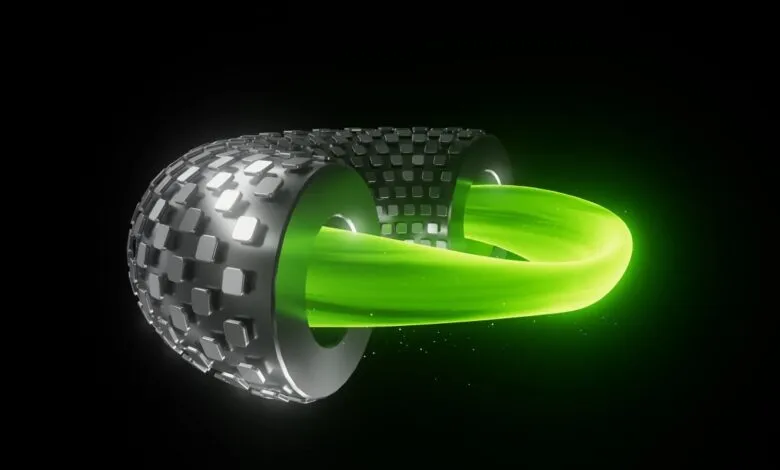
Magnets are central to most fusion reactor designs, as they compress and heat plasma to the point where atomic nuclei fuse, releasing energy. Thea’s magnets, however, are unique. Each rectangular unit can be individually adjusted to shape the reactor’s overall magnetic field. The company compares this approach to pixels on a monitor, where software coordinates many tiny elements to form a complete image.
This flexibility is critical for Thea’s chosen reactor type, the stellarator. Stellarators maintain highly stable plasma configurations but require a twisted, complex geometry. This contrasts with tokamaks, which use a more brute-force magnetic confinement method. The irregular shape of a stellarator traditionally drives up manufacturing cost and complexity.
Thea’s solution is to surround its reactor core with dozens of regular, smaller magnets. Software controls these tunable magnets to create a stellarator-shaped magnetic field within a simpler physical structure. The software also aids assembly: the startup has deliberately installed test magnets out of alignment, and the system compensated automatically.
Thea plans to complete its Eos demonstration reactor by 2030, with a commercial version, Helios, expected online in 2034. This timeline aligns with competitors like Commonwealth Fusion Systems, which aims to bring its Arc reactor online in Virginia in the early 2030s.
If Thea’s pixel-inspired magnets succeed, the company could gain a manufacturing edge. The startup has built dozens of full-scale magnet iterations in its Jersey City lab. In contrast, other fusion startups pursuing magnetic confinement require massive assembly halls to produce reactor-scale magnets.
However, the small magnets do not handle all the work. Thea uses 12 larger magnets of four different shapes outside the planar coils to manage most of the plasma confinement. The 300-plus smaller magnets serve to fine-tune the plasma. This reliance on larger magnets somewhat dilutes the manufacturing advantage.
Still, any simplification of a fusion reactor , among the most complex devices ever built , brings commercial power closer. An extra $100 million certainly accelerates that journey.
Other investors in the round include General Innovation Capital Partners, Linse Capital, Calm Ventures, Climate Capital, Divergent Capital, Emerald Technology Ventures, Gaingels, Idemitsu Kosan, Overlay Capital, Timescale Ventures, and Whatif Ventures.
(Source: TechCrunch)