Stilta raises $10.5M from a16z and YC to revive forgotten company patents
▼ Summary
– Oskar Block launched Stilta, an AI platform automating patent research and analysis, after witnessing the slow, manual patent process at an autonomous trucking company.
– Stilta uses a network of AI agents to search for conflicting patents, flag similar property, and pull filing and court histories, producing litigation-grade reports with pinpoint citations.
– The startup announced a $10.5 million seed round led by Andreessen Horowitz, with participation from Y Combinator and other investors.
– Stilta aims to lower the cost barrier of patent litigation, potentially unlocking value from patents that companies have never enforced or analyzed due to prohibitive costs.
– Block stated that while AI is already overtaking analytical legal work, humans still decide case outcomes, and the real question is whether companies are ready for what becomes possible when the analytical bottleneck disappears.
Oskar Block has always found his way back to building companies. At 18, he founded his first startup, creating machine learning models for sports betting. “I’ve always been drawn to solving difficult data problems,” he told TechCrunch. After a stint in consulting, where he guided enterprises on AI integration strategies, he learned what it truly took to get large organizations to adopt new technology.
Later, while working at an autonomous trucking company, Block witnessed the painfully slow and manual nature of the patent process. The spark for his next venture struck during a dinner with his friend and colleague, Tobias Estreen. Estreen’s father, a patent attorney, described his daily routine: “Reading the same kind of documents, the same way he had for thirty years,” Block recalled.
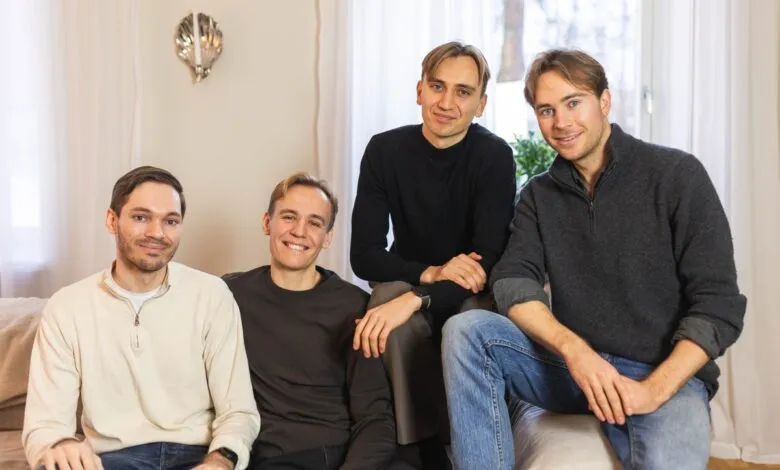
Seeing a clear opportunity, Block and Estreen joined forces with Petrus Werner and Oscar Adamsson to launch Stilta. The company offers an AI platform designed to automate the research and analytical heavy lifting behind intellectual property cases, work that has traditionally made patent litigation both slow and costly. On Tuesday, Stilta announced a $10.5 million seed round led by Andreessen Horowitz, with additional backing from Y Combinator and operators from firms like OpenAI, Legora, and Lovable.
Block, now CEO of Stilta, explains that the platform functions like a team of lawyers. Users simply input a patent number and any relevant context. From there, a network of AI agents takes over, searching for conflicting patents, flagging similar intellectual property, and pulling the patent’s filing and court history.
“They reason in parallel and converge the way a room full of specialists would, but at a scale no human team can match,” Block said. He emphasized that the lawyer or professional using the tool remains in the “driver’s seat,” guiding the analysis rather than surrendering control. “The output is litigation-grade: a report and claim charts with pinpoint citations to every piece of evidence.”
Stilta enters a competitive space that includes Solve Intelligence and DeepIP, as legal tech becomes a red-hot sector within the broader AI boom. Block noted that some parts of the legal industry are already experiencing AI-driven change, while others may take much longer to adapt. The analytical work, he said, is already being overtaken by AI, but humans still determine case outcomes.
He also pointed out that many companies hold patents they have “never enforced, never licensed, never even analyzed properly because the cost of doing so was prohibitive.” Stilta aims to remove that cost barrier. By making the patent litigation process more efficient and affordable, the startup could unlock new potential for businesses that have long left their intellectual property on the shelf. This shift could fundamentally change how companies view the latent value sitting inside their patent portfolios.
“The question isn’t really whether the legal system is prepared for AI,” Block said. “It’s whether companies are prepared for what becomes possible when the analytical bottleneck disappears.”
(Source: TechCrunch)