Artemis II Effect: Space Camp Registrations Double
▼ Summary
– Jared Isaacman attended Space Camp’s Aviation Challenge at age 12, where he first flew an airplane and decided to become a pilot.
– Isaacman later founded a successful payments company, flew to space twice on SpaceX’s Crew Dragon, and returned to Space Camp to inspire participants.
– In 2022, after his Inspiration4 flight, Isaacman donated $10 million to begin a Space Camp expansion.
– As NASA Administrator, Isaacman donates his salary to Space Camp and opened the new Inspiration4 Skills Training Complex, funded by an additional $15 million donation.
– Space Camp became part of American culture after the 1986 film “Space Camp,” though the movie was criticized for its timing after the Challenger disaster.
When Jared Isaacman was just 12 years old, he spent a week at Space Camp in Huntsville, Alabama, participating in the “Aviation Challenge” program. That experience, he says, changed his life. “For the first time, I got behind the controls of an airplane when I attended Aviation Challenge,” Isaacman recalled during a Friday evening event at the US Space & Rocket Center. “I became a pilot because I thought that was the closest I would ever get to the stars.”
Fast forward several decades. After building a successful online payments company and flying twice to space as a private citizen aboard SpaceX’s Crew Dragon, Isaacman has returned to Space Camp multiple times to inspire the next generation. In 2022, a year after his first spaceflight on Inspiration4, he donated $10 million to launch an expansion of the facility.
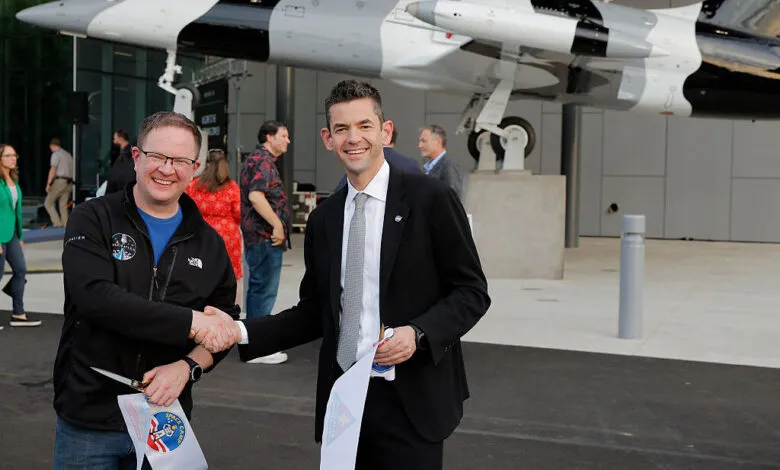
Now, as the head of NASA’s space program, Isaacman continues to give back. He donates his entire salary to Space Camp. On Friday, he returned to officially open the new Inspiration4 Skills Training Complex, a 47,000-square-foot facility made possible by an additional $15 million donation from him. The funding will also support the construction of a new dormitory.
Space Camp has long held a unique place in American culture. The 1986 film Space Camp brought the program into the national spotlight, depicting four teenagers who befriend a robot and accidentally launch into orbit aboard a space shuttle. While the plot was far-fetched and the film faced criticism for its release just months after the Challenger tragedy, the real-world Space Camp has only grown in significance.
(Source: Ars Technica)