Roomba creator aims to replace dogs with plush robots
▼ Summary
– Colin Angle, co-founder of iRobot and creator of the Roomba, has unveiled a prototype for a new AI pet robot.
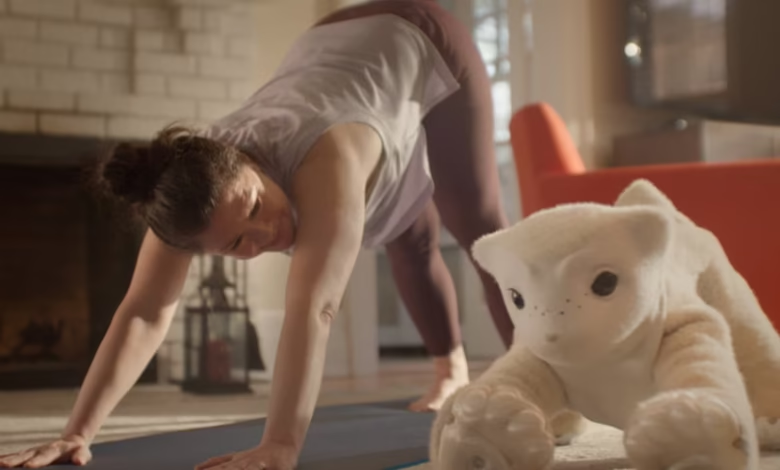
– The robot is four-legged, covered in plush material, and designed as an AI companion.
– It can follow its owner around the house and adapt to their daily habits.
– The robot is intended to make its owner feel an emotional connection.
– The full story is available at The Next Web.
Twenty-five years after co-founding iRobot and turning the Roomba into the world’s most recognizable home robot, Colin Angle has unveiled his latest creation: a plush, four-legged AI pet designed to trail you through your home, learn your daily routines, and stir genuine emotion. The prototype, built by his new venture Familiar Machines, represents a radical departure from utilitarian vacuuming and a direct bid to fill the emotional space humans reserve for living animals.
Angle’s new robot doesn’t scrub floors or fetch slippers. Instead, it uses advanced sensors and machine learning to track your movements, recognize family members, and respond to your mood. Covered in soft fabric, the device is engineered to feel warm and huggable rather than cold and mechanical. The goal, Angle explained, is to create a companion that feels alive without the mess, vet bills, or mortality of a real pet.
The timing is deliberate. As more people live alone or in pet-restricted housing, and as the cost of caring for animals rises, Angle sees a growing market for robotic companionship that offers many of the benefits of a dog without the constant attention and cleanup. “We’re not trying to replace a dog in every way,” he said. “We’re trying to give people the parts they love , the loyalty, the presence, the sense of being greeted , without the parts they can’t handle.”
Familiar Machines has already secured venture backing and expects to begin limited production within two years. Angle declined to reveal a final price but acknowledged the robot will cost significantly more than a Roomba. He emphasized that the device is not a toy: it’s intended to become a long-term member of the household, capable of forming bonds over years of shared routines.
Critics question whether a machine can truly replace the unpredictable, messy affection of a living creature. Angle doesn’t claim it can. But he argues that for many people, the comfort of a consistent, attentive presence , even one made of silicone and code , is enough. The company’s early testers report naming their prototypes, talking to them, and feeling a pang of loneliness when the battery dies.
Whether the public will embrace a robot as a substitute for a pet remains an open question. But Angle, who helped convince millions to welcome a vacuum cleaner into their homes, is betting that the next frontier of robotics isn’t productivity , it’s connection.
(Source: The Next Web)