OpenAI Codex Update Challenges Anthropic Claude Code
▼ Summary
– OpenAI’s Codex system now gains the ability to operate desktop applications in the background on a user’s computer, starting with macOS.
– The update introduces new capabilities for Codex, including image generation, native web browsing, and plug-ins for tools like GitLab and Microsoft Suite.
– A new memory feature will allow Codex to remember user preferences and past context to improve future task speed and quality.
– These features are initially rolling out to ChatGPT desktop app users on macOS, with EU and other operating system availability coming later.
– The updates are part of OpenAI’s competitive efforts in the automated coding space against rivals like Google and Anthropic.
A significant new set of capabilities is now arriving for OpenAI’s Codex, positioning it as a more powerful and autonomous development assistant. The latest enhancements allow the system to directly control desktop applications, create images, and retain knowledge from previous interactions, marking a substantial step forward in agentic AI for software development.
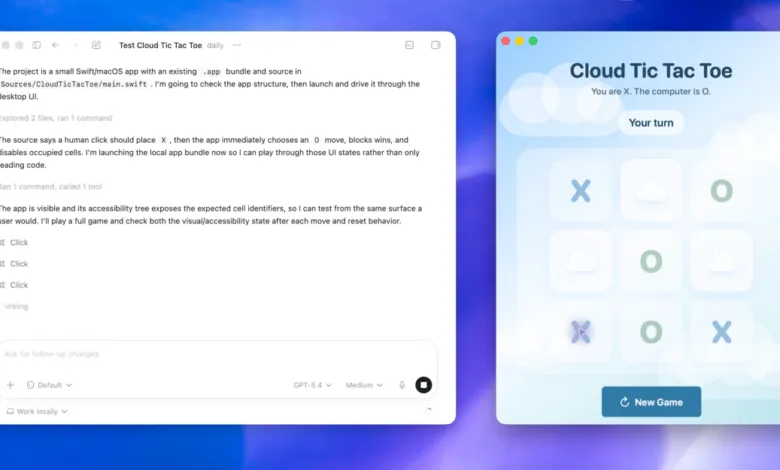
A central new feature is the ability for Codex to operate apps on a user’s computer. According to OpenAI, the system can work unobtrusively in the background, enabling parallel task execution by multiple agents. This functionality is designed to assist developers with frontend testing, application evaluation, and working within software that lacks a dedicated API. The rollout begins immediately for ChatGPT-linked desktop users on macOS, with availability for other operating systems and European Union users to follow at a later date.
Beyond desktop control, the update introduces several other powerful tools. Codex gains image generation and iteration via a new model, alongside new integrations for platforms like GitLab, Atlassian Rovo, and the Microsoft Suite. A native in-app browser enables direct web research, where users can annotate web pages to give the agent precise instructions. Task automation is also streamlined, with features allowing the reuse of conversation threads and the ability for Codex to schedule future work and resume long-running projects autonomously.
Perhaps one of the most impactful additions is a new memory feature. This opt-in capability, released in preview, allows Codex to remember valuable context from past sessions, including user preferences, corrections, and hard-won information. OpenAI anticipates this will accelerate future tasks and achieve a quality of output that previously required extensive, custom instructions. These personalization features will become available for Enterprise, Education, and EU users in the near future.
These comprehensive upgrades arrive amid fierce competition in the AI coding assistant space. OpenAI is clearly accelerating its efforts to match and surpass rivals, with the rapid ascent of tools like Anthropic’s Claude Code intensifying the race to automate complex software engineering workflows.
(Source: The Verge)