Astroport and Vermeer Develop Autonomous Moon Construction Tech
▼ Summary
– Astroport and Vermeer are collaborating to adapt Vermeer’s heavy surface mining equipment for autonomous construction on the Moon, a concept they term “Lunar Iron.”
– The adaptation centers on using Astroport’s UTIPA system, a modular adapter that allows proven Earth machinery to use interchangeable tools for different lunar tasks like mining and trenching.
– This effort addresses the unique challenges of lunar construction, including low gravity, extreme temperature swings, abrasive regolith, and the need for fully autonomous operation.
– The partnership aligns with NASA’s Moon Base and Artemis programs, which require extensive site preparation and infrastructure for a permanent human presence by the 2030s.
– The broader lunar construction ecosystem is growing, but a key unsolved challenge is scaling heavy civil engineering work for the Moon’s harsh environment.
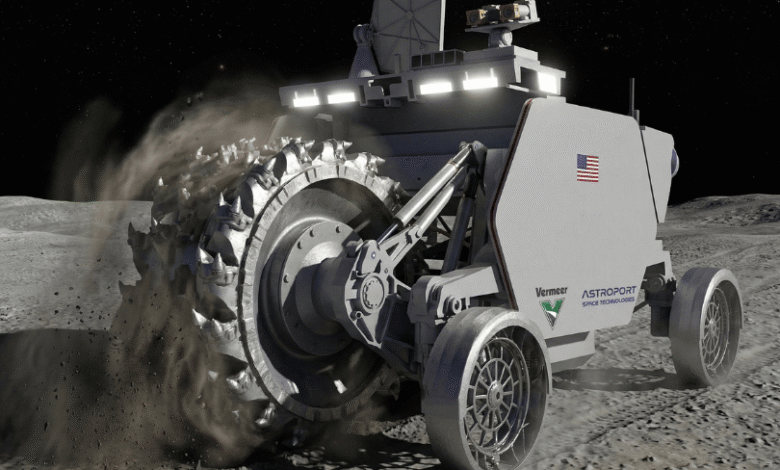
A new partnership aims to provide the foundational machinery for building a permanent Moon base. Astroport Space Technologies and Vermeer Corporation are collaborating to adapt proven terrestrial surface mining equipment for autonomous lunar construction. The initiative, announced at the ASCE Earth & Space 2026 conference, focuses on modifying heavy machinery to function in the Moon’s harsh environment through a process the companies call lunarisation.
This effort centers on delivering what the partners term Lunar Iron. This concept refers not to a material but to the essential class of heavy machinery, like excavators and trenchers, needed for large-scale lunar development. Such equipment must perform tasks like digging foundations and building landing pads under conditions impossible on Earth, operating autonomously in a vacuum while enduring temperature swings exceeding 300 degrees Celsius and the unique challenges of low-gravity excavation.
Jason Andringa, Vermeer’s President and CEO, emphasized his company’s legacy of solving tough problems. “This collaboration is an example of our continuation of that important work, applying our expertise in automation and heavy equipment to the lunar environment,” he stated. Astroport CEO Sam Ximenes connected the work to national goals, citing recent federal mandates for a sustained U. S. presence on the Moon. “By partnering with Vermeer, we are delivering the ‘Lunar Iron’ necessary… for critical assets such as safe nuclear power deployment and habitation,” Ximenes said.
The technical key to the venture is Astroport’s Universal Tool Implement Payload Adapter (UTIPA). This modular system allows various tool heads for mining, trenching, and grading to connect to a standard robotic platform. This modular lunar construction approach is critical for efficiency, as it means fewer machines need to be launched from Earth, with each unit capable of performing multiple roles throughout a base’s construction sequence.
The partnership directly supports NASA’s Moon Base programme and the broader Artemis campaign, which targets sustained lunar exploration by 2030. Establishing permanent infrastructure requires the very site preparation and civil engineering capabilities this collaboration is developing. Astroport has been methodically building its expertise through multiple NASA contracts, including work on its Brickbot regolith processor and a successful field demonstration with Venturi Astrolab’s rover earlier this year. Vermeer brings its own relevant experience through a partnership with resource harvesting startup Interlune, having already unveiled a large-scale excavation prototype in 2025.
This alliance exists within a growing lunar industrial ecosystem, where companies like Blue Origin and SpaceX are developing landers and habitats. However, a significant bottleneck remains: the unproven ability to execute heavy civil engineering on the Moon at the scale required for permanent outposts. The Moon’s fine, abrasive regolith and its static-charged dust pose severe challenges for machinery, while low gravity fundamentally alters excavation physics.
Astroport’s international presence and Vermeer’s global manufacturing scale provide a strong foundation for tackling these problems. The central question is whether adapting terrestrial technology can bridge the gap to operational lunar hardware. With the U. S. government committed to a permanent lunar presence this decade, the commercial and political momentum is clear. The companies positioned to deliver construction-ready hardware will lead the next phase of lunar development, betting that the fastest path to building on the Moon starts with what already works on Earth.
(Source: The Next Web)