My Google Smart Home Failed: Here’s What Happened
▼ Summary
– The author initially embraced Google Home for smart home automation but grew frustrated with its unreliable voice commands and limited automation capabilities over time.
– Voice controls proved inefficient, requiring specific phrasing and manual intervention rather than enabling the proactive, automatic home environment the author desired.
– Google Home’s routines remained too basic and restrictive, lacking support for many connected devices and failing to enable complex, multi-device automations.
– The Matter smart home protocol was disappointing, introducing setup complexities, network issues, and incomplete feature support that made it unreliable compared to older standards.
– The author switched to Home Assistant for its superior automation flexibility, device integration, and customization options, relegating Google Home to a secondary role for basic voice commands.
My initial excitement for a Google-powered smart home has given way to a more practical and automated setup, driven by years of firsthand experience and evolving needs. The journey began with importing devices to Lebanon, navigating voltage differences, and starting with brands like Wemo and Wink Hub. Early voice commands felt magical, turning on lights or playing Christmas music on demand. Over time, the focus shifted from novelty to efficiency, integrating products from Somfy, Nuki, Hue, and Cielo for energy savings and comfort, all funneled through Google Home for voice control by 2019.
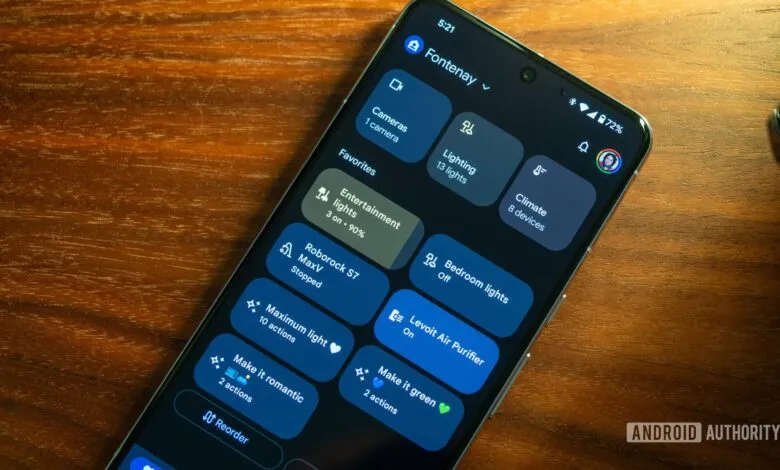
Fast forward to today, and the landscape has shifted dramatically. Voice commands proved more frustrating than futuristic, requiring precise phrasing, patience for processing, and frequent retries when the Assistant failed. It often felt easier to manually press a button than endure the unpredictability of speaking to Google. The core issue emerged: I didn’t want to issue commands; I wanted the house to act intelligently on its own. Automations that dim lights at sunset or start the vacuum when I’m out should happen seamlessly, but Google’s routines remained too basic for years. Even with recent improvements, they can’t leverage data from my air quality sensors to control purifiers or manage devices like washers and robot vacuums within routines.
A truly smart home should react to your presence and habits without constant manual input. Instead of this proactive intelligence, Google continues to emphasize conversational interactions with Gemini, which still depend on you initiating every action. This gap between expectation and reality became impossible to ignore.
The promise of Matter as a universal standard brought its own disappointments. My first attempt with Tado X thermostats was a disaster, complicated by network issues like disabling 5GHz bands and the tedious process of setting up each device in multiple apps. Features like vacation mode or energy savings were lost if I relied solely on Google Home. A subsequent try with a Meross power strip highlighted further instability, disappearing from apps until I enabled IPv6, a fix that slowed other devices. Troubleshooting Matter involves endless guesswork without clear error messages or logs, making it unreliable for a hub-free dream.
Ultimately, I turned to Zigbee, a proven and reliable technology, despite adding another hub to my setup. This decision led me to Home Assistant, which became the central brain of my smart home. It integrates every device, including those incompatible with Google Home, and offers deep automation capabilities. From linking motion sensors to lighting based on ambient conditions to receiving alerts for low batteries or filter replacements, Home Assistant delivers the proactive intelligence I always wanted. It provides logs for troubleshooting and total customization over dashboards and controls, something Google’s app can’t match.
Now, Google Home plays a minor role, handling voice commands and media on Nest speakers while Home Assistant manages all critical automations. The shift underscores that a smart home should anticipate your needs, not wait for instructions. While Google focuses on conversational AI, the real advancement lies in silent, reliable automation that works behind the scenes.
(Source: Android Authority)