Vindral CEO on Interactive Livestreaming and Tunable Latency
▼ Summary
– Vindral provides synchronized live streaming with configurable latency ranging from sub-second to several seconds to match broadcast timing.
– Media Over QUIC (MoQ) is an emerging internet transport protocol that enables flexible latency choices and has major industry backing from companies like Akamai and YouTube.
– MoQ supports interoperability and enhanced interactivity by allowing events to be embedded in video tracks for features like instant replays.
– Vindral offers a hybrid deployment model, providing both cloud SaaS and on-premise engine options to integrate with client infrastructure.
– MoQ is evolving as a global standard with flexibility for partial implementation, allowing companies to adopt components as the protocol matures.
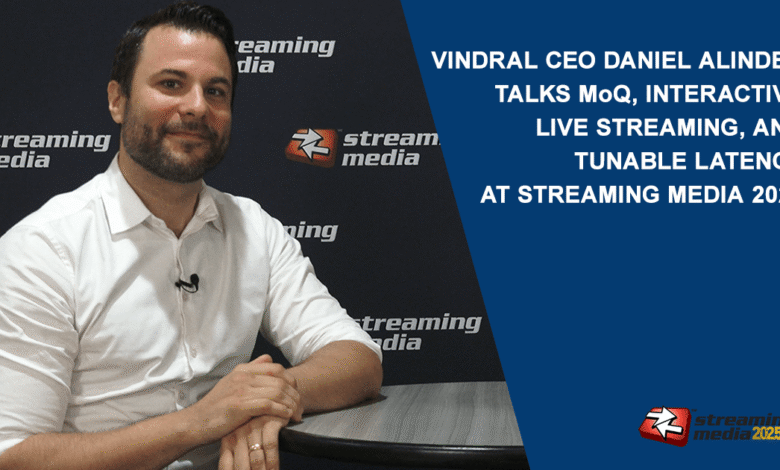
Vindral’s innovative approach to interactive livestreaming centers on tunable latency, allowing broadcasters to synchronize online viewers with traditional broadcast timelines or achieve sub-second delays for real-time engagement. This flexibility is crucial for applications like live sports betting, where timing discrepancies can spoil the experience. During a recent industry discussion, Vindral CEO Daniel Alinder emphasized that their platform, Vindral Live, enables clients to select latency settings ranging from 500 milliseconds to several seconds, aligning online streams with broadcast delays when necessary.
The conversation also explored the growing significance of Media over QUIC (MoQ), an emerging protocol for transporting video and data over the internet. Alinder described MoQ as a paradigm shift that moves away from proprietary stacks toward standardized Web Transport. He highlighted its potential to redefine low-latency streaming dynamics, noting that major industry players like Akamai, YouTube, and Meta are backing the standard. This collective support suggests MoQ could become a foundational technology for future streaming workflows.
A key advantage of MoQ lies in its promise of interoperability. Alinder explained that the protocol allows different systems and endpoints to communicate consistently, establishing a baseline for features while permitting vendors to add proprietary enhancements. This interoperability extends to interactive capabilities; for example, MoQ can embed event markers directly within a video track, enabling instant replay generation or other interactive highlights without relying on external systems.
Interactivity itself relies heavily on synchronization among viewers. Low latency forms the backbone of features like live chat and shared reactions, ensuring everyone participates in the same moment. Vindral’s technology addresses this by keeping audiences aligned, whether they require ultra-low delays or are synced to slower broadcast feeds.
Vindral offers a hybrid deployment model, providing both a cloud-based SaaS solution and an engine that integrates into client infrastructure. This flexibility supports on-premises, cloud, or mixed environments, allowing broadcasters to adopt MoQ for specific workflow segments without overhauling their entire setup. Alinder shared that Vindral’s own cloud service blends on-prem and cloud resources, illustrating a practical approach to leveraging specialized hardware like AV1 encoding cards ahead of broader cloud vendor support.
Regarding MoQ’s origins, Alinder acknowledged its strong European roots but stressed it has evolved into a global movement. Initiatives like the OpenMOQ Consortium, supported by both American and European companies, demonstrate worldwide engagement. Early adopters like Vindral contribute to shaping the standard through groups such as the Streaming Video Technology Alliance (SVTA), ensuring it meets diverse industry needs.
As MoQ continues to develop, its modular nature allows for selective implementation. Similar to how DASH-264 emerged as a focused subset of the DASH standard, MoQ offers wiggle room for adopters to use completed components while awaiting full specification. This adaptability, combined with underlying technologies like HTTP/3 and QUIC, paves the way for smarter, browser-native video experiences that go beyond simple playback.
The ongoing maturation of MoQ and tunable latency solutions signals a broader shift toward configurable, interactive streaming that serves varied audience and broadcaster requirements.
(Source: Streaming Media)


