Heybike Comfort Ranger 3.0 Pro Review: Durable Cargo Ebike
▼ Summary
– Assembly required attaching several pre-familiar components, and the heavy frame made having assistance helpful.
– The Ranger Pro ebike functions without its companion app, which is only needed for adjustments, updates, and ride tracking.
– It features a waterproof, enclosed battery (IP65 rated), allowing confident use in wet conditions like rain and puddles.
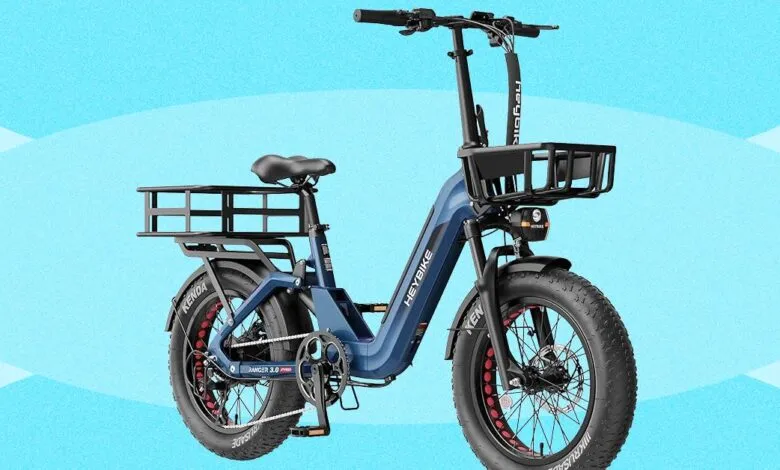
– Its main accessibility feature is a foldable design that halves its size for storage, though its 65-pound weight makes it awkward to carry.
– The bike proved stable and secure during testing, handling potholes well without its folding latches coming undone.
Arriving in a manageable number of pre-assembled sections, the Heybike Ranger 3.0 Pro required only basic assembly of the seat, handlebars, front wheel, and pedals. While the process was straightforward for anyone familiar with traditional bikes, the heavy frame proved unwieldy to position alone, making an extra set of hands a welcome asset. Unlike its sibling model, the Ranger S, this cargo ebike operates independently of its companion smartphone app, which is purely optional for adjusting settings, updating firmware, or tracking rides. Straight out of the box, the battery reached a full charge in roughly three hours, a figure that extended to about seven hours for subsequent charges after depletion, matching the performance of other leading models on the market.
Testing occurred during a characteristically unpredictable Montana spring, with conditions ranging from steady drizzle to sleet and deep roadside puddles. The IP65 waterproof rating provided significant peace of mind, as the fully enclosed battery and electronics are designed to withstand direct water jets, though not submersion. Riding through wet weather to run errands never caused concern. A key feature enhancing this bike’s utility is its foldable design, which allows it to collapse to approximately half its size via latches at the handlebar base and the frame’s center. This transformation makes for convenient storage in a garage corner or the back seat of a car, though the 65-pound weight means it’s a lift, not a carry.
Initially, the idea of cruising at 20 miles per hour in traffic with a frame secured by two latches was slightly unnerving. However, after navigating some of the state’s most severe potholes, nothing loosened or gave way, confirming the locking mechanism’s robust security. The bike boasts an impressive 440-pound load capacity, though the rear rack, front basket, and panniers are sold separately. Using the standard rear rack, securing a gym bag, yoga mat, and grocery haul was simple and effective. Coming from a background of taller, full-size bicycles, the handling of this folding cargo model was a pleasant surprise, proving more agile and stable than some bulkier upright ebikes in various conditions.
(Source: Wired)