Snap’s Smart Glasses Hands-On: Not Meta Ray-Bans Yet

▼ Summary
– Snap is preparing to release consumer-facing smart glasses called “Specs” later this year, building on its decade-long history in this category.
– The current developer version, Spectacles, is a chunky and heavy fifth-generation AR model that causes wearability issues like ear fatigue.
– The glasses feature interactive apps called “Lenses,” including generative AI for stylizing environments, object identification, and language translation, though these features have some accuracy problems.
– Key challenges for the consumer version include improving the size, weight, and comfort, as well as refining the keyboard input and extending the short 45-minute battery life.
– The reviewer believes Snap must significantly improve the physical design, user interface, and app polish before releasing a usable product to the public.
Snap is preparing to launch its consumer-facing smart glasses later this year, offering a new take on wearable augmented reality. While the final consumer product details remain under wraps, the company’s latest developer-focused Spectacles provide a revealing look at the technology and experiences Snap is building. These fifth-generation interactive AR glasses feature a see-through display and represent a significant step in the company’s decade-long journey in smart wearables.
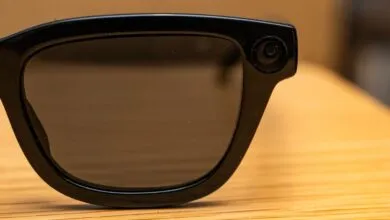
My initial hands-on impression was dominated by the device’s physical presence. The glasses are notably chunky and heavy, reminiscent of the bulky 3D glasses from movie theaters years ago, but with considerably more weight. Unlike some competitors that aim for a discreet, everyday look, these developer Spectacles clearly stand out. The heft became increasingly apparent during my demo, causing fatigue on my ears and even some slippage. Snap has indicated that the consumer version will address these wearability concerns, promising improvements in size, weight, fit, and overall premium finish, with a design more inspired by conventional eyewear.
The core experience is delivered through various apps, which Snap calls “Lenses.” I sampled several, with mixed results. The “Teleport” Lens uses generative AI to stylize a photo of your surroundings, creating a static AR portal that other wearers can view at that physical location. The concept of returning to a spot to peer into a stylized world is intriguing, though I found the visual output could be more vivid. Another feature, Spatial Tips, leverages multi-modal AI to provide information about your environment. It had its moments, correctly identifying an olive tree in an office, but also stumbled, like mislabeling a plate of assorted fruit entirely as passionfruit.
I also tested the Translation Lens, which offers real-time subtitles for over 30 languages. While it grasped basic Spanish phrases, the translation wasn’t flawless. For instance, “tengo hambre” (I’m hungry) was incorrectly presented as “tango ombre.” This highlights the need for further software refinement to ensure reliability.
For Snap’s next consumer glasses to make a real impact, several key areas need attention. There’s industry chatter about smart glasses eventually replacing phones or laptops, but the current input method is a barrier. The virtual keyboard was challenging to use, leading to frequent typos and hindering any notion of these being a primary computing device. Snap suggests the glasses are ideal for travel or quick connectivity when using a computer is impractical. However, the current model’s limited battery life, lasting about 45 minutes, and the physical discomfort I felt after just 30 minutes would undermine that use case.
While I can see potential for AR in specialized scenarios like shopping, that specific demo wasn’t available, and such niche applications alone are unlikely to drive mainstream adoption. The upcoming consumer launch will be a crucial test. To succeed, Snap must deliver a comfortable, lightweight form factor, create a seamless and intuitive interface, and polish its Lens experiences to be consistently useful and reliable. If the company can solve these fundamental issues of fit, function, and battery life, its smart glasses could finally move from a developer curiosity to a compelling consumer product.
(Source: ZDNET)