Nissan’s New E-Power Hybrid: Can It Really Hit 50 MPG?
▼ Summary
– Nissan has lacked competitive hybrid offerings in North America, unlike Toyota and Honda, and has been reluctant to introduce its global E-Power series hybrid system there.
– The company is now introducing a third-generation hybrid system, demonstrated in European-spec vehicles, which will debut in the North American Nissan Rogue later this year.
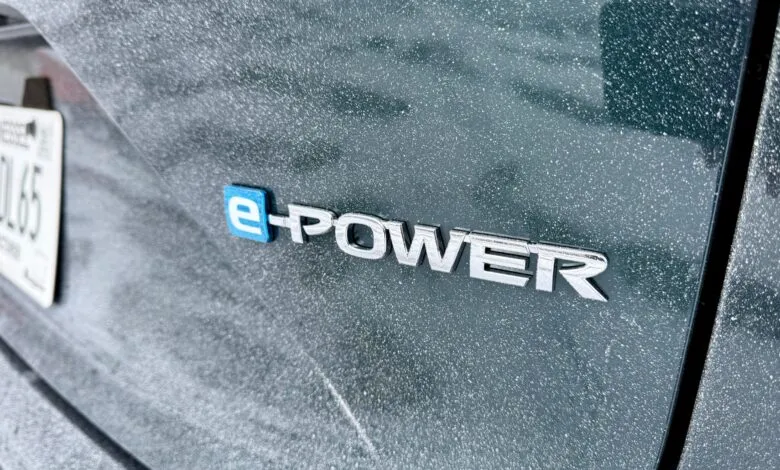
– This new E-Power system uses a unique 1.5-liter turbocharged three-cylinder engine that generates electricity but never directly powers the vehicle’s wheels.
– The front electric motor, with 202 horsepower, is sourced from the Nissan Leaf, and the system includes a 2.1 kWh battery pack to store energy.
– While the demonstration vehicle is front-wheel drive, the upcoming Rogue E-Power will feature all-wheel drive powered by an additional rear electric motor, with higher total output.
While many automakers have expanded their hybrid lineups, Nissan has often seemed like a spectator in the North American market. The company’s previous attempts, like the Altima using Toyota’s technology or the underwhelming Rogue hybrid, failed to make a significant impact. This situation is poised for a major shift with the introduction of Nissan’s third-generation E-Power hybrid system, a technology that has seen success overseas and is now being tailored for American drivers. The upcoming system promises a unique approach to electrification, aiming to deliver impressive efficiency without the typical compromises.
To give a preview, Nissan brought European-spec Qashqai models to North America. These vehicles showcase the same powertrain that will debut in the new Nissan Rogue later this year. Although the Qashqai is slightly smaller than the Rogue, its core hybrid technology is identical. At the heart of this system is a new 1.5-liter turbocharged three-cylinder engine designed exclusively for the E-Power setup. This engine operates as a generator in a series-hybrid configuration. It produces electricity that is sent through an inverter, either directly powering the front electric motor or charging a compact 2.1 kWh battery pack for later use. Crucially, the gasoline engine never mechanically drives the wheels; it functions solely as an onboard power plant.
The front electric motor is a proven component, sourced directly from the latest Nissan Leaf. In this application, it delivers a robust 202 horsepower (151 kW). The demonstration Qashqai is front-wheel drive, but the production Rogue E-Power will feature an all-wheel-drive system. This will be achieved by adding a second electric motor to power the rear axle. While total system output will be higher for the Rogue, Nissan has not yet released specific power figures. The company emphasizes that this design allows the gasoline engine to run almost exclusively within its most efficient speed range, which is the key to achieving strong fuel economy. The goal is to combine the smooth, instant torque of an electric vehicle with the extended range and convenience of a traditional hybrid, potentially reaching that coveted 50 mpg benchmark in real-world driving conditions that prioritize efficiency over pure performance.
(Source: Ars Technica)