Metrics Don’t Lie, But They Can Mislead Without Business Context
▼ Summary
– IT strategy aligns with business goals when IT metrics like customer retention match business KPIs rather than focusing solely on technical metrics like uptime.
– Successful IT infrastructure orchestration requires skills in platform architecture, API governance, automation, and multi-cloud management alongside financial literacy.
– Security and IT operate as strategic partners when security is embedded early in projects with shared KPIs, transforming security from gatekeepers to innovation enablers.
– Organizations should automate low-risk, repetitive tasks while maintaining human oversight for high-impact processes to balance efficiency with control.
– Emerging technologies have durable value when they address core business needs, integrate with existing systems, and match the organization’s readiness rather than just offering novelty.
Aligning IT strategy with genuine business outcomes requires more than shared vocabulary; it demands shared metrics and a unified vision of success. When technology leaders focus solely on technical benchmarks like uptime, they risk drifting from the commercial priorities that truly drive the organization forward. The most effective strategies emerge from forums where business and technology priorities are reviewed together, ensuring that product teams carry accountability for both IT performance and business results.
A revealing test involves asking business leaders to describe the IT roadmap and IT leaders to explain the commercial rationale behind their projects. In well-integrated organizations, both sides can articulate not just what is being delivered, but why it matters. Where this connection is weak, the solution often involves redefining value streams, clarifying ownership, and reshaping incentives so that business outcomes directly influence technology priorities.
As companies transition from owning infrastructure to orchestrating across cloud, on-premises, and SaaS environments, the required skill set is evolving dramatically. Platform and integration architecture, API governance, automation, and cloud security have become non-negotiable competencies. Teams must also manage multi-cloud suppliers and maintain service-level accountability across increasingly fragmented ecosystems.
Successful orchestration further depends on financial and operational literacy. Understanding cost optimization, compliance-by-design, and maintaining performance without direct ownership are now essential. While many organizations can embrace this model, those in critical infrastructure or heavily regulated sectors may still need to retain ownership of certain components, as resilience and control remain paramount.
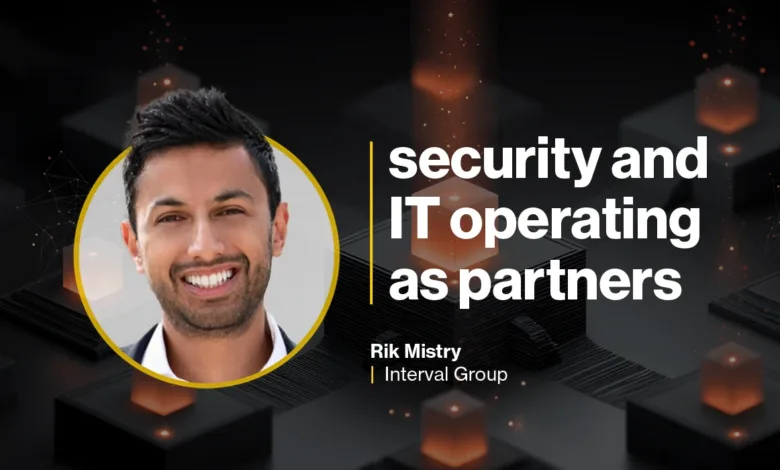
The relationship between CISOs and CIOs often looks better on paper than in practice. True strategic partnership happens when security is embedded from the outset, not added later for compliance. This means integrating security architects into product, project, and infrastructure teams while treating security KPIs, such as time to patch or zero-trust coverage, as shared metrics across both functions.
Bringing the CISO into planning early can transform security from a perceived obstacle into an innovation enabler. Transparent discussions between program and security teams not only accelerate internal approvals but can also influence vendors to implement product changes that meet stringent compliance requirements.
Infrastructure automation offers significant efficiency gains but can also amplify errors if implemented without careful consideration. Organizations should automate repeatable, low-risk activities like provisioning and compliance checks while preserving human validation for high-impact workflows such as production changes or incident response. Mature organizations combine automated enforcement with human review of exceptions, using automation to surface decisions faster rather than eliminating decision-making entirely.
An effective approach involves classifying each process by risk, recurrence, and reversibility. High-risk or difficult-to-reverse tasks should include human approval checkpoints, while low-risk, high-frequency tasks can move into fully automated workflows. This balanced approach delivers efficiency without compromising accountability.
When evaluating emerging technologies, distinguishing durable value from temporary hype requires examining three critical dimensions: business relevance, ecosystem maturity, and organizational readiness. Technologies with lasting impact typically enhance core business outcomes, integrate smoothly with existing processes, and match the organization’s adoption capabilities. Hyped solutions often excel in user experience but fall short on operational readiness or proven return.
It helps to consider whether a technology addresses a recurring pain point or merely introduces novelty. Organizational size and maturity also matter significantly, what works for a startup may be impractical for a global enterprise. Maintaining a degree of skepticism is wise, as most new technologies require several years of evolution before they become truly enterprise-ready.
(Source: HelpNet Security)