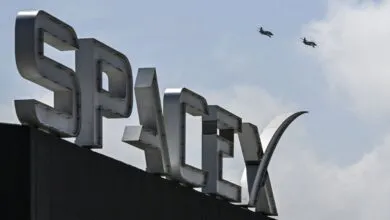
Danish Pension Fund Bars SpaceX IPO Over Governance
▼ Summary
– AkademikerPension, managing $25 billion, will not participate in SpaceX’s IPO or buy its stock, citing the company as “grossly overvalued” and having a “catastrophic governance structure.”
– The fund estimates SpaceX’s reasonable value at $1 trillion, about half the $1.8 trillion target, and will exclude the stock from its entire portfolio, including indexed products.
– Elon Musk holds roughly 85% voting power via dual-class shares, serving as CEO, CTO, and board chair, giving him control over board appointments and preventing his removal without consent.
– Large US pension funds managing over $1 trillion sent a joint letter calling SpaceX’s governance “extreme,” objecting to Musk’s veto power, mandatory arbitration, and Texas reincorporation rules.
– Despite a $75 billion IPO with 30% allocated to retail, institutional governance concerns may affect pricing or long-term ownership, as SpaceX trades at 96 times revenue and lost $4.94 billion last year.
Denmark’s AkademikerPension, a fund managing roughly $25 billion on behalf of academic professionals, has announced it will not participate in SpaceX’s initial public offering or purchase shares in any secondary-market transactions. Chief investment officer Anders Schelde labeled the company “grossly overvalued” and pointed to what he termed a “catastrophic governance structure” as the decisive factor behind the exclusion.
The fund estimates that SpaceX cannot realistically surpass a valuation of $1 trillion, approximately half the $1.8 trillion target the company is pursuing as marketing begins as soon as 4 June, with pricing potentially set by 11 June. AkademikerPension will also steer clear of indexed equity products that include SpaceX, ensuring the stock is excluded from its entire portfolio, not just the IPO.
The governance complaint
Schelde’s objections center on Elon Musk’s tight control over SpaceX. The company’s S-1 filing reveals that Musk holds roughly 85% of voting power through a dual-class share structure, where Class B shares carry ten votes each compared to one vote for the Class A shares offered to the public. Musk simultaneously serves as chief executive, chief technology officer, and board chair.
This concentration of power means public shareholders will have no meaningful ability to influence company decisions. Musk can appoint a majority of the board and cannot be removed as CEO without his own consent. After listing, SpaceX will claim controlled-company status, exempting it from Nasdaq rules requiring a majority of independent directors.
Schelde described the arrangement as “exceptionally poor performance on governance matters” and argued that investors are being asked to accept an “unprecedentedly low risk premium” for a firm with such deep management entrenchment.
Not alone in the concern
While AkademikerPension is a relatively modest player in global capital markets, its concerns resonate with much larger institutions. In May, the heads of the California Public Employees’ Retirement System, the New York City Retirement Systems, and the New York State Common Retirement Fund,which collectively manage more than $1 trillion,sent a joint letter to Musk, calling SpaceX’s governance “extreme.”
The letter characterized the IPO as featuring “the most management-favorable governance structure ever brought to the US public markets at this scale.” The pension fund leaders objected to Musk’s veto power over his own removal, the use of mandatory arbitration for shareholder claims, and the company’s reincorporation in Texas, which requires shareholders to hold up to 3% of outstanding stock to bring certain legal actions.
A pattern of activist divestment
AkademikerPension has a history of using its portfolio to make governance and political statements. Earlier this year, the fund sold its remaining 200 shares in Tesla, citing Musk’s role in what it described as destroying the brand and its value, along with concerns about worker treatment and board independence.
In January 2026, the fund dumped approximately $100 million in US Treasuries, with Schelde stating that the US government is “not a good credit” and that its long-term finances are unsustainable. The move came amid heightened tensions between Washington and Copenhagen over Greenland, though Schelde said the decision was not directly tied to the diplomatic rift.
What it means for the IPO
One pension fund with $25 billion in assets declining to participate will not materially affect a $75 billion capital raise. SpaceX has allocated an unusually large 30% of the offering to retail investors, and demand from individual buyers is expected to be substantial regardless of institutional governance objections.
The question is whether the concerns shared by AkademikerPension and the US pension fund coalition signal a broader pattern that could weigh on pricing or long-term institutional ownership. At $1.8 trillion, SpaceX would trade at roughly 96 times its 2025 revenue of $18.7 billion, a multiple that assumes years of hypergrowth from Starlink satellite internet and the xAI artificial intelligence division.
SpaceX lost $4.94 billion last year after absorbing xAI, and Musk’s track record of ambitious but capital-intensive programs means the burn rate is unlikely to slow soon. For investors who share AkademikerPension’s view that the company is worth half its asking price, the governance structure makes it impossible to push for changes from the inside. The only option is to stay out.
(Source: The Next Web)