Geely EX5: $15,300 Electric SUV Expands to 35 Markets
▼ Summary
– Geely has launched the EX5, a battery-electric SUV starting at roughly $15,300, featuring massaging seats, a premium sound system, and up to 610 km of range.
– The EX5 is already sold in 35 countries and is the most exported battery-electric A-class crossover from China.
– Its pricing significantly undercuts comparable European EVs, offering features typically found in models costing two to three times more.
– The vehicle’s low cost is enabled by Geely’s massive manufacturing scale and supply chain efficiency, which has made it a top-selling brand in China.
– Geely plans broader global expansion, including entering the US market with brands like Zeekr, potentially using local production to circumvent tariffs.
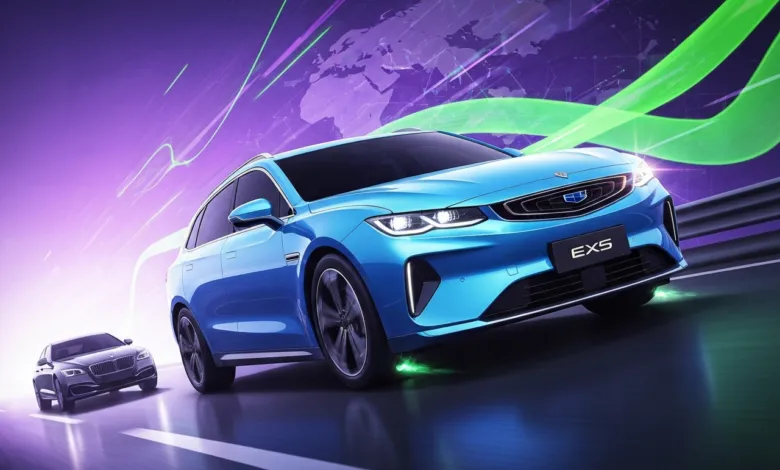
The global electric vehicle market is witnessing a seismic shift, and the Geely EX5 is a primary catalyst. This battery-electric SUV, starting at approximately $15,300, delivers a combination of price, range, and features that challenges the fundamental economics of the automotive industry. Already available in 35 countries, this model from the Chinese conglomerate that owns Volvo, Polestar, and Lotus offers up to 610 km of range, massaging seats, and a premium sound system for a sum that rivals the cost of a well-equipped supermini in Western markets.
For the starting price, buyers receive a vehicle with a 60.2 kWh lithium iron phosphate battery providing 530 kilometres of range on China’s CLTC cycle, powered by a 215 horsepower front-mounted motor. An extended-range version adds roughly $1,000 for a 68.4 kWh battery and the maximum 610 km range. While European WLTP ratings will be lower, real-world performance is still expected to comfortably surpass 400 kilometres per charge.
The interior quality is generating significant attention. Reviewers describe a cabin with materials and fit that defy the price tag. Higher trims come standard with a 1,000-watt sound system, and the top model features front seats with a sophisticated multi-layer cushion design and built-in massage functions. The driving experience is tuned for comfort, creating a relaxed atmosphere that makes the cost seem incongruous. Criticisms have focused on software localization for global markets, but the list of compromises for a vehicle at this price point remains notably short.
This aggressive pricing is a direct result of Geely’s manufacturing scale and vertically integrated supply chain. The company ended 2025 as China’s second-largest auto brand and surged to first place in January 2026, with monthly wholesale deliveries exceeding 165,000 units. Its brand portfolio is strategically comprehensive: the Galaxy line covers mainstream EVs, Zeekr targets premium buyers, Lynk and Co occupies the middle ground, while Volvo, Polestar, and Lotus serve luxury and performance segments. The EX5 sits as the volume leader for the core Geely brand, engineered to drive international growth.
Geely’s technical prowess extends beyond this single model. In April 2026, the company unveiled an i-HEV hybrid system boasting 48.4% thermal efficiency, among the highest figures in mass production. This capability to innovate across both electric and hybrid platforms provides a strategic flexibility that pure-EV startups cannot match.
For European automakers, the EX5 embodies their long-forecasted competitive threat. It is now on sale in markets like Belgium and the Netherlands. Even with the EU’s 20% tariff on Chinese EVs, the EX5 would be priced thousands below a Volkswagen ID.3 or Renault Megane E-Tech. The structural cost advantages from China’s integrated battery supply chains and vast production scale cannot be negated by tariffs alone.
Geely’s ambitions are global. The company plans to introduce its Zeekr and Lynk and Co brands to the United States within the next few years, with potential production at Volvo’s South Carolina plant to circumvent prohibitive tariffs. For American consumers, this could eventually replicate the EX5’s value proposition: more vehicle for less money, backed by a corporation producing millions of cars annually.
The EX5 represents the original promise of the electric revolution, an affordable EV without major compromises. That this vision is being delivered by a Chinese manufacturer, rather than legacy Western automakers with their costly electrification programs, is a defining industry moment. When a vehicle costing less than a set of options on a European sedan offers a 600 km range and massaging seats, the central question shifts. The issue is no longer if such cars will arrive, but how the rest of the industry will sustain its margins when they do.
(Source: The Next Web)