Google’s ‘Aluminum OS’ Brings Android to PCs: What We Know
▼ Summary
– Google is unifying ChromeOS and Android into a single desktop platform called ‘Aluminium OS’ to better compete with Windows and macOS in the PC market.
– The new Aluminium OS will be built with AI at its core, integrating Google’s Gemini models and AI stack to enhance PC functionality.
– Google plans for Aluminium OS to target a wide range of devices and price tiers, including laptops, tablets, and premium hardware, not just budget machines.
– The company intends to eventually replace ChromeOS with Aluminium OS, managing a transition that includes legacy support and optional migration for existing devices.
– Aluminium OS is confirmed to launch in 2026, with development based on Android and testing underway on various hardware platforms.
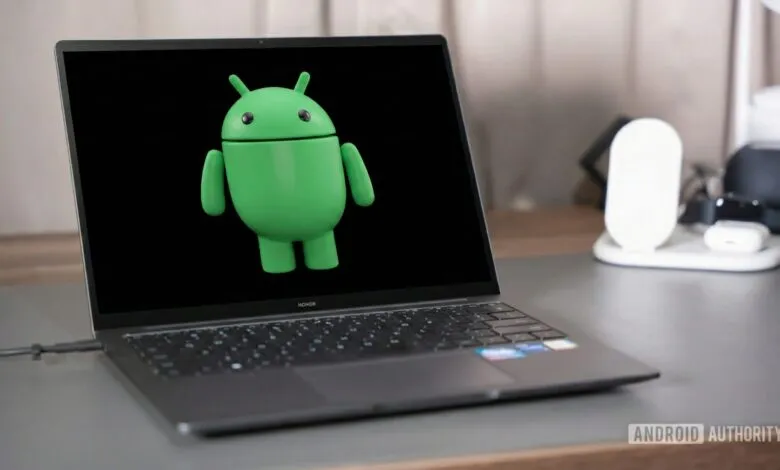
Google is taking a major step to unify its operating systems by developing a new platform, codenamed ‘Aluminium OS,’ which merges Android with ChromeOS for personal computers. This initiative aims to create a stronger competitor to Windows and macOS, leveraging Android’s flexibility and Google’s extensive AI capabilities to deliver a cohesive experience across laptops, tablets, and other desktop form factors.
The journey toward Android on PCs began gaining attention about a year ago, when exclusive reports indicated Google’s plan to rally behind Android as its primary desktop operating system. The goal is to develop products that can effectively rival the iPad while streamlining the company’s development efforts. By July, a Google executive publicly confirmed the intention to merge ChromeOS and Android. Then, at Qualcomm’s Snapdragon Summit in September, Google officially announced its collaboration with Qualcomm to bring Android to the PC market, emphasizing a platform that converges mobile and desktop computing with a strong focus on artificial intelligence.
A recent poll asked users if they would miss ChromeOS if it were replaced by Aluminium OS. The results showed 11% of respondents use ChromeOS almost daily and would miss it, while 3% expressed reluctance to learn another Google operating system. On the other hand, 35% indicated they wouldn’t mind the change if Aluminium OS includes all ChromeOS features and more, 15% called ChromeOS a failure, and 33% said it doesn’t affect them since they don’t use it. The remaining 3% described having more complicated feelings about the transition.
While the partnership with Qualcomm and the official announcement clarify Google’s direction, many questions remain unanswered. Will the ChromeOS brand be retired? Can existing Chromebooks be upgraded to the new system, or will they become obsolete? Is this operating system intended only for budget devices, or will it also target premium PCs? What will the user interface look like, and what innovative features can users anticipate?
These pressing questions will likely persist as development continues. Although a full picture may not emerge until closer to the launch date, insights from job listings and bug reports have started to reveal early details.
Over the weekend, a tipster on Telegram shared a link to a Google job posting for a ‘Senior Product Manager, Android, Laptop and Tablets.’ The listing explicitly mentions working on “a new Aluminium, Android-based, operating system,” confirming that Aluminium is indeed the codename for the unified platform. The name appears to be a playful reference to its origins: similar to Chromium, the open-source version of ChromeOS, Aluminium is a metal name ending in ‘-ium.’ The British spelling, emphasizing the ‘Al’ prefix, is thought to acknowledge Android as the foundational element of the project.
Google has stated that Aluminium OS, much like Android XR, is “built with artificial intelligence at the core.” This points to deep integration with Gemini, Google’s AI chatbot and large language model. At the Snapdragon Summit, Rick Osterloh, Google’s Senior Vice President of Devices and Services, elaborated on the company’s strategy to bring its full AI stack to PCs. He highlighted plans to incorporate Gemini models, the Google Assistant, and the entire application ecosystem into the PC domain, underscoring Android’s expanding role across all computing categories.
Although the specific Gemini-powered features for Android PCs have yet to be demonstrated, expectations are high for the OS to fully utilize hardware capabilities. On premium smartphones, Gemini already enables a range of on-device AI functions that demand substantial memory and processing power from the CPU, GPU, and NPU. There was initial concern that Google might restrict the new OS to the budget segment where Chromebooks have traditionally performed well, leaving the high-end market to Microsoft and Apple. However, the job listing dispels these fears.
The Senior Product Manager role involves “driving the roadmap and curating a portfolio of ChromeOS and Aluminium Operating System (ALOS) Commercial devices across all form factors (e.g. laptops, detachables, tablets, and boxes) and tiers (e.g., Chromebook, Chromebook Plus, AL Entry, AL Mass Premium, and AL Premium) that meets the needs of users and the business.”
This confirms that Android will not be limited to laptops; the roadmap explicitly includes detachables, tablets, and ‘boxes’, likely mini-PCs similar to Chromebox or Mac Mini. Moreover, the tiered structure, which lists ‘AL Mass Premium’ and ‘AL Premium’ alongside ‘AL Entry,’ signals Google’s intention to compete across all price segments. While exact pricing is still unknown, this strategy aligns with the recent Chromebook Plus initiative, which already hinted at a broader market approach.
The job listing also sheds light on the future of ChromeOS. It notes that the manager will help “drive ChromeOS and Aluminium (e.g., Android) platforms and devices,” developing a roadmap and product portfolio for both. This suggests the two platforms will coexist temporarily. However, the role also includes crafting a strategy to transition “Google from ChromeOS to Aluminium with business continuity in the future,” confirming that Google ultimately plans to replace ChromeOS entirely. This transition must be handled delicately to avoid disrupting enterprise customers.
A multi-pronged approach is expected for the shift:
- Legacy Support: Existing ChromeOS devices that cannot be upgraded to Aluminium OS will likely continue receiving updates until they reach their end-of-life. Google will need to maintain the legacy ChromiumOS codebase for several more years.
- Optional Migration: Instead of an enforced immediate switch, Google may offer an optional upgrade path for compatible hardware. The company is currently testing Aluminium OS on development boards with MediaTek Kompanio 520 and 12th Gen Intel Alder Lake processors, suggesting that Chromebooks with these chips could be eligible for updates. Migrating an operating system on live devices is a significant technical challenge that will require careful execution.
- New Hardware: Of course, new PCs will also launch with Aluminium OS pre-installed.
Even if Google replaces the entire foundation of ChromeOS with Android, the company might be hesitant to abandon the ChromeOS name. While it doesn’t have the market share of Windows or macOS, the ChromeOS brand is well-established, especially in education and enterprise. Although the job listing doesn’t confirm the final name, bug reports hint that Google could retain the branding. Engineers have referred to the current platform as “ChromeOS Classic” and “non-Aluminium ChromeOS,” implying the new Android-based version might simply take over the “ChromeOS” name.
Alternatively, Google might use “Android Desktop” to align with its renewed emphasis on the Android brand. However, “Android Desktop” could just be an internal term for the form factor. Since these references have only appeared in bug reports, the final marketing name remains uncertain.
Development is actively underway, with bug reports confirming that Google is testing new builds of Android 16 on development hardware. The company has stated the project will launch in 2026, though it’s unclear whether this will occur in the first or second half of the year. Given this timeline, the initial public release will likely be based on Android 17, scheduled for next year. Ongoing monitoring will uncover more details as the official debut approaches.
(Source: Android Authority)