Viture’s New AI Glasses: The Stealth AR Startup’s Next Move

▼ Summary
– Vonderful Inc. is preparing to launch AI-powered smart glasses around CES, positioning itself as new competition for Meta in the AR space.
– Vonder appears to be a stealth project of Viture, an AR startup with Chinese roots that has been building visor-style glasses since 2021.
– Viture’s current glasses use bulky “birdbath” optics and require connection to phones or computers, limiting their AI functionality and mobility.
– Vonder glasses may feature more advanced display technology than Viture’s current products and appear to be standalone devices using Bluetooth.
– Viture has retail partnerships and recently raised $100 million for expansion, potentially helping Vonder compete despite Meta’s dominance.
A new competitor is preparing to challenge Meta in the smart glasses arena. Vonderful Inc., operating under the Vonder brand, is developing what it calls “the most advanced smart glasses ever created.” These AI-powered glasses are expected to launch around the time of the Consumer Electronics Show, based on a prematurely published staging website and a recent FCC filing. This move sets the stage for a direct confrontation with established players.
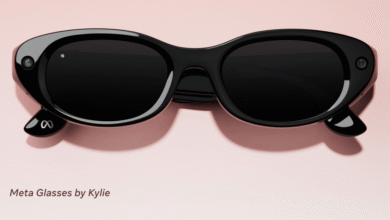
The ambitious claim is notable, especially since Meta recently released its highly polished Ray-Ban Display glasses. However, Vonderful is not a complete newcomer. Evidence suggests it is a stealth project from Viture, an augmented reality startup that has been manufacturing glasses since 2021. This connection was uncovered through FCC documentation submitted by a Viture employee listed as a Vonder project manager. Further corroboration comes from a Vonder landing page, complete with a countdown timer pointing to a 2026 launch, which is hosted on Viture’s own servers. The Vonder trademark was also filed by Eden Future HK Limited, a company identified in Chinese media reports as the owner of Viture.
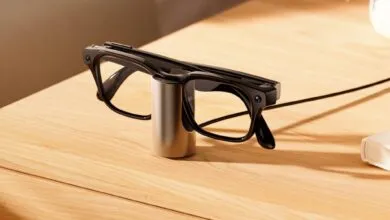
Viture specializes in producing visor-style glasses that connect to a phone or computer for processing power. These devices essentially function as secondary displays with an AR overlay. They typically employ “birdbath” optics, a system that uses mirrors to superimpose digital images onto the user’s view of the real world. This technology is generally considered bulkier and less sophisticated than the waveguide displays found in products like Meta’s Ray-Ban glasses. While useful for providing a portable screen for a phone, laptop, or gaming console, these glasses are not designed for all-day, on-the-go wear, often requiring a tethering cable. Their AI capabilities are also inherently limited by the connected smartphone’s processing power.
The company launched its first visor device in 2022 and expanded its lineup with several new models this past summer. To address the tethering issue, Viture sells an optional neckband accessory. This add-on contains the necessary computing hardware to run the glasses independently of a phone and includes integrated cameras for basic gesture control.
Specific technical details for the upcoming Vonder glasses remain scarce, as the FCC filing was heavily redacted. However, an informed source indicates the new device may abandon birdbath optics in favor of a more advanced display technology. The filing confirms the use of Bluetooth, pointing towards a standalone device that doesn’t need to plug into a phone. The absence of Wi-Fi suggests the initial model may not include a camera, as Bluetooth lacks the bandwidth for real-time video streaming or transferring large photo files. The same source hinted that a camera-equipped version could be a future possibility.
Viture is part of a broader trend where AR startups are evolving from basic visor-style devices towards fully integrated, all-in-one smart glasses. Its competitor, Rokid, recently completed a successful Kickstarter for its own smart glasses featuring monochrome displays and also unveiled a display-less model that more closely resembles Meta’s popular design. Meanwhile, TCL’s spin-off, RayNeo, launched a pair of standalone AR glasses in 2024 that quickly sold out, signaling strong market interest and the potential for an updated version soon.
Competing with a tech behemoth like Meta, which has invested tens of billions into AR and VR, is a formidable challenge. Yet, the product category is still in its early stages, leaving room for innovation and strategic partnerships. For example, Viture rival Xreal has already partnered with Google to develop the first smart glasses powered by Android XR.
Viture possesses several advantages that could help its Vonder brand gain a foothold. The company has an existing retail partnership with Best Buy, with its products available in 200 stores. Furthermore, Viture recently secured a substantial $100 million in financing. This capital is explicitly earmarked for retail expansion and funding “next-Generation Innovation,” with a focus on advancing both hardware and software ecosystems through AI-powered extended reality.
(Source: The Verge)