Extropic’s Plan to Revolutionize Data Centers
▼ Summary
– Extropic has developed its first working chip using probabilistic bits (p-bits) and demonstrated that advanced versions will handle AI and scientific tasks.
– The chips, called thermodynamic sampling units (TSUs), differ fundamentally from CPUs and GPUs and promise thousands of times greater energy efficiency when scaled.
– Extropic’s hardware uses silicon to harness thermodynamic electron fluctuations for modeling probabilities in systems like weather or generative AI models.
– The initial chip, XTR-0, has been shared with select partners, including AI labs and weather modeling startups, for testing and validation.
– The company released TRHML software to simulate its chip on GPUs, and early testing confirms the p-bits function as intended, offering a more efficient alternative to matrix multiplication.
A new startup named Extropic has unveiled its first functional hardware, marking a significant step toward a novel form of computing that could transform data centers. The company’s unique chips, known as thermodynamic sampling units (TSUs), operate on probabilistic bits rather than the binary logic of traditional CPUs and GPUs. This breakthrough promises to deliver thousands of times greater energy efficiency when scaled, offering a compelling alternative for AI and scientific workloads that currently consume enormous power.
Extropic’s processors leverage thermodynamic electron fluctuations within silicon components to model probabilities in complex systems. This allows them to simulate everything from weather patterns to generative AI models that produce images, text, or video. By sidestepping conventional matrix multiplication, the technology introduces a fundamentally different computational primitive, one that could reshape how large-scale AI systems are built and operated.
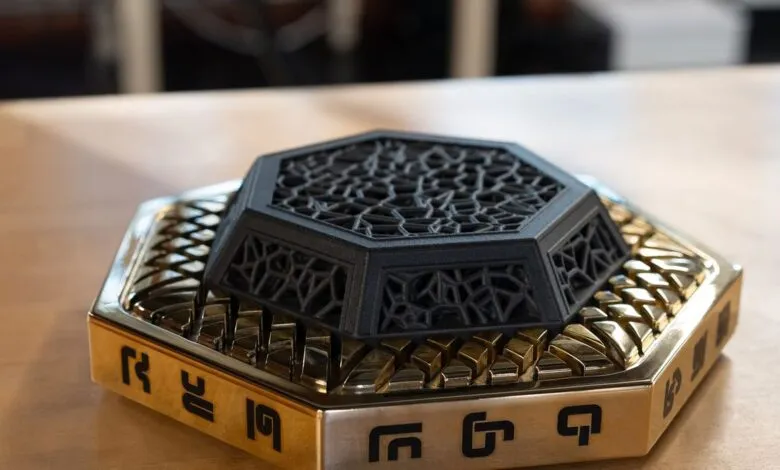
The initial working chip, called XTR-0, has been distributed to a select group of partners. These include frontier AI labs, weather modeling startups, and government representatives. Extropic has chosen not to disclose specific names, but confirmed that early testing is underway. CEO Guillaume Verdon, previously known for his provocative online presence as “Based Beff Jezos” and his association with the effective accelerationism movement, stated that this rollout lets developers “kick the tires” and explore the hardware’s capabilities.
One early tester is Johan Mathe, CEO of Atmo, a startup specializing in high-resolution weather forecasting for clients such as the Department of Defense. Mathe reports that Extropic’s chips enable far more efficient calculation of probabilistic weather outcomes compared to existing methods. He has experimented with both the physical hardware and Extropic’s simulation software, TRHML, which mimics chip behavior on standard GPUs. Mathe confirmed that the probabilistic bits, or p-bits, performed as expected in initial runs.
The XTR-0 system integrates a field programmable gate array (FPGA) with two of Extropic’s first probabilistic chips, labeled X-0. Each X-0 chip contains a small number of qubits. Unlike conventional digital bits that represent only 1 or 0, p-bits model uncertainty directly, making them especially suited for probabilistic machine learning and simulation tasks. Although the current hardware is limited in scale, it successfully demonstrates the viability of Extropic’s approach.
Trever McCourt, Extropic’s Chief Technology Officer, emphasized that the company’s machine learning primitive is dramatically more efficient than matrix multiplication. The challenge now, he notes, is scaling the system to support applications on the level of ChatGPT or Midjourney. With AI firms investing heavily in data center infrastructure, Extropic’s energy-efficient architecture could soon offer a powerful and cost-effective alternative.
(Source: Wired)