Waymo Self-Driving Cars Sometimes Used by Police
▼ Summary
– A Waymo robotaxi became immobilized during a California freeway fire last August, requiring a highway patrol officer to manually drive it away after remote assistance failed.
– Waymo has repeatedly relied on first responders to move its vehicles in emergencies, with at least six documented instances including at active crime scenes.
– The company employs a roadside assistance team to handle on-scene issues, but details on its size and operations are not publicly disclosed.
– San Francisco officials have criticized Waymo for making first responders a “default roadside assistance,” arguing this is not sustainable during city emergencies.
– Waymo’s vehicles also receive guidance from remote assistance workers, but errors have occurred, such as one instance where a vehicle incorrectly proceeded past a stopped school bus.
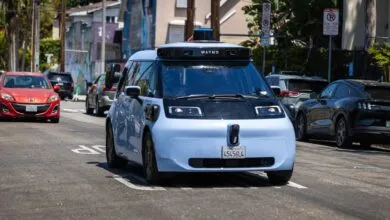
The rapid expansion of autonomous vehicle services is encountering real-world challenges, particularly when robotaxis encounter emergency scenarios. A revealing incident last August highlights a growing reliance on public safety resources. When a grass fire shut down part of California’s I-280 near Redwood City, traffic was diverted the wrong way on the freeway. A Waymo self-driving car attempted to navigate the chaos by using the shoulder but ultimately stopped, blocking the improvised exit route. Despite efforts from the company’s remote assistance team, the vehicle would not move. Waymo’s solution was to call 911, requesting that a California Highway Patrol officer physically drive the immobilized car and its passenger to safety, which the officer did roughly thirty minutes later.
This event was not a unique occurrence. An investigation has identified at least six instances where first responders have had to take manual control of Waymo vehicles during emergencies to clear them from roadways. In one case, an Austin police officer moved a robotaxi to make way for an ambulance responding to a mass shooting. This growing trend has sparked significant criticism from city officials who argue that public safety officers are being transformed into a default roadside assistance service, diverting them from their primary duties.
The issue came to a head during a recent San Francisco hearing concerning robotaxi behavior during a major December power outage. City emergency management officials expressed frustration that stalled autonomous vehicles were impeding responders. Notably, Waymo representatives did not detail their own roadside assistance team during the lengthy hearing, focusing instead on their remote support systems. The company later stated that its team handled dozens of vehicles during the blackout but acknowledged a handful required first responder intervention.
Waymo’s operational model involves several human-supported layers. Remote assistance workers, some based in the Philippines, provide advisory guidance to vehicles in complex situations but do not drive them. A separate U.S.-based event response team manages collisions and coordinates with emergency services. Finally, the on-the-ground roadside assistance specialists are tasked with physically moving vehicles. The company has been vague about the size, staffing, and scalability of this team as it plans to launch in approximately 20 new cities this year, raising questions about its preparedness.
Communication breakdowns have also occurred. In the Redwood City fire incident, CHP dispatchers were initially under the impression that the passenger was being asked to drive the car away, a request Waymo states it never makes. It took a second 911 call to clarify that an officer was needed.
Despite company training for over 30,000 first responders on how to interact with its vehicles, officials are demanding more accountability. At the San Francisco hearing, supervisors pressed for concrete plans to reduce dependence on police and firefighters. One proposed idea involved leveraging gig economy partnerships, similar to an existing program with DoorDash, for vehicle recovery, though how this differs from current roadside assistance remains unclear. The core demand from city leaders is straightforward: taxpayer-funded emergency personnel should not serve as a primary robotaxi retrieval service. As one official starkly put it, “Our first responders should not be AAA.”
(Source: TechCrunch)