BYD, Geely to Use Nvidia Robotaxi Platform
▼ Summary
– Nvidia has expanded its robotaxi program by adding Chinese automakers BYD and Geely, along with Isuzu and Nissan, to use its Drive Hyperion platform for developing Level 4 autonomous vehicles.
– This partnership occurs amid US-China trade tensions and could accelerate China’s autonomous vehicle development, potentially helping it compete with or overtake the US in the robotaxi field.
– Nvidia’s automotive business is currently a small fraction of its overall revenue, despite the company supplying major automakers and seeking to raise its profile as a self-driving leader.
– The company is also collaborating with ride-hailing services, including Lyft and Uber, to develop and deploy robotaxi fleets globally using Nvidia’s technology.
– To address safety concerns in autonomous driving, Nvidia introduced Halos OS, a safety system designed to intervene if AI models are about to make unsafe decisions.
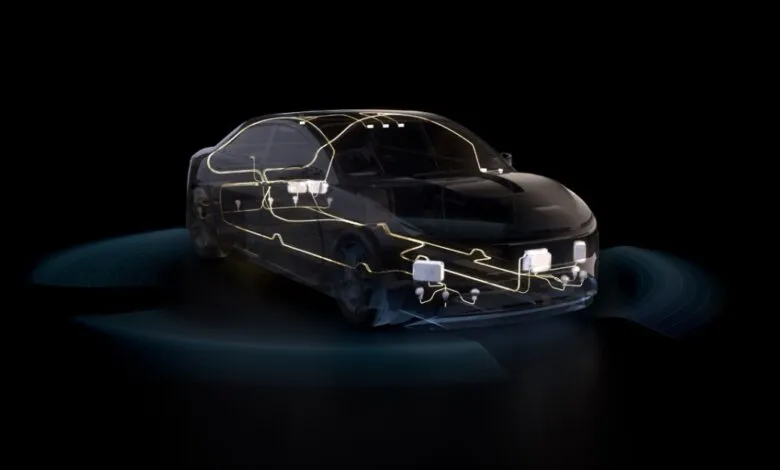
Nvidia has significantly expanded its influence in the autonomous vehicle sector by securing major partnerships with Chinese automotive giants BYD and Geely. The chipmaker announced at its GTC conference that these companies will adopt its comprehensive Drive Hyperion platform. This system integrates the necessary hardware, sensors, and software for developing Level 4 self-driving vehicles, marking a strategic move to cement Nvidia’s role in the global race for robotaxi dominance.
BYD, which already incorporates Nvidia technology in its current vehicles, will now utilize the Hyperion platform to engineer its next-generation autonomous models. Geely plans to implement Nvidia’s powerful Thor system-on-a-chip in its Zeekr brand vehicles. Notably, Geely also supplies Zeekr vehicles to Waymo for its U.S. robotaxi operations, creating a interconnected web of partnerships where Waymo itself uses Nvidia’s technology both in its vehicles and cloud infrastructure.
This collaboration arrives amidst persistent trade tensions between the U.S. and China, particularly concerning advanced semiconductor technology. While China holds a substantial lead in electric vehicle manufacturing, the competition in autonomous driving is far more balanced. Companies like Baidu already operate commercial robotaxis across numerous Chinese cities. Nvidia’s deal with BYD and Geely could dramatically speed up their development timelines, potentially enhancing China’s position to challenge U.S. leadership in this critical technology, a concern that has spurred discussions in Congress about passing autonomous vehicle legislation.
For Nvidia, the automotive segment remains a relatively small part of its enormous business, which is overwhelmingly driven by AI and data center revenue. However, the company is aggressively building its profile as an autonomous driving leader. Its partnerships extend beyond China, including agreements with Nissan, Isuzu, and the software company Tier IV to develop Level 4 commercial buses.
The ride-hailing industry is also a key battleground. Lyft has committed to using the Nvidia Hyperion platform to develop its own robotaxis, aiming to enhance its machine learning capabilities. Simultaneously, Nvidia maintains a separate, expansive partnership with Uber. Together, they aim to deploy a global network of 100,000 robotaxis, beginning in Los Angeles and San Francisco in early 2027, with plans to expand to 28 markets across four continents by 2028.
Nvidia executives argue that the company’s progress stems not from accumulating real-world driving miles, like Waymo or Tesla, but from its advanced virtual simulation and testing tools. They highlight their open-source portfolio of AI models, known as Alpamayo, alongside synthetic data generation capabilities. According to Nvidia, these technologies enable rapid development and validation of autonomous systems.
As robotaxis become more common, public safety concerns are intensifying. Incidents involving vehicles from Tesla and occasional operational issues with Waymo cars have kept the spotlight on reliability. In response, Nvidia introduced a new product called Halos OS, described as a “safety guardrail” for autonomous systems. This software is designed to monitor AI decision-making and intervene to prevent unsafe actions, providing an additional layer of security for its partners’ Level 4 vehicles.
Nvidia’s strategy appears to be one of pervasive industry integration. Company leadership suggests that nearly every major player developing Level 4 autonomy is now utilizing their technology in some capacity, from Waymo and Zoox to numerous Chinese firms. By providing the foundational chips and software stack, Nvidia is positioning itself as the indispensable engine powering the future of self-driving transportation.
(Source: The Verge)