AMD: Agent Computers Are the Next Evolution of AI PCs
▼ Summary
– The Radeon AI Pro R9700 is a distinct, lower-cost tier that lacks key Radeon Pro features like dedicated Pro drivers and hardware ECC, instead offering software-driven, Linux-only ECC.
– In contrast, the higher-end W7900 workstation card provides hardware-level ECC with full Windows support and carries a significantly higher MSRP.
– For Windows users, the R9700 is functionally similar to a well-binned RX 9070 XT with 32GB VRAM, but its value lies in offering more VRAM without the premium cost of NVIDIA alternatives.
– The R9700 targets the prosumer/enthusiast market, competing on price and VRAM capacity rather than professional workstation features.
– Recent changes suggest AMD may have discontinued the quarterly Pro driver branches for consumer RDNA2/3 GPUs, making official support unclear.
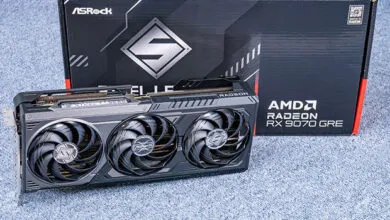
For professionals and enthusiasts navigating the complex landscape of AI-ready graphics hardware, understanding the nuanced differences between product tiers is crucial. The recent introduction of the Radeon AI Pro R9700 represents a distinct strategic move by AMD, carving out a new space between traditional consumer and professional-grade cards. This model is engineered specifically for the burgeoning prosumer market, offering substantial VRAM for demanding compute tasks without the full suite of features, or the associated price tag, of a true workstation card like the W7900.
A key distinction lies in the driver support and error-correcting code (ECC) memory implementation. The high-end W7900 workstation GPU benefits from dedicated “Pro Edition” drivers and hardware-level ECC memory, which is fully supported on Windows systems. In contrast, the Radeon AI Pro R9700 utilizes software-driven ECC that is currently functional only within Linux environments. This fundamental difference in architecture and support underscores the R9700’s positioning as a tool for development and specialized workloads rather than mission-critical, fault-tolerant professional applications.
The pricing strategy further clarifies this segmentation. With launch prices around $1,300, the R9700 sits significantly below the W7900’s original $4,000 MSRP, making high-capacity VRAM more accessible. For Windows users, the card’s functional profile may closely resemble a well-binned Radeon RX 9070 XT with 32GB of memory, providing a compelling alternative for those seeking to avoid what is often termed the “nVidia tax” in the competitive GPU market.
The value proposition of the R9700 grows as AMD enhances its out-of-the-box AI software features. The more robust and user-friendly the AI toolset becomes, the more attractive this card appears against similarly priced offerings from competitors. Its success hinges on delivering a streamlined experience for AI development and content creation workflows that demand large memory buffers.
Historically, AMD offered limited quarterly driver branches for consumer models through its auto-detect tool, providing a taste of professional stability. Recent observations suggest these optional Pro driver branches may no longer be readily available for newer architectures, with download pages sometimes hosting outdated versions. This shift appears related to broader driver reorganization efforts within the company. Users interested in the latest possible stable branches for specific workloads may need to inquire directly with AMD support to obtain recent builds that are not publicly listed.
(Source: TechPowerUp)