AI Rivals Decode Ancient Roman Board Game’s Secrets
▼ Summary
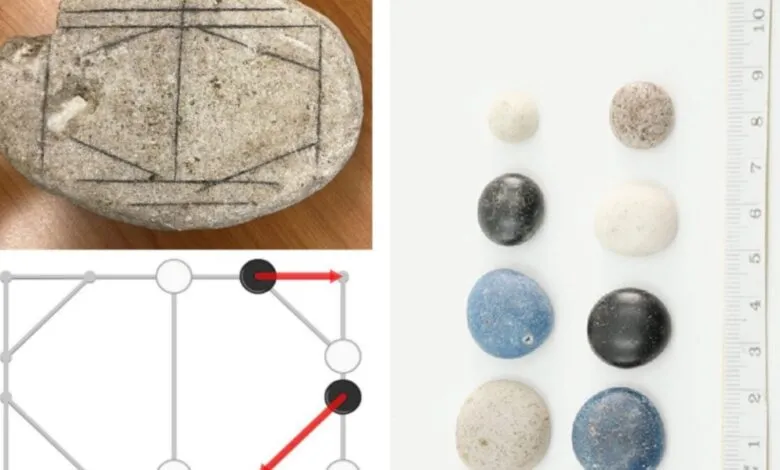
– Researchers used AI to analyze a mysterious stone artifact from a Roman town in the Netherlands, concluding it was likely an ancient game board based on its geometric pattern and surface wear.
– The study marks the first time AI-driven simulated play has been combined with archaeological methods to identify an ancient board game and its potential rules.
– The AI models tested known European games to find one whose rules would produce the specific wear pattern observed on the artifact’s surface.
– The analysis matched the artifact with “blocking games,” where the objective is to obstruct an opponent’s movement, suggesting these games were played centuries earlier than previously documented.
– This new AI method helps archaeologists identify unusual or rarely played ancient games that don’t match known geometric patterns from texts or art.
The fascinating intersection of artificial intelligence and archaeology has unlocked new secrets from a mysterious stone artifact, revealing it to be a rare ancient Roman board game. Researchers have successfully employed AI-driven simulations to not only confirm the object’s purpose but also to reconstruct its probable rules, marking a significant advancement in how we understand past cultures through their leisure activities.
Discovered in Coriovallum, a Roman settlement located in what is now the Netherlands, the oval stone features a unique geometric pattern on one face. To the untrained eye, it might seem unremarkable, but experts noticed telltale signs of human interaction. The surface showed specific patterns of wear and abrasion, consistent with game pieces being slid across it repeatedly over time. This physical evidence strongly suggested the stone was used for play, but the particular design did not match any game previously documented by historians.
Faced with this puzzle, archaeologist Walter Crist and his team turned to artificial intelligence for answers. They programmed two AI systems to simulate thousands of matches using rules from known ancient European games, such as Haretavl from Scandinavia and Italy’s Gioco dell’orso. The goal was to see which set of rules would produce a pattern of virtual “wear” on a digital model that mirrored the actual damage found on the ancient stone.
This innovative method proved highly successful. The simulations pointed decisively toward a category known as blocking games. In these games, the primary objective is to obstruct your opponent’s pieces, preventing them from moving, a strategic style familiar to many modern players. The AI models demonstrated that repeated play under such rules would naturally create the uneven abrasion observed on the artifact, effectively confirming its identity as a game board.
This research represents the first time AI-simulated gameplay has been combined with traditional archaeological analysis to identify an ancient board game. Previously, identification relied heavily on comparing geometric patterns to those of known games referenced in texts or artwork. This new approach provides a powerful tool for recognizing games that were unusual or infrequently played, offering a much deeper window into the social and recreational lives of past societies.
An intriguing implication of the study is the potential rewriting of a small piece of gaming history. Before this discovery, evidence for blocking games in Europe only dated back to the Middle Ages. The Roman-era stone suggests these strategic contests were enjoyed centuries earlier than historians had believed, highlighting a long and sophisticated tradition of board gaming. While the exact name of the game and the full details of its rules may remain lost, we now have a compelling glimpse into how ancient players might have strategized, competed, and perhaps even quarreled over this stone board.
(Source: Gizmodo)