Google’s Aluminium OS Leaked in First-Ever Video
▼ Summary
– Leaked images from a Google bug report reveal Aluminium OS, a new operating system designed to replace ChromeOS by merging Android and ChromeOS features.
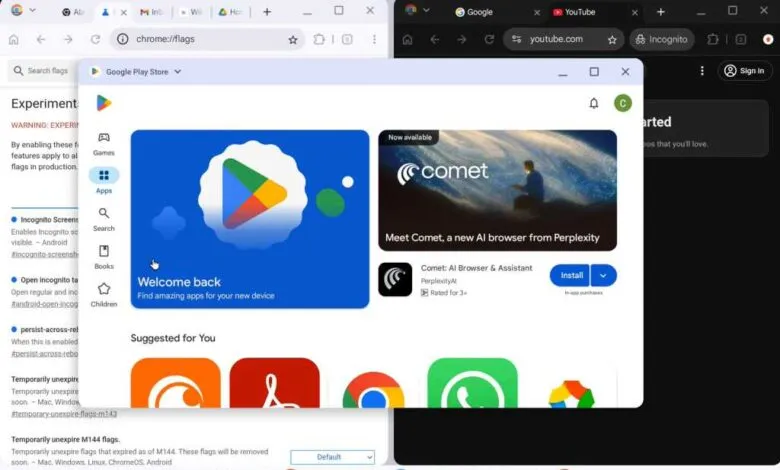
– The interface, shown on an HP Chromebook, resembles Android 16’s desktop mode and features a taskbar, split-screen functionality, and the Google Play Store.
– A core feature is the integrated Gemini AI assistant, positioned as a central, pre-installed application within the new OS.
– Aluminium OS is designed for broader compatibility, aiming to run on devices like tablets and smartwatches beyond just Chromebooks.
– There is no official launch date, and Google plans to support ChromeOS for some time even after Aluminium OS is eventually released.
A first-ever video leak has provided a fascinating early look at Google’s upcoming Aluminium operating system, the long-anticipated successor designed to eventually replace ChromeOS. The footage, originating from a Google bug report before being swiftly removed, showcases the new OS running on an HP Elite Dragonfly Chromebook. This glimpse reveals a platform that strategically merges the desktop-oriented interface of ChromeOS with the versatile application ecosystem of Android, signaling a major shift in Google’s software strategy aimed at creating a unified experience across diverse devices.
The leaked images and video depict a desktop-like environment with a familiar taskbar and start screen, drawing clear inspiration from Android’s desktop mode. A brief view of the Google Play Store confirms deep integration with the Android app library. Notably, the footage highlights several core functionalities, including smooth split-screen multitasking and a notably streamlined in-app update process. In the video, the Chrome browser updates seamlessly without requiring the user to close or restart the application, a tangible improvement over the current ChromeOS behavior.
A central feature prominently displayed is the integrated Gemini AI assistant, listed at the top of the pre-installed applications. This positioning underscores Google’s commitment to embedding advanced AI directly into the operating system’s foundation. While current Chromebooks are already optimized for AI tasks, Aluminium OS is engineered with a broader hardware vision. The system is reportedly being developed to run on a wider array of devices beyond traditional laptops, including tablets and even smartwatches from Google and other manufacturers. This cross-platform ambition suggests Google is working towards a more cohesive ecosystem where a single OS can adapt to multiple form factors.
The strategic move to consolidate ChromeOS and Android into Aluminium OS represents a significant evolution. ChromeOS, known for its cloud-centric, lightweight design, will merge with the robust app and service framework of Android. The goal appears to be creating a single, adaptable operating system that can power everything from a smartwatch to a desktop workstation, simplifying development and creating a more consistent user experience across the Google product landscape.
Regarding its release, Aluminium OS is positioned as a long-term replacement for ChromeOS, though no official launch date or detailed rollout timeline has been announced. Google has indicated that support for existing ChromeOS devices will continue for the foreseeable future, even after the new OS begins its deployment. This phased approach suggests a gradual transition, allowing developers, manufacturers, and users time to adapt to the unified platform. The leak, while unofficial, offers a compelling preview of Google’s future direction as it seeks to streamline its software offerings and compete more effectively in a multi-device world.
(Source: PC World)