3D-Scanned Insoles: Placebo Tech or Real Innovation?
▼ Summary
– Groov is a company that uses an iPhone’s Face ID camera and an AI algorithm to create custom 3D-printed shoe inserts, offering a personalized alternative to standard insoles.
– The product aims to provide a more accessible and affordable option than professional podiatrist orthotics, costing $150 and not requiring a prescription.
– The author’s personal test of the Groov insoles found they provided better arch support and quality than generic inserts, but the overall improvement over cheaper options was marginal and inconclusive.
– The article identifies Groov as an example of “placebo tech” in the wellness industry, where marketing and perceived benefits can influence a user’s experience more than definitive, measurable results.
– The broader critique is that the wellness technology market is a “wild west” where harmless but potentially overhyped products coexist with genuinely harmful ones, making it difficult for consumers to distinguish between them.
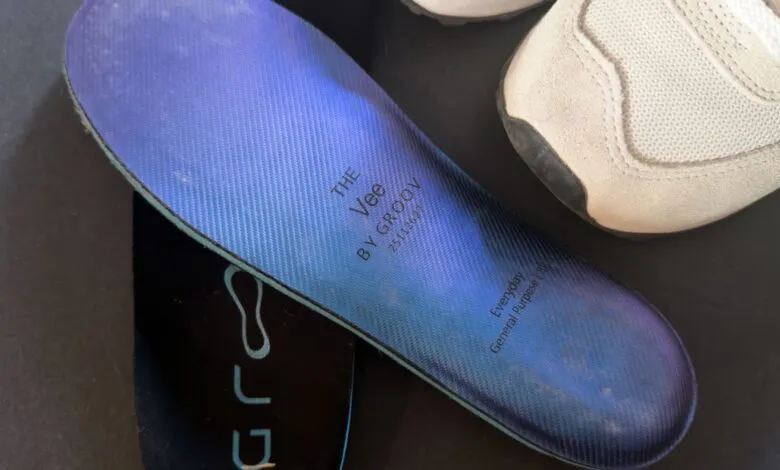
My feet demand attention. That’s why, last December, I was in an office with my leg propped on a chair while a startup CEO used an iPhone to meticulously scan my bare feet from every angle. I wasn’t there for an unusual photoshoot; I was testing Groov, a company that uses the iPhone’s Face ID camera and an AI algorithm to create custom, 3D-printed shoe inserts. The promise is personalization. Most people buy insoles because even comfortable shoes often don’t fit perfectly, a problem magnified by conditions like flat feet or plantar fasciitis. Groov’s approach is intriguing because it leverages a device many already own to build a detailed 3D model of your foot. An AI then designs the optimal support surface, mimicking what a podiatrist might do but without the messy plaster molds or expensive proprietary scanners.
Over-the-counter inserts from a drugstore aren’t truly made for your unique foot shape, while professional custom orthotics from a podiatrist can cost hundreds of dollars and often require a prescription. Groov positions itself in the middle: using accessible technology to deliver a tailored product for $150, with eligibility for flexible spending accounts. Theoretically, it’s a more affordable and convenient path to customized foot support, though it currently only works with iPhones.
However, products like this exist in the unregulated frontier of wellness technology. This space is flooded with gadgets and potions promising miraculous fixes, with varying degrees of scientific backing. Some innovations genuinely improve access to proven remedies, while others are little more than modern snake oil. Groov, at least, seemed relatively harmless.
The company’s founder, Dan Cataldi, made a compelling case. He argued that shoe manufacturing has stagnated, relying on standardized molds despite every person having uniquely shaped feet. He posited that removable inserts are the only practical way to adapt mass-produced footwear for individual comfort, a practice common among professional athletes. He even showed me a video montage of stars like LeBron James removing their custom insoles before giving away their sneakers. There’s logic there, though elite athletes are also known for superstitious rituals in pursuit of any advantage.
As someone with wide feet and fallen arches who is no elite athlete, I saw trying Groov as a low-stakes optimization experiment. The perfect test came at CES, where I regularly log over 10,000 steps daily. I paired the Groov inserts with a new pair of walking shoes and embarked on a week of trudging through convention halls. I was also secretly conducting my own wearable tech trial for my feet.
The results, unfortunately, were not definitive and highlighted the most tricky aspect of wellness tech: the powerful placebo effect. On a day I walked 18,000 steps, my feet still ached. Yet, they hurt slightly less than on a similar day months prior when I wore old sneakers with generic inserts. Was that marginal improvement meaningful when I still found myself shifting weight from foot to foot after standing for just fifteen minutes? The subjective nature of comfort makes such judgments difficult.
In subsequent testing, jumping between the shoe’s default insoles, the Groov inserts, and a drugstore brand, the Groov product was undeniably better. The arch support was more precise and the materials were higher quality, allowing me to walk several thousand more steps before fatigue set in. But was the custom, phone-scanned $150 insert life-changing? Absolutely not. The only firm conclusion from a week of intense walking was that any dedicated insole is better than the flat, flimsy one that comes standard in most shoes. Beyond that, whichever option I believed was more effective tended to feel better to me, regardless of objective performance.
This is a prime example of what I consider “placebo tech” in wellness. The placebo effect is a well-documented phenomenon where a simulated treatment can produce real perceived benefits. Here, custom inserts are a legitimate intervention for improving fit and reducing pain. However, when you layer on buzzwords like AI and a narrative about democratizing customization with your iPhone, you’re psychologically primed to believe this high-tech solution is superior to traditional options. Any relief you feel then reinforces that belief, whether it’s objectively true or not.
For the average consumer, this cycle is familiar. You see ads from trusted influencers featuring scientific-sounding jargon, decide to try the product, and have a neutral or slightly positive experience. That personal validation, “it worked for me”, often outweighs subsequent critical reviews or expert debunking. If the product doesn’t cause physical harm, and you believe it helps, then in a very real sense, it does help. The primary risk with products like Groov is financial, but the problem is they sit on the same digital shelf as offerings that can be genuinely dangerous, making it incredibly hard to distinguish worthwhile innovation from clever marketing.
I wish identifying wellness snake oil was simply a matter of common sense. The reality is that it often requires hands-on experimentation to separate the real from the fake and the genuinely effective from the placebo. Part of my goal is to document navigating this ambiguous landscape, hoping it encourages more critical thinking the next time a social media ad promises a miracle fix.
As for my feet, I have a feeling the quest for perfect comfort, whether from a shoe or an insole, is a journey without a final destination.
(Source: The Verge)

