Google on Canonical Fixes; Mueller on Hidden Links & A/B Tests – SEO Pulse

▼ Summary
– Google is adding AI image generation to AI Overviews and redesigning the Google Images homepage as a personalized, real-time gallery.
– John Mueller said hiding a homepage link to manipulate anchor text priority is unlikely to produce a visible or measurable change.
– Mueller stated there is no SEO penalty for long A/B tests, but Google’s guidance warns against running experiments longer than necessary.
– Google’s updated canonicalization guide states that content-based canonical fixes can take up to two weeks to be reflected in Search.
– The theme of the week is that Google retains final control over how it interprets inputs like links and content, despite user optimizations.
Welcome to this week’s SEO Pulse. Google has rolled out image generation inside AI Overviews, John Mueller weighed in on a plan to hide a homepage link, and the company set a firm timeline for how long a content-based canonical fix may take.
Here is what matters for your strategy and execution.
Google Adds Image Generation Inside AI Overviews
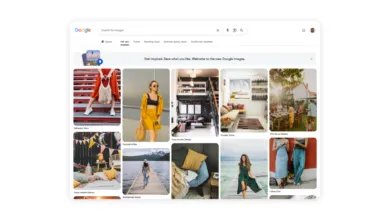
To mark the 25th anniversary of Google Images, Google is launching AI-powered image creation directly within AI Overviews and redesigning the Images homepage.
Key details:
- The new feature lets users generate custom images from text prompts using Google’s Nano Banana model, the same system being integrated across Search and Chrome this year.Why this matters: AI Overviews already answer many queries without requiring a click. Adding generated images gives that surface yet another capability it can fulfill independently, in a slot that previously directed users to web-based images. The redesigned homepage introduces a personalized feed that sits alongside the search box, offering a starting point that doesn’t even require a query.Mueller on a Plan to Hide a Homepage LinkGoogle Search Advocate John Mueller responded to a strategy aiming to hide a homepage button link so a better-worded link lower down the page would gain SEO priority. His verdict: you are probably overthinking it.Key details:
- A Reddit thread on r/bigseo described a homepage with two links to the same services page: a Services button near the top and an FAQ link with preferred anchor text further down.Why this matters: Internal anchor text optimization has been a long-standing technique, which is why this approach sounds plausible. But the cost is a homepage where the primary button is no longer a link. The reward, according to Mueller, is nothing measurable. His alternative preserves both links and simply adjusts their order in the HTML code.Mueller on Long A/B TestsSEJ’s Roger Montti analyzed Mueller’s comments on A/B tests that run six to twelve months and found they may contradict Google’s own published guidance.Key details:
- Asked on Bluesky about how Google handles long-term holdouts on a marketplace with tens of millions of pages, Mueller stated that, depending on the setup, one version or the other is used for indexing. Variants that are sufficiently different could both appear in search results.Why this matters: Montti notes that Mueller answered the indexing question twice but left the core concern about year-long tests untouched. This creates a gap between a Googler’s reply and Google’s official documentation. The published guidance is more specific, warning against running experiments longer than necessary, especially when one variant reaches a large percentage of users.Google Says Content-Based Canonical Fixes Can Take Two WeeksGoogle updated its canonicalization troubleshooting guide to set clear expectations for how long a content fix takes to reflect in Search.Key details:
- The guide states that pages may remain in a duplicate cluster for up to two weeks after you fix the content.Why this matters: This number gives you a concrete answer for clients wondering why their fix hasn’t taken effect. It also clarifies that the wait is specific to content changes, not all canonical problems. Two weeks is the outside limit, not the standard. Whether Google agrees with your preferred canonical at the end of that period is a separate question.Theme of the Week: You Get a Vote, Not a VetoThree of this week’s four stories converge on the same idea: you provide input, but Google retains the final say over how it is interpreted.
- The canonicalization guide’s starting position is that Google’s pick might be better, and it asks you to weigh that before troubleshooting.The Images announcement sits alongside this theme rather than inside it. It is a product change, not a statement about how Google reads your pages. Still, it points the same way: generated images give Search one more thing it can create internally, alongside what it finds on the web.The lever you still hold is the quality of what you provide. Pages can split out of a duplicate cluster faster when the content is clearly different. Proper “ elements give Google links it can crawl. Google still decides what to do with both.