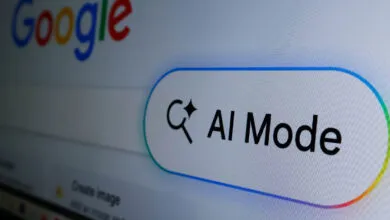
Google AI Mode ads appear in nearly 30% of queries, study finds

▼ Summary
– A SE Ranking study found AI Mode text ads appeared on 29.45% of commercial queries less than a year after their introduction.
– Most AI Mode ad blocks (71.1%) contained two advertisers, while 28.9% showed only one.
– Higher cost-per-click (CPC) keywords were more likely to trigger ads, with a 53.56% ad rate for keywords with a CPC of $10 or more.
– Ad presence varied by category, with pets at 72.38% (highest) and healthcare at 2.64% (lowest).
– Buying an AI Mode ad did not increase the advertiser’s likelihood of being cited as a source or ranking organically for the same keyword.
A new study from SE Ranking reveals that Google’s AI Mode is now displaying text advertisements on 29.45% of commercial queries, marking a significant acceleration in ad adoption less than a year after their initial rollout in AI-generated search responses.
The research examined 50,032 U. S. commercial keywords across 20 different industries, excluding product carousels. Among the 14,733 queries where text ads could appear, nearly one in three triggered an ad in the AI Mode response. SE Ranking noted that ads first appeared in AI Mode outputs in late 2025, and by mid-2026, the frequency had climbed sharply. The firm also warned that the actual ad rate could be even higher, as AI Mode results often vary between user sessions.
Multiple advertisers frequently shared the same ad block. According to the study, 71.1% of queries that triggered ads displayed two advertisers simultaneously, while only 28.9% showed a single ad. This suggests that competition for AI Mode ad placements is intensifying.
Cost-per-click (CPC) emerged as the strongest predictor of ad visibility. Keywords with a CPC under $2 saw ads appear on 24.33% of queries. That figure rose to 32.45% for keywords priced between $2 and $10, and jumped dramatically to 53.56% for keywords costing $10 or more. Interestingly, search volume and keyword difficulty did not show a comparable correlation with ad frequency.
Ad presence varied widely by industry. The Pets category led with ads appearing on a staggering 72.38% of analyzed keywords. At the other end of the spectrum, Healthcare showed the lowest rate at just 2.64%. SE Ranking explained that categories with higher ad rates tend to be lead-generation markets with straightforward paths to paid conversions. Lower-ad categories, by contrast, often involve informational or YMYL (Your Money or Your Life) intent, where commercial demand may be weaker or Google may exercise greater caution.
Buying an AI Mode ad did not increase an advertiser’s chances of being cited as a source in the same response. Only 11.53% of advertiser domains appeared among the cited sources for the keywords they purchased. At the individual URL level, that overlap dropped to just 1.95%. This pattern held even when SE Ranking controlled for domain strength, backlinks, referring domains, and organic visibility.
Organic search overlap was similarly limited. Just 2.32% of advertised URLs ranked organically for the same queries where their ads appeared. At the domain level, the overlap increased to 15.35%. In other words, roughly 85% of advertisers did not appear in organic results for the keywords they targeted with AI Mode ads.
The takeaway for marketers is clear. Buying visibility in AI Mode does not boost your chances of being cited or ranking organically. Treat AI Mode ads, cited sources, and organic rankings as three separate visibility channels. Each requires its own strategy, and success in one does not guarantee performance in the others.
The data was collected on June 30, 2026, and SE Ranking cautioned that ad behavior may continue to evolve as Google expands AI-specific ad formats.
(Source: Search Engine Land)