Your TV is now a giant data-leaking smartphone
▼ Summary
– Tech companies are redesigning smartphone apps like Google Photos and YouTube for smart TVs, making TVs more like phones to capture user attention.
– Smart TVs track viewing habits, screenshots, audio, and time-of-day data, compiling it into detailed consumer profiles for advertising.
– TV manufacturers and software companies partner to maximize ad revenue, with smart TVs commanding higher ad rates than mobile video.
– To keep viewers from casting phone content, TV apps add native features that collect more data, while companies restrict sideloading to control the ecosystem.
– Rising hardware costs and ad-driven profits push TV makers to intensify tracking, though state laws in Kentucky and Texas are beginning to regulate data collection.
Sign up for the Slatest to get the most insightful analysis, criticism, and advice out there, delivered to your inbox daily.
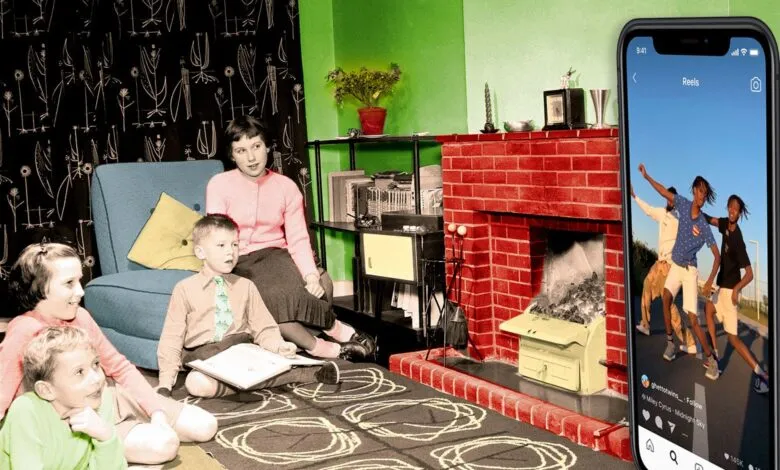
Some of the biggest names in technology are quietly orchestrating their next major shift, and the focal point is the screen in your living room. Earlier this month, Google announced that its Photos app would become available on Samsung’s smart TVs, allowing users to display their images in widescreen without needing to cast from a phone. In March, YouTube brought its formerly mobile-exclusive Gemini-powered summaries and timestamps to its widely used TV application. Meanwhile, music streaming services, newsletter platforms, and even Instagram are redesigning their products,particularly short-form Reels,for the largest display in your home. The trajectory is unmistakable: your television is rapidly evolving to mirror your smartphone.
TV-compatible versions of mobile apps are nothing new. (You may have spotted Doodle Jump in your smart TV’s app store recently.) However, this recent wave of app reconfiguration reflects a strategic realization by data-mining, privacy-invasive companies: they can capture far more screen real estate on the one household device that occasionally manages to pull your gaze away from your phone. Your TV and smartphone are now more interoperable and indistinguishable than ever, and an unavoidable user-tracking singularity is quietly forming in your own living room.
This is the natural progression of an established habit. TV hardware manufacturers appear convinced that the only way to keep viewers from glancing at their phones is to make the television more like those phones,just bigger. Meanwhile, software companies remain focused on maximizing shareholder value. The two sides have forged a useful new partnership, but its success comes at the cost of your wallet and your sanity, while undermining the very idea of casual viewing as more ads, interactive elements, and online purchase prompts crowd your screen.
Despite widespread American concern over privacy settings on phones and wearables, few people apply the same scrutiny to their televisions. Yet smart TVs sit in 77 percent of U. S. households, and they operate far differently than the Nielsen boxes of the past. The flatscreen hosting your Netflix app also monitors your viewing habits, capturing rapid-fire screenshots, tracking time spent watching, and recording audio from voice search requests you shout into the remote. It can even log what time of day you watch and identify the obscure Criterion disc playing in your non-smart DVD player.
“We still think of them as passive devices: We sit, we watch, that’s about it,” Or Goren, editor-in-chief of the cord-cutting advocacy publication Cord Busters, wrote to me in an email. “We don’t really grasp the TV as something that can follow us around and learn about us.”
All that collected data is compiled and compared with other viewer profiles to create a complete picture of you as a TV watcher. That data slab is then enriched with information from other sources, growing into a full digital dossier of your consumer attributes that gets traded from advertiser to vendor to advertiser. “The data from your connected television platform is melded into a single ID, with your social media use and your mobile use and other online profilers,” Jeff Chester, executive director of the Center for Digital Democracy, told me. “You’re able to harvest sufficient data to create a representation of their identity.”
After Vizio settled Federal Trade Commission charges in 2017 for harvesting such data without user consent, other TV makers simply made customers opt in by default through verbose terms of service, while obscuring the technical opt-out processes for the most common data-mining practices. Because there is little real accountability, smart TVs can still rely on data collection as a key revenue source, just like smartphones and their most popular apps.
However, even though TV and smartphone user data feed into the same advertising profiles,and despite companies like Samsung and Apple specializing in both types of technology,the two devices remain in competitive tension. In recent years, a majority of younger viewers have preferred smartphones over TVs as their default hub for visual entertainment. And although YouTube TV dominates living-room screens, Meta is projected to surpass Google this year as the top corporate recipient of global ad revenue, largely thanks to the mobile-native Instagram app. TVs desperately need to command customers’ attention at home, rather than serving merely as glorified speakers for background podcasts.
Fortunately for the TV industry, it can exploit built-in advantages over phone and app makers. Smart TV systems “command much higher ad rates than mobile video,” Casey Oppenheim, co-founder and CEO of the digital-privacy company Disconnect, wrote to me. “Getting a user into a vertical-video scroll on a 75-inch screen means longer sessions, more ad impressions, more immersive ads, and more behavioral signals. On a TV you’re locked in to content and ads in a way that you’re not on mobile.”
The monetary incentive is strong enough that even platforms like Pinterest now offer a TV complement to their standard app, joining the many free social apps vying for TV space as consumers grow weary of streaming-service costs and as advertisers spend more on digital TV spots year after year. The current game for smart TVs is to engage viewers so thoroughly on their larger screens that they feel less tempted to look down at their smaller ones. This means, in part, becoming an increasingly closed ecosystem, discarding customization methods that might steer you away from official big-name apps or leave a cash-generating option unused. Recently, both Amazon’s and Google’s TV platforms have cracked down on sideloading,the practice of downloading apps from third-party providers,by only permitting downloads from their parent companies’ authorized app stores.
Adding formerly phone-exclusive features to those TV apps also helps discourage sharing content from your device to your screen, a common habit for Reels users and Chromecast enthusiasts who gather friends around their Sony TVs at home. “Chromecast gets phone-side engagement but no data from the TV,” said Oppenheim. “A native TV app tells you the device type, session length, IP address, and even the context of what was watched before and after. Casting gives them none of that.” TV makers may not go as far as Netflix has in scrapping Chromecast compatibility altogether, but they earn more when people don’t simply cast whatever is on their phone screens.
Customers may, increasingly, become less agreeable to all this. TV divisions of major corporations profit far more from ads than from device sales, a gap likely to widen due to disruptions from the artificial intelligence rush, chip shortages, and ongoing global business instability caused by trade barriers and war. Once-affordable smart screens are about to become much more expensive to manufacture and purchase because of hardware costs, not because of added experiential innovations. The most effective way for the sector to pad its margins is to double down on looking and functioning like a sizable version of your phone. Market research indicates that the physical TV industry will continue erasing differences between phone and TV apps in the near future, as those apps add more interface features like specialized games.
So if you were already frustrated by the saturation of your TV’s blaring “digital billboards,” here is some bad news: it is about to get more invasive. TVs and streaming subscriptions are raising their prices while more AI-enhanced tracking metrics and ultrapersonalized ads are embedded into otherwise-free social media apps. Not to sound overly dramatic, but it really is the case these days that your TV is watching you more than you are watching it. And if it needs to resemble your smartphone to keep you seated, so be it.
There are ways a concerned viewer can mitigate these effects on their own, by consulting thorough guides for turning off their TV’s most egregious tracking patterns. States are also showing some legislative initiative. In Kentucky, lawmakers recently passed a bill classifying TV-viewing patterns as “sensitive data” deserving of broader legal protections and transparency measures. Following a lawsuit from Texas, Samsung reached an agreement with the state government to ensure its products explain their tracking methods to new buyers upfront and explicitly grant them the chance to opt out. California enacted a law 11 years ago that mandates user consent before smart TVs can enable voice-recognition systems. Since further federal regulation is increasingly unlikely after that 2017 Vizio-FTC settlement, more states are likely to take up local laws.
The simplest solution, naturally, would be to unplug altogether, ditching your smart TV for an old-fashioned antenna system and turning back to physical media players instead of streamers. As Chester told me, “The system is so extensive, it’s impossible for the average person to opt out of” all the means of tracking afforded by TV-as-internet. Maybe the next analog status symbol for the youth could be a cathode-ray tube.
(Source: Slate Magazine)