Google AI Ads Boost Sales Up to 80% for Brands

▼ Summary
– Google’s AI advertising tools are delivering significant revenue gains for some retailers, like Aritzia, which reported an 80% increase.
– The company is embedding ads into its AI search experiences and introducing new formats, such as “direct offers,” designed for conversational queries.
– AI-driven campaigns match ads to more detailed user intent, as queries in AI Mode are often two to three times longer than traditional searches.
– Google is shifting from keyword-based ads to intent-driven advertising, which it says is crucial as 15% of daily searches are entirely new.
– While Google’s ad business grows, early results for AI ads across the industry are mixed, with Amazon seeing limited traction and Perplexity AI phasing them out.
The integration of artificial intelligence into Google’s advertising ecosystem is driving substantial revenue growth for brands, with some retailers reporting sales increases as high as 80%. This evolution signals a strategic shift from traditional keyword-based campaigns to a more dynamic, intent-driven advertising model that leverages the conversational nature of modern search.
Alphabet Inc., Google’s parent company, reported a landmark year, surpassing $400 billion in total revenue for 2025. Its advertising engine remains a powerhouse, with fourth-quarter ad revenue reaching $82.28 billion, a 13.5% increase year-over-year. YouTube ads also saw robust growth, contributing $11.38 billion. This financial performance underscores how AI is expanding, not replacing, the core search and advertising business, countering earlier predictions that AI chatbots would disrupt the industry.
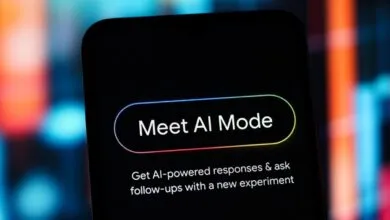
Central to this growth is Google’s strategy of embedding ads directly into its AI-powered search experiences. This includes its AI Mode, powered by the Gemini model, which introduces new ad formats tailored for conversational queries. The company has also rolled out tools that give brands greater influence over their appearance in AI-generated answers. A new “business agent” feature, for instance, allows companies like Poshmark and Reebok to manage how their products are presented within these interactive environments.
Campaigns such as Performance Max and the newer AI Max are delivering results by matching advertisements to more nuanced user intent. Queries within AI Mode are typically two to three times longer than traditional searches, providing the system with richer context to connect users with relevant products. Apparel retailer Aritzia exemplifies this success, attributing an 80% revenue increase to its adoption of the AI Max campaign type.
The underlying technology works by scanning a retailer’s website and creative assets, interpreting the nuanced intent behind a user’s conversational question, and then dynamically pairing products and messaging in real time. This capability is becoming essential as search behavior evolves; Google notes that 15% of daily searches are now entirely new and unpredictable, rendering old keyword-targeting methods less effective.
For advertisers, the implication is clear. The industry is moving toward AI-matched advertising, where campaigns can engage consumers with far greater precision at the exact moment of purchase intent. Brands relying solely on traditional targeting risk losing ground as search becomes more conversational and fluid.
Google is actively testing next-generation formats to capitalize on this shift. Early trials of “direct offers,” which use Gemini to analyze conversational context and user behavior to serve personalized promotions, include participants like E.l.f. Beauty, Chewy, and L’Oréal. Furthermore, Google is advancing its commerce ambitions through a collaboration with Shopify on a Universal Commerce Protocol, enabling transactions to be completed directly within an AI chat interface.
This landscape, however, is not without its challenges and competitors. Early experiments with ads in AI search across the tech sector have yielded mixed outcomes. Amazon has reportedly seen limited traction from ads in its own AI shopping assistant, while OpenAI continues to explore various monetization paths. Perplexity AI has even begun phasing out ads after disappointing initial performance.
Google frames its role in this new paradigm as that of a “matchmaker,” using AI to foster more relevant connections between users and brands. The company emphasizes that its tools are designed to help businesses maintain control over their messaging and build consumer trust by presenting the right product at the optimal time.
Looking ahead, Google states it has no immediate plans to insert ads directly into its standalone Gemini chatbot. Instead, the focus will remain on expanding and refining advertising within AI Mode, developing more personalized offers and seamless AI-driven shopping experiences.
The fundamental takeaway is that AI is reshaping the mechanics of search and digital marketing. For Google, this transformation is making advertising more conversational, precisely targeted, and, as the revenue figures demonstrate, increasingly profitable for brands that successfully adapt.
(Source: Search Engine Land)