Antigravity’s 360-Drone Aims to Challenge DJI’s Dominance
▼ Summary
– The Antigravity A1 drone and headset combo is now available for purchase in the US at Best Buy, providing a timely alternative as DJI drones face potential import bans.
– Unlike traditional drones, the A1 is designed for effortless operation, using a 360-degree camera and motion-sensing goggles that allow users to navigate by simply looking and pointing.
– The system records video in every direction simultaneously, enabling users to rotate and zoom their footage after the flight.
– Priced starting at $1,599, the A1 is more expensive than many camera drones but offers a unique, beginner-friendly experience focused on ease of use rather than high-end traditional footage.
– It differs from DJI’s anticipated Avata 360, as the A1 is a lightweight, Mini-style drone, while DJI’s Avata line consists of heavier, high-speed FPV drones.
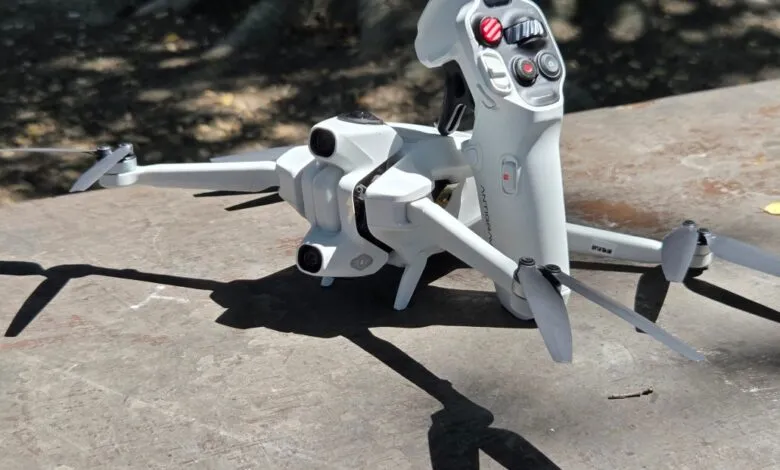
The Antigravity A1 drone has officially arrived on US store shelves at Best Buy, presenting a timely alternative for aerial enthusiasts as industry leader DJI faces market uncertainty. This launch provides a tangible option for American consumers seeking a new drone experience that prioritizes immersive flying over traditional piloting.
Previously, the Chinese brand couldn’t guarantee US availability. Now, the product is not only listed but physically present in stores, with shipments beginning this week. This retail move appears to precede the company’s planned full announcement.
What sets the A1 apart is its fundamental approach. Priced at $1,599 for the drone and headset combo, the system is engineered to remove the complexities of flight and filming. Instead of piloting or framing shots, users wear motion-sensing goggles connected to the drone’s 360-degree camera. By simply turning your head, you can look in any direction from the drone’s aerial perspective. A targeting line, controlled by arm movement, lets you point where you want the drone to travel. A trigger pull sends it on its way, freeing your attention to enjoy the immersive view. Because the camera records in every direction at once, you have the flexibility to pan, rotate, and zoom through the captured spherical video during playback.
The cost positions it against higher-end models. The base package is $1,599, with bundles reaching $1,899 or $1,999 for extra batteries and accessories. At this price, competing drones can capture higher-resolution traditional rectangular footage. In terms of physical form, the A1 shares more in common with a DJI Mini, it’s lightweight, foldable, and likely exempt from FAA registration, despite its price point leaning toward the tier once occupied by DJI’s more advanced Mavic and Air series.
The core value lies in the integrated system. No mainstream DJI drone has bundled a 360-degree camera with goggles designed to make the act of flying and filming effortlessly intuitive. Antigravity’s goggles are a notable part of the package. However, competition may be coming. DJI’s own Avata 360 drone recently received FCC clearance, potentially offering a different take on spherical aerial video before any broader restrictions affect the company’s US imports.
The two products will likely offer distinct experiences. The Antigravity A1 is built as a beginner-friendly, gentle-flying platform. In contrast, DJI’s existing Avata line consists of heavier, high-performance “cinewhoop” drones engineered for dynamic, high-speed FPV flight, suggesting the Avata 360 could be a more aggressive machine.
(Source: The Verge)