Nikon ZR: A Budget-Friendly Alternative to RED Cameras
▼ Summary
– Nikon’s new $2,200 ZR camera offers a version of RED’s powerful R3D video format, making RED’s imaging characteristics accessible at a much lower price point.
– The camera uses a modified 12-bit format called R3D NE, which provides RED’s color pipeline and highlight handling but is more limited and computer-intensive than full RED R3D files.
– A key limitation is that ISO changes affect noise and clipping in R3D NE, unlike on a RED where ISO is adjustable metadata, forcing careful exposure control during shooting.
– The ZR is designed as a fully-featured, compact camera with integrated tools like a high-quality screen and 32-bit audio, contrasting with RED’s modular, accessory-dependent systems.
– Despite some hardware compromises, the ZR represents significant value for prosumer videographers and a strategic move by Nikon to compete in the video camera market.
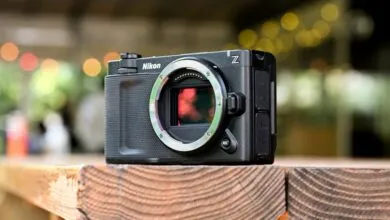
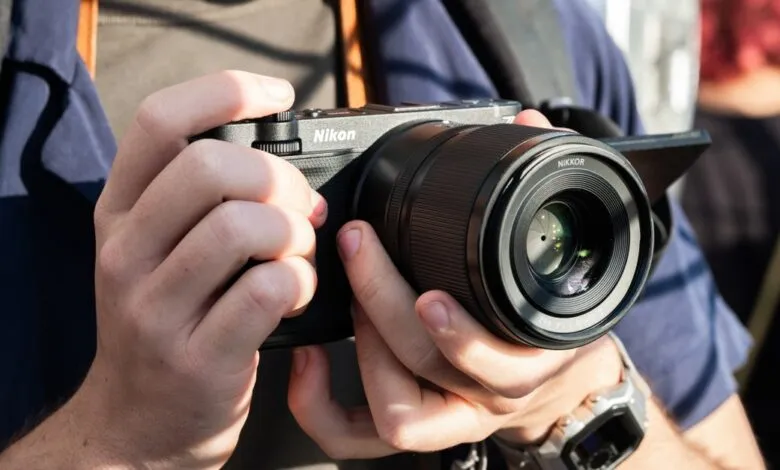
For professional videographers, the allure of a RED camera is often tempered by its staggering price tag, which can soar to around $45,000. Nikon is now challenging that exclusivity with the $2,200 ZR, a camera that brings a version of RED’s powerful R3D file format to a dramatically more accessible price point. This move follows Nikon’s acquisition of RED in 2024, and the ZR represents the first collaborative fruit of that union, packed with features aimed squarely at video creators.
The camera’s standout capability is its support for R3D NE, a tailored variant of RED’s renowned compressed RAW format. This format allows for extensive post-production adjustments to white balance, ISO, gamma, and color space with minimal quality loss, effectively serving as a creative safety net. However, it’s important to understand this is not the full-fat R3D experience from a dedicated RED camera. The ZR utilizes a 24.5-megapixel sensor from the Nikon Z6III, not a RED sensor, resulting in a 12-bit file versus the 16-bit files from high-end RED bodies. This difference means R3D NE files are more demanding on computer resources during editing and handle exposure differently.
Where the ZR truly shines is in its image character. The files processed through RED’s iconic IPP2 color pipeline deliver that signature smooth highlight rolloff, rich color, and a filmic tonal response. Side-by-side with standard R3D footage, the results are remarkably close, distinguished mainly by a subtle green cast attributable to Nikon’s sensor. The major practical divergence lies in ISO handling. On a RED, ISO is non-destructive metadata; on the ZR, sensor gain is baked into the R3D NE file before compression. To manage noise, Nikon locks you into two native ISOs, 800 or 6400, when shooting in this format. This demands more precise exposure control on set using ND filters or aperture, as significant exposure corrections in post will introduce noise.
While it captures a RED-like image, the ZR’s hardware philosophy is the polar opposite. RED cameras are celebrated for their modular, accessory-dependent “brain” design. The Nikon ZR is an all-in-one, feature-rich device meant to operate with minimal add-ons. It boasts a brilliant, fully articulating 4-inch touchscreen, eliminating the need for an external monitor in many scenarios. Perhaps more groundbreaking is its internal recording of 32-bit FLOAT audio, a first for any camera, which virtually eliminates clipping and removes the necessity for a separate audio recorder on many shoots.
The camera is also notably compact and light at 1.4 pounds, achieved through a fanless design, and it incorporates 7.5 stops of in-body image stabilization, a feature absent from RED’s lineup. This makes it exceptionally capable for handheld or run-and-gun filming without a gimbal.
Compromises exist, as expected at this price. The tripod socket placement interferes with the battery door, micro HDMI is used instead of full-sized, and storage options are limited to one CFexpress Type B and one microSD slot, complicating simultaneous backup recording. Users may also find the joystick somewhat unresponsive, and a 125-minute recording limit restricts use for lengthy events.
Ultimately, the Nikon ZR delivers on its core promise: providing a compelling gateway to the color science and file flexibility associated with RED cameras for just over two thousand dollars. It demands more disciplined shooting to overcome its exposure limitations but rewards users with exceptional image quality and a suite of integrated features that reduce gear bulk. For prosumers and professionals seeking RED’s cinematic look without the monumental investment, the ZR stands as a formidable and valuable tool, signaling Nikon’s serious intent to reclaim ground in the competitive video market.
(Source: The Verge)