ULA’s 10-Vulcan Goal for 2025 Falls to Single Launch
▼ Summary
– ULA initially projected 20 launches for 2025 but will likely complete only six, falling short of expectations.
– The company’s 2025 launches include five Atlas V missions and just one Vulcan rocket flight.
– Vulcan’s single 2025 launch in August was its third flight and first certified national security mission for the Space Force.
– ULA remains one of two Space Force-certified launch providers, while SpaceX has conducted significantly more launches this year.
– Military satellites remain grounded due to Vulcan delays, a concern first raised by Pentagon officials in 2024.
United Launch Alliance’s ambitious launch schedule for 2025 has fallen significantly short of initial projections, with the company now preparing for just six total missions instead of the twenty originally forecast. This represents a notable reduction in operational tempo, particularly for the new Vulcan rocket, which will see only one flight this year compared to multiple planned launches. While six launches still mark ULA’s busiest year since 2022, the gap between expectation and reality highlights ongoing challenges in ramping up the new vehicle.
Last year, ULA’s leadership painted a picture of a record-breaking 2025. Company CEO Tory Bruno informed reporters that they anticipated up to twenty missions, with a near-even distribution between the workhorse Atlas V and its successor, the Vulcan. The current reality is quite different. The final launch of the year is now scheduled for December 15, when an Atlas V will carry another set of Amazon’s Leo broadband satellites from Cape Canaveral Space Force Station in Florida.
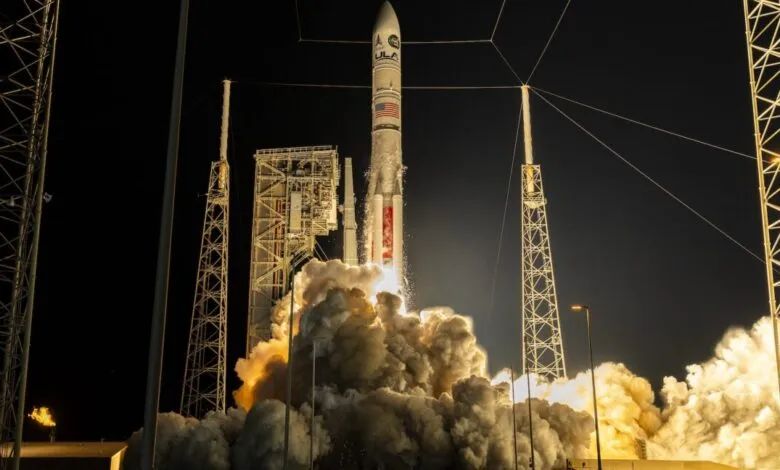
The Vulcan’s single 2025 flight took place on August 12. That mission, sponsored by the U.S. Space Force, successfully deployed an experimental military navigation satellite along with at least one other classified payload into orbit. This launch was significant as the third overall flight for Vulcan and its first officially certified national security mission, a crucial milestone for the program.
As one of only two launch providers certified by the Space Force for its most vital National Security Space Launch (NSSL) missions, ULA plays a critical role in placing reconnaissance, navigation, and early-warning satellites into space. The other certified provider, SpaceX, has demonstrated a markedly different launch cadence this year, having launched its Falcon 9 rocket 151 times, which includes six missions directly for the NSSL program.
Pentagon officials have expressed concern about the Vulcan’s progress for some time. Back in May 2024, the senior defense official responsible for space acquisition wrote a formal letter to Boeing and Lockheed Martin, ULA’s parent companies. In that correspondence, Frank Calvelli, then the assistant secretary of the Air Force for space acquisition, explicitly stated that military satellite capability was “sitting on the ground due to Vulcan delays.” A year and a half later, that situation appears largely unchanged, with key national security payloads still awaiting their ride to orbit on the new rocket.
(Source: Ars Technica)