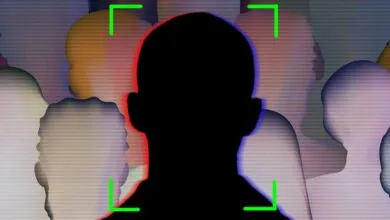
GOP Census Reform Puts Your Privacy at Risk

▼ Summary
– The Republican Party is renewing efforts to challenge the US census, particularly targeting the differential privacy system implemented for data protection.
– Differential privacy is an algorithmic process designed to prevent census data from being used to identify individual respondents.
– Critics falsely claim that differential privacy has made 2020 census data inaccurate, which could endanger data security and discourage immigrant participation.
– Census data includes sensitive personal details and is used to allocate federal funds and determine congressional representation based on total population counts.
– Without differential privacy, census data could be reverse-engineered to identify individuals, violating legal protections and risking fines or imprisonment for violations.
A renewed political effort to alter the methodology of the US census is raising significant concerns about personal privacy and data security. This initiative, led by Republican lawmakers, targets a sophisticated privacy protection system known as differential privacy, which was implemented for the 2020 census. Critics argue that dismantling these safeguards could expose the sensitive information of every resident in the country and potentially skew the political representation that dictates federal funding and congressional seats.
During his presidency, Donald Trump and his allies repeatedly attempted to introduce a citizenship question to the census and to exclude non-citizens from the population counts used for apportioning congressional districts. The Supreme Court blocked one such effort in 2019. The current focus, however, has shifted to the technical framework of differential privacy. This system adds carefully calculated statistical “noise” to the published data, making it impossible to trace information back to any specific individual. Despite its purpose as a protective measure, some political figures are incorrectly claiming that this process has compromised the accuracy of the 2020 census data.
The implications of removing differential privacy are profound. Without it, the vast amount of anonymized data released by the Census Bureau could be reverse-engineered. Malicious actors could potentially de-anonymize the records, identifying people by their race, age, economic status, home address, and other personal details. This creates a direct threat to individual safety. For example, research from the University of Washington demonstrates that without these protections, census data could be used to out transgender youth, putting them at risk.
The census is far more than a simple headcount; it is a cornerstone of American democracy and public policy. Conducted every decade, it collects comprehensive information on everyone residing in the United States, regardless of citizenship status. This data directly influences the distribution of hundreds of billions of dollars in federal funding for essential services like schools, hospitals, and infrastructure. Furthermore, it determines how many seats each state gets in the House of Representatives and, by extension, its weight in the Electoral College.
As technology has advanced, the risk of re-identifying individuals from supposedly anonymous datasets has grown exponentially. Census officials and academic researchers recognized that older anonymization techniques were no longer sufficient against modern computational power. Federal law, specifically Title XIII of the US Code, strictly prohibits the Census Bureau from publishing any data that could reveal a person’s identity, their home, or their business. Violating this law is a serious offense, punishable by heavy fines and potential imprisonment. The differential privacy system was the bureau’s direct response to this legal and ethical obligation, designed to ensure that the data used for public good does not come at the cost of personal security.
(Source: Wired)