The Human Hand Behind AI’s Content
▼ Summary
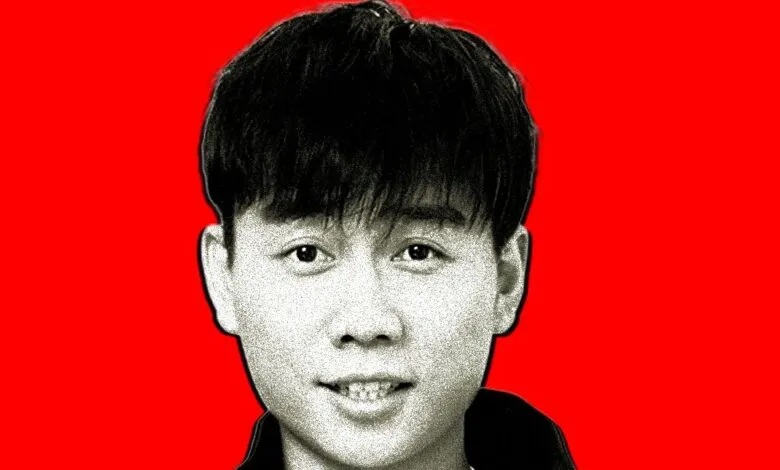
– Mu excels at imitating AI-generated videos through clumsy movements, spaced-out expressions, and unpredictable plots, accurately capturing their essence.
– He began his acting career in college, shifted to comedy sketches on Chinese social media in 2019, and now focuses primarily on content creation.
– His AI imitation videos earned him a sponsorship deal worth 80,000 RMB, but he received fewer opportunities than expected from his global virality.
– Mu filmed two versions of sponsored sketches, preferring the human-acting version, but the advertiser chose the one with AI-generated footage, highlighting concerns about AI replacing human actors.
– He studies AI video flaws to recreate them in his sketches and notes an ongoing battle where humans and AI creators compete, with AI rapidly improving to appear more human.
While comedian Mu has gained widespread attention for his uncanny ability to replicate the bizarre world of AI-generated videos, his work highlights a much deeper conversation about creativity and automation. His performances, marked by awkward gestures, vacant stares, and nonsensical story arcs, resonate because they perfectly mirror the strange, glitchy aesthetic of what many call “AI slop.” For countless viewers, the accuracy is both hilarious and unsettling, raising questions about where human artistry ends and machine output begins.
Mu’s journey into this niche didn’t start with artificial intelligence. Long before his viral fame, he pursued a traditional acting path, dreaming of a career on screen since his college days. He even spent a summer at Hengdian World Studios, the planet’s largest film studio, hunting for background roles. By 2019, he shifted his focus to creating comedy sketches on Chinese social platforms, a move that eventually consumed most of his schedule. The AI imitation clips, surprisingly, form just a small part of his broader creative portfolio.
The commercial potential of his unique talent became clear when a Chinese generative AI firm offered him a sponsorship deal. They paid 80,000 RMB (roughly $11,000) for two promotional sketches showcasing their video generation model. While this was a solid opportunity, many expected his international viral success to unlock even bigger doors. As part of the agreement, Mu produced two versions of each sketch, one incorporating actual AI-generated footage, and another relying solely on human performance. He personally hoped the advertiser would select the human-only version, feeling it better showcased authentic acting talent. Instead, the company chose the AI-embedded one. Mu reflects, “That kind of feels like it’s starting to steal jobs from human actors, doesn’t it?”
Recently, Mu returned to the spotlight with a new series imitating videos produced by Sora, OpenAI’s advanced generative video tool. This latest work is more refined, yet it still captures that uniquely eerie and inexplicable quality that persists even as AI video technology grows more sophisticated. According to Mu, the real competition isn’t between people and machines. He sees an ongoing battle among humans themselves, creators using AI tools versus performers like him. Each side continuously tries to outdo the other. “We’re poking fun at some of AI’s flaws, its eeriness and absurdity, but the AI creators are probably improving those, too. You see, this year’s AI already looks much more human,” he observes.
To prepare for his first AI imitation sketch in July 2024, Mu immersed himself in studying countless AI-generated videos. He analyzed recurring quirks and common errors, then deliberately wove those elements into his scripts. For instance, AI often misinterprets an object’s context or purpose. A clothes hanger, typically used for garments, is also sometimes employed as an impromptu disciplinary tool in some households. This dual function inspired one of Mu’s earlier sketches: in the middle of pretending to scold his “son” with a hanger, the child’s shorts inexplicably fall off. Mu’s character then appears to forget the scene’s intention, casually deciding to hang the shorts up instead. This kind of abrupt, illogical shift perfectly mimics the disjointed narrative flow found in so much AI-generated content.
(Source: Wired)