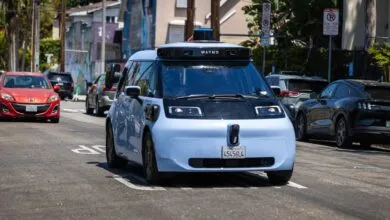
Waymo’s Driverless Taxis Arrive in London

▼ Summary
– Waymo plans to launch London’s first fully driverless robotaxi service in 2026, marking its first international expansion.
– The UK government will begin piloting fully driverless ridehail services in spring 2026, with broader implementation expected by late 2027.
– Waymo will start supervised data collection with safety drivers in London soon and use its own app for the commercial service, with fleet management by Moove.
– Waymo has established UK engineering hubs in London and Oxford and has been recruiting staff in preparation for the London launch.
– Waymo will face competition from Uber and UK-based Wayve, which are also testing driverless cars in London.
The familiar sight of London’s black cabs may soon share the road with a new competitor as Waymo announces plans to launch its fully driverless robotaxi service in the UK capital. This strategic move by the Alphabet-owned company represents its first international expansion beyond the United States, with commercial operations scheduled to begin in 2026. The announcement comes as the UK prepares for its initial pilot programs of completely autonomous ridehailing services, marking a significant shift in urban transportation.
Currently, Britain’s roads feature no fully driverless vehicles, but government initiatives aim to change that landscape. Official plans indicate that pilot programs for autonomous ridehailing will commence in spring 2026, while broader implementation of self-driving taxis will follow the full enactment of the Automated Vehicles Act by late 2027.
Waymo’s approach involves a phased implementation strategy. In the coming weeks, the company will deploy supervised robotaxis with safety drivers present to gather crucial data about London’s unique driving environment. When the commercial service launches next year, passengers will be able to access completely driverless vehicles through Waymo’s proprietary ridehail application. Fleet maintenance and management will be handled by Moove, the same company that currently services Waymo’s operations in Phoenix and Austin, with upcoming responsibilities in Miami as well.
The autonomous vehicle company has demonstrated sustained interest in the London market for some time. Recent job postings for positions including fleet readiness leads and various engineering roles indicated Waymo’s growing presence in the British capital. Company representatives highlight their established connections within the UK, pointing to engineering centers located in both London and Oxford. These facilities host teams working on advanced large-scale simulation systems, which the company describes as the gold standard for developing fully autonomous driving technology.
While London represents Waymo’s first full international deployment, the company previously sent two dozen of its distinctive Jaguar SUVs to Tokyo for limited testing. However, no firm commitment has been made regarding commercial service in the Japanese market.
Upon its arrival, Waymo will encounter significant competition in London’s mobility sector. Uber has revealed its partnership with British autonomous driving startup Wayve to test driverless vehicles in the city next year. Being a homegrown company potentially gives Wayve certain advantages in navigating the local regulatory and operational landscape.
It’s worth noting that Waymo frequently conducts vehicle testing in numerous cities where commercial service may or may not eventually materialize. This practice allows the company to evaluate how well its systems adapt to new urban environments after accumulating tens of millions of driving miles in its primary markets of San Francisco, Phoenix, and Los Angeles. The ultimate goal is reaching a point where the company can introduce its robotaxi service to new cities with minimal preliminary testing required.
(Source: The Verge)