Is Art Dead? How Sora 2 Impacts Your Rights & Creativity
▼ Summary
– OpenAI’s Sora 2 AI video tool raises significant legal and ownership risks, including copyright infringement and unauthorized use of brand likenesses.
– The technology enables easy creation of deepfakes and inappropriate content, leading to concerns about misuse for amusement, profit, and deception.
– Generative AI tools like Sora 2 democratize creative output but threaten traditional creative professions by eliminating skill scarcity and challenging copyright standards.
– Distinguishing reality from AI-generated content is increasingly difficult, with deepfakes posing societal challenges for authenticity and trust.
– OpenAI states its tools are designed to support human creativity, but critics argue they must take more responsibility for preventing infringement and misuse.
The emergence of advanced AI video generators like Sora 2 is sparking intense debate about intellectual property rights, creative authenticity, and the very definition of art in the digital age. This technology allows users to produce strikingly realistic videos from simple text prompts, but its rapid adoption raises serious legal and ethical questions that could reshape creative industries.
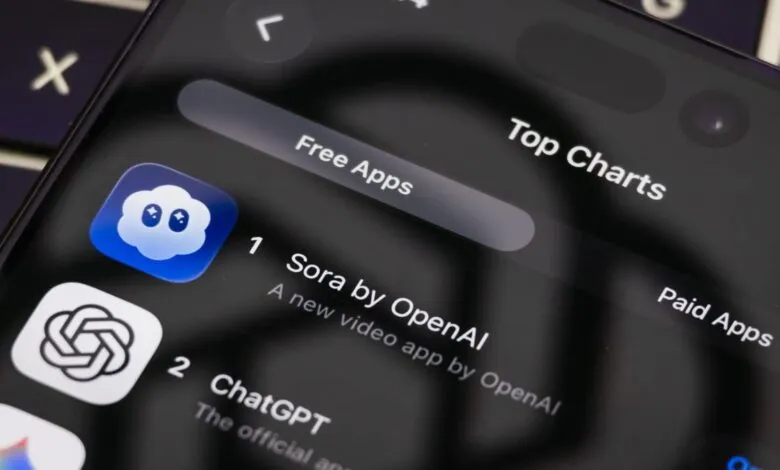
Within days of its release, Sora 2 amassed over a million downloads and climbed to the top of app store charts. The immediate result was what some are calling a “branding and likeness Armageddon,” with users generating videos featuring everything from SpongeBob cooking meth to Ronald McDonald fleeing from Batman. This rapid proliferation of AI-generated content demonstrates both the technology’s appeal and its potential for misuse.
The legal implications became apparent when The Wall Street Journal reported that OpenAI had contacted Hollywood rights holders about opting out of having their intellectual property represented in Sora 2. This approach did not sit well with content owners. The Motion Picture Association issued a firm statement through Chairman Charles Rivkin, asserting that “OpenAI needs to take immediate and decisive action to address this issue” and reminding the company that “well-established copyright law safeguards the rights of creators and applies here.”
OpenAI has since implemented some protective measures, including blocking requests for specific copyrighted characters and implementing moving watermarks and content provenance metadata. The company’s System Card document outlines several safety themes, including consent-based likeness control, intellectual property safeguards, and usage policies prohibiting misuse.
Legal experts emphasize that responsibility for copyright infringement ultimately falls on human users rather than the AI systems themselves. Sean O’Brien of Yale Privacy Lab explains that “when a human uses an AI system to produce content, that person, and often their organization, assumes liability for how the resulting output is used.” He notes that US law is developing a clear doctrine: only human-created works are copyrightable, AI outputs are generally considered public domain, users bear responsibility for infringement, and training on copyrighted data without permission constitutes legally actionable infringement.
The impact on creative professions is equally profound. Veteran commercial illustrator Bert Monroy observes that “with AI, the client has to think of what they want and write a prompt and the computer will produce a variety of versions in minutes with NO cost except for the electricity to run the computer.” This democratization of creative tools threatens to disrupt established career paths while making sophisticated visual storytelling accessible to broader audiences.
Maly Ly, founder of consumer AI startup Wondr and former marketing executive at major entertainment companies, offers a nuanced perspective: “AI video is forcing us to confront an old question with new stakes: Who owns the output when the inputs are everything we’ve ever made?” She suggests that “the real opportunity isn’t protection, it’s participation” and envisions a system where artists whose work trains AI models receive traceable compensation.
The technology’s ability to create convincing deepfakes presents additional societal challenges. From historical examples like Orson Welles’ 1938 “War of the Worlds” broadcast to modern concerns about political manipulation, the line between reality and fabrication continues to blur. The emotional impact is particularly acute for families of deceased celebrities, with Robin Williams’ daughter Zelda pleading for people to stop sending her “AI videos of dad” that reduce his legacy to “horrible, TikTok slop.”
Attorney Richard Santalesa of SmartEdgeLaw Group notes that Sora 2 “highlights the push and tug between creation and safeguarding of existing IP and copyright law.” While the technology’s terms of use prohibit infringement, he acknowledges that “the genie is out of the bottle and won’t be stuffed back in.”
OpenAI maintains that its “video generation tools are designed to support human creativity, not replace it, helping anyone explore ideas and express themselves in new ways.” This vision of AI as a creative collaborator rather than replacement raises fundamental questions about artistic ownership, compensation models, and whether we’re witnessing the evolution of creativity or its eventual erosion.
(Source: ZDNET)