How Fish DNA Helps You Hold On to Your Butt
▼ Summary
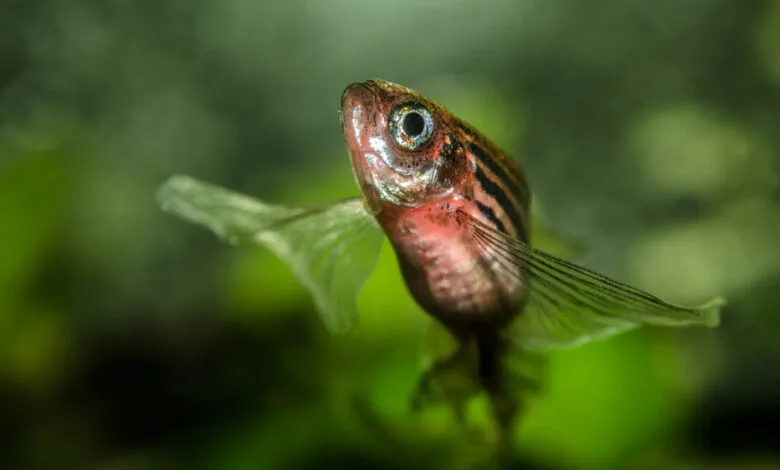
– Evolution has adapted mammal digits for diverse uses, but their origin from fish ancestors remains unclear due to the lack of obvious digit equivalents in fish fins.
– Some genes are essential for both digit formation in vertebrates and fin ray development in fish, suggesting parallels between these structures.
– A new study proposes that digits evolved by repurposing a genetic network originally used for cloaca formation in fish, rather than from fin rays.
– Hox genes, organized in clusters, regulate limb development by controlling gene activity along the embryo’s body axis and within developing limbs.
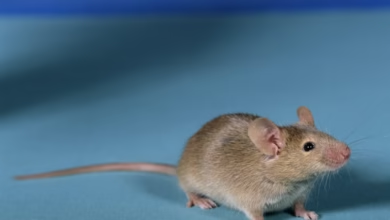
– In mice, the Hoxa13 and Hoxd13 genes are critical for digit formation, as their elimination completely prevents digits from developing.
The evolutionary journey from aquatic fins to terrestrial limbs represents one of biology’s most fascinating transformations. While mammals today boast an impressive array of specialized digits, from the delicate wings of bats to the sturdy hooves of horses, the genetic origins of these structures have long puzzled scientists. New research now suggests that the development of fingers and toes may trace back not to fin rays, but to a far more surprising source: the genetic machinery behind a fish’s excretory system.
Early investigations into limb evolution pointed to similarities between the bony rays in fish fins and the digits of land animals. Certain genes appeared to play roles in both structures, hinting at a shared developmental pathway. However, recent findings challenge this interpretation, proposing instead that digits emerged through the repurposing of a genetic network originally responsible for forming the cloaca, a multipurpose organ in fish used for excretion and reproduction.
Central to this process are Hox genes, which act as master regulators during embryonic development. These genes are organized into clusters, with their positional activity along the body axis helping to define structures from head to tail. In mammals, four such clusters exist, each containing around ten genes that guide the formation of limbs in a precise spatial sequence. Genes at one end of a cluster influence development near the shoulder or hip, while those at the opposite end govern the formation of structures farther out, including digits.
Experiments in mice have demonstrated the critical importance of specific Hox genes, particularly Hoxa13 and Hoxd13, in digit formation. When these genes are disabled, digits fail to develop altogether. This highlights their non-negotiable role in constructing the intricate bones of our hands and feet. What makes the new research so compelling is the suggestion that these essential digit-forming genes were co-opted from genetic programs that originally shaped very different anatomical features in our aquatic ancestors.
(Source: Ars Technica)