360-Degree Cameras Gain a Powerful New Feature
▼ Summary
– Insta360 partnered with UK startup Splatica to let creators make photorealistic 3D digital recreations of real-world spaces using a consumer 360-degree camera and a subscription service.
– The process requires only changing two camera settings, recording a video while walking or flying, uploading it to Splatica, and waiting a day for a 3D world to appear in a web browser.
– Splatica uses a proprietary version of SLAM to create accurate point clouds from 360-degree video, with files carrying metadata like GPS and gyroscope data from Insta360 and Antigravity cameras.
– The service has limitations: splats can look ethereal and translucent when zoomed in, and results depend on thorough filming from every angle the user wants to explore.
– Splatica pricing ranges from 18 to 25 cents per second of video plus a monthly subscription ($50–$300), but the first 1,000 users get free uploads for up to 10 minutes of footage.
Imagine being able to explore a real-world location as if it were a video game level, without waiting for a tech giant to send a camera car. That capability is now available to anyone with a 360-degree camera and a subscription to a new service. Insta360, the dominant player in the consumer 360-camera market, has partnered with a small UK startup called Splatica to turn ordinary video footage into navigable, photorealistic 3D environments.
Last year, we explored the potential of Gaussian splatting, a technology that could eventually let anyone digitally recreate real-world spaces in stunning 3D. Splatica has made that future a reality today, using nothing more than a standard consumer camera and a cloud-based service that handles the heavy lifting.
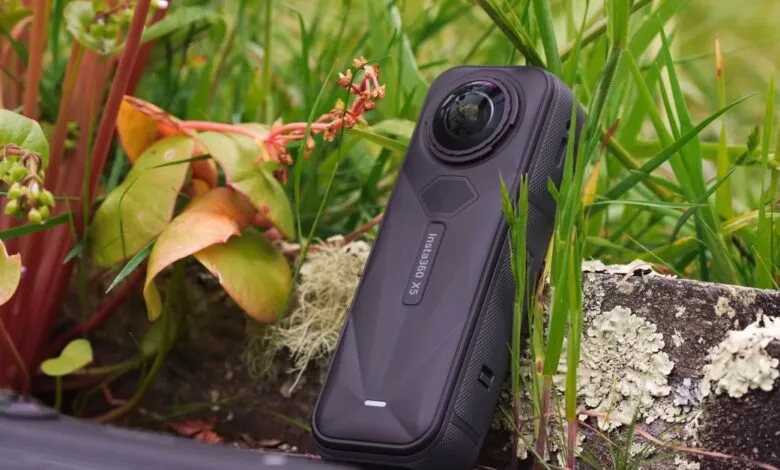
The process is remarkably straightforward. I changed two settings on an Insta360 X5 or an Antigravity A1 drone, recorded a video while walking or flying around an area, uploaded that video to a Splatica account, and waited roughly a day. The result was a miniature, interactive 3D world in my web browser. While the results aren’t perfect , the splats can look slightly ethereal, like stepping into a CGI painting , the potential is immediately clear.
This isn’t just a novelty. Insta360 cofounder Max Richter told me the company’s cameras were already popular for real estate virtual tours, construction progress reports, and facility inspections. For a real estate agent, this feature alone could justify the purchase. I tested it on a local park’s play structure, a beat-up basketball hoop, and even a bridge pillar. The quality depends heavily on the capture path; a simple circle around an object yields a much less detailed result than a thorough, winding exploration. Splatica also automatically edits out most people, leaving the scene eerily empty.
For a more industrial application, I simulated a bridge inspection. The results lacked the fine detail a surveyor might need, partly because the drone’s obstacle avoidance kept interrupting the flight. However, a five-minute scan of my own backyard was so expansive and detailed that my wife and I felt uncomfortable sharing the full version. You can view a 3D point cloud of the backyard objects instead. These scans can be downloaded in PLY and USDZ formats and include real-world measurements. Splatica cofounder Andrey Shelomentsev says the error is typically about one percent per 100 centimeters, which is “good enough for surveying and some rough exploration.”
This isn’t my first attempt at 3D scanning my backyard. In 2021, I used a Skydio drone, but that required a $2,999 annual subscription, plus the drone and separate photo-stitching software. Splatica does it all autonomously from a standard 360-degree video. The company’s own sample scenes are even more impressive, including a full factory floor in Turkey used for training robots and parts of the Leighton House in London.
The magic behind this is a proprietary version of SLAM (Simultaneous Localization and Mapping), the same technology used by robots, self-driving cars, and VR headsets. Splatica’s version is designed specifically to create accurate point clouds from 360-degree video. It helps that Insta360 and Antigravity cameras embed extra metadata , lens distortion, shutter speed, accelerometer, gyroscope, and GPS data , directly into the video files. “The files carry everything we need,” Splatica CEO Eugene Nikolskii told The Verge.
The system has clear limitations. Zooming in reveals translucent blobs of color rather than crisp textures, a hallmark of how splats work. Traditional photogrammetry might be better for fine surface details. But that hasn’t stopped Insta360, Antigravity, and Splatica from launching Project Eternal, a “global initiative” to preserve cultural landmarks. They’re offering prizes, 1,000 free Splatica uploads, and a pilot project to scan Pompeii and Civita di Bagnoregio in Italy, while inviting creators to scan sites like Roman theaters and Korea’s Jeju Island. The companies wouldn’t disclose their investment, but Splatica says it will maintain public access to any scene submitted to its “Open Heritage Dataset” and has a privacy policy that keeps your content yours.
Beyond heritage preservation, Insta360’s Richter says enterprise customers are already piloting 3D reconstruction and digital twin workflows in construction and facilities management. The biggest current barrier is cost. Splatica charges between 18 and 25 cents per second of processed video, plus a monthly subscription that ranges from $50 to $300 depending on the tier. If you’re quick, you might still snag one of the 1,000 free slots, which waive the subscription fee and let you turn 10 minutes of footage into 3D worlds. You can also explore over 100 public splats in Splatica’s gallery.
(Source: The Verge)


