China’s Data Center Boom: Why the Debate Won’t Stop
▼ Summary
– Public opposition to data center construction has surged, with polls showing 75% of Americans against local projects, prompting politicians like Greg Abbott and Josh Shapiro to adopt tougher stances ahead of midterms.
– Despite this backlash, some Republicans and tech leaders continue to support data centers by blaming Chinese influence for spreading anti-infrastructure narratives on social media platforms.
– X reported identifying 200 accounts linked to China that were amplifying anti-data center talking points, a claim amplified by President Donald Trump and conservative figures.
– Critics argue that attributing public resistance to foreign interference is a convenient excuse that ignores genuine environmental concerns and resistance to AI infrastructure among the American public.
– Experts note that claims of Chinese influence lack hard evidence, relying instead on insinuations, while companies like OpenAI have also identified clusters of users allegedly testing narratives against AI infrastructure.
Data centers have become the most volatile political flashpoint of the current election cycle, with public opposition reaching historic highs. As senior writer Molly Taft outlines in this week’s Power Play edition, the infrastructure boom is facing a fierce backlash that has forced even staunch advocates to reconsider their stance. With midterms approaching, polling indicates that 75 percent of Americans now oppose having a data center built in their community, a dramatic surge from just 42 percent last year. This shift in sentiment has prompted governors like Texas’s Greg Abbott and Pennsylvania’s Josh Shapiro, who previously championed these projects, to adopt tougher rhetoric to appeal to skeptical voters.
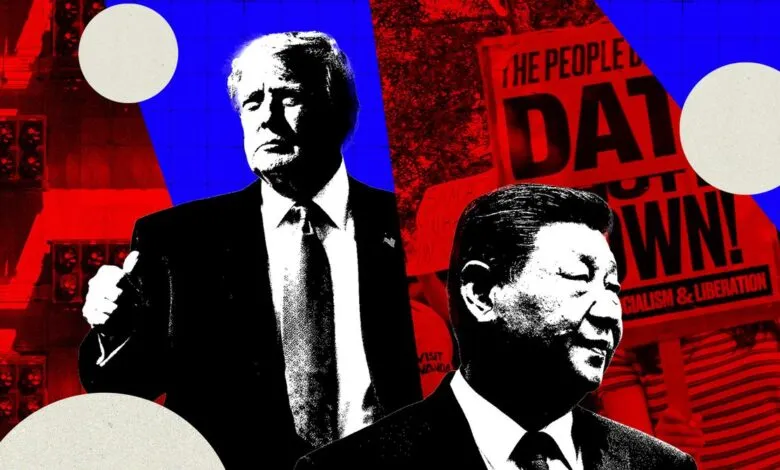
Despite President Donald Trump’s vigorous defense of the industry, some Republicans are distancing themselves from the issue, while others are pivoting to a different narrative: blaming China for the domestic unrest. In late August, X reported identifying 200 accounts linked to China that were actively spreading anti-data center talking points. The revelation triggered alarmist headlines and drew immediate support from high-profile figures. President Trump amplified the claim on Truth Social, writing: “China could not be happier with this anti Data Center movement” as he urged the platform to “let Data Reign!” Proponents argue that foreign interference is driving the negative sentiment, suggesting that the public’s resistance is artificially manufactured rather than organic.
However, experts suggest this theory lacks substantial proof. Policy reports cited by lawmakers earlier this year relied heavily on insinuations rather than concrete data. Similarly, OpenAI’s June report acknowledged that the user cluster it banned was merely exploiting existing discontent around AI infrastructure, rather than creating it from scratch. Graphika, a social media analytics firm, found that the majority of opposition remains homegrown. Tyler Williams, vice president of intelligence at Graphika, stated this week: “There’s still very little evidence of significant foreign intervention.” He noted that the 200 flagged accounts were part of a much larger bot farm of 200,000 accounts, indicating they were likely leveraging pre-existing local grievances rather than orchestrating a coordinated foreign influence campaign.
(Source: Wired)