Why China Isn’t to Blame for Data Center Hatred
▼ Summary
– Right-wing officials and data center investors claim Chinese government funds data center protests; OpenAI reported a cluster of Chinese accounts spreading anti-data center messages.
– Experts are skeptical of funding claims, suggesting foreign interference likely amplifies existing US tensions over data centers and AI, not creates them.
– Local opposition to data centers is rising, with over half of Americans supporting a moratorium, and US support for data centers being the lowest among 15 surveyed countries.
– Graphika found no evidence of organized foreign influence operations, only sporadic posts from AI-generated avatars and Bangladesh-based Facebook pages for monetization.
– The Bitcoin Policy Institute report, cited by officials and investors, alleges Chinese funding and state media campaigns, but evidence relies on stories also covered by US outlets.
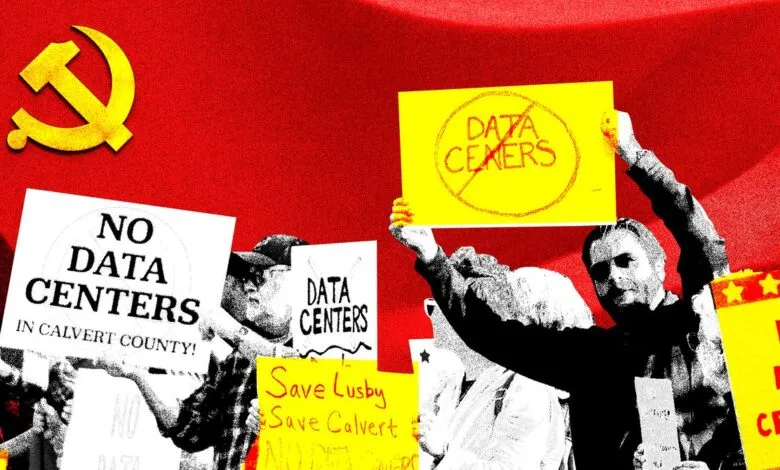
Right-wing politicians and data center investors have increasingly pointed fingers at Beijing, alleging that protests against data center development are secretly funded and orchestrated by the Chinese government. OpenAI added fuel to the fire on Wednesday, releasing a report that identified a cluster of accounts originating in China spreading anti-data center messages on social media.
But experts who spoke to WIRED are deeply skeptical of these claims. They argue that while some foreign activity may exist, it is likely piggybacking on genuine, pre-existing frustrations over data center expansion and AI infrastructure in the United States.
Local resistance to data centers has surged dramatically in recent months. A poll released last week by climate outlet Heatmap found that more than half of Americans support a moratorium on new data center construction. Separate data from UK-based policy research agency Public First, released in early June, shows that support for data centers in the US is the lowest among 15 countries surveyed.
The narrative that Beijing is bankrolling opposition has gained significant traction in Washington, DC. On Wednesday, Senator Tom Cotton sent a letter to Acting Attorney General Todd Blanche demanding an investigation into foreign influence “led by the Chinese Communist Party” aimed at manipulating public opinion. He is not alone. Republican leaders on the House Energy and Commerce Committee sent a separate letter to the White House and the FBI last week, voicing concerns about foreign campaigns targeting data center projects. Interior Secretary Doug Burgum told Fox Business last month that communities attempting to build data centers are “getting bombarded” with foreign propaganda.
Data center developers have also latched onto these ideas. Canadian investor Kevin O’Leary, who is behind a controversial, massive data center project in Utah, used a graphic from a recent report by the Bitcoin Policy Institute, a cryptocurrency advocacy group, in a May video. He claimed foreign influence was driving opposition to his project.
Graphika, a social media analytics firm, has been monitoring data center opposition across platforms like Facebook, Bluesky, and TikTok for the past year. Dina Sadek, an analyst at the company, states that Graphika has “not yet seen evidence of organized or scaled influence operations or campaigns that can be traced back to a foreign actor.” She notes two exceptions: a “cross-platform network of accounts” using AI-generated avatars that comment on various social issues and “sporadically” mention US tech companies, and some Facebook pages producing AI-generated anti-data center images. These pages, Sadek says, often have administrators based in Bangladesh and may exist purely “for monetization purposes.”
“Our ongoing research indicates that domestic US actors are leading the online anti-data center conversation,” Sadek says.
OpenAI’s report includes ChatGPT-generated anti-data center images, which the company says were used to “amplify existing public concerns about energy prices and local impacts of data center development.” However, OpenAI also notes that it “found no evidence of meaningful breakout” for the anti-data center messaging from the flagged accounts.
The Bitcoin Policy Institute report that O’Leary cited is a central pillar of right-wing claims about Chinese influence. The report, also referenced by House Republicans in their letter, alleges that a complex web of nonprofit funding connects popular anti-data center efforts to foreign funders, including the Chinese Communist Party. It further claims that Chinese state media is “openly campaigning against US AI data centers,” citing stories and videos about rising energy costs and the anti-data center trend. These are topics that American and international outlets have covered extensively on their own.
(Source: Wired)