Nvidia, Robots and Extinct Animals Headline TechCrunch Disrupt 2026
▼ Summary
– TechCrunch Disrupt 2026 is expanding its AI programming by introducing a new Real World AI Stage alongside the existing main stage.
– The new stage focuses on the intersection of digital and physical AI, featuring autonomous hardware in public spaces, defense, and biology.
– Speakers from companies like Shield AI, Colossal Biosciences, and Nvidia will discuss challenges such as data gaps for robotics and safety in deployment.
– Sessions will cover the requirements for a ChatGPT-like moment in physical AI, regulatory hurdles for autonomous systems, and de-extinction technologies.
– The event takes place October 13 to 15 at Moscone West in San Francisco, with registration currently open for attendees.
TechCrunch Disrupt 2026 is shifting its focus beyond the digital realm to explore how artificial intelligence interacts with the physical world. While previous iterations of the event have highlighted AI through a dedicated stage, the technology’s rapid evolution and widespread adoption necessitate an expansion for this year’s conference. The single AI Stage will continue to host sessions on software and digital applications, but organizers are introducing a new Real World AI Stage. This addition targets the convergence of code and hardware, examining how autonomous systems are moving from self-driving vehicles into public infrastructure, military operations, domestic spaces, and even ecological restoration projects.
The lineup includes insights from industry leaders at Shield AI, Colossal Biosciences, FieldAI, and Foxglove. Attendees can experience these discussions in person at Moscone West in San Francisco from October 13 to 15. Registration is currently open for those looking to engage with the latest developments in physical AI.
Bridging the Data Gap for Physical Intelligence
A significant hurdle remains for general-purpose robotics: the lack of comprehensive training data. Unlike large language models that leveraged the vast internet or autonomous cars that accumulated millions of hours of driving footage, robots currently operate with limited datasets. Experts suggest this scarcity is the primary reason why true robotic intelligence is still years away, despite parallel advances in other AI sectors. A new generation of startups is actively working to construct the simulation environments and foundation models necessary to close this gap.
Les Karpas, Head of Physical AI at Nvidia, will lead a session titled “Robots Are Waiting for Their ChatGPT Moment. Here Is What Is Standing in the Way.” The discussion will investigate the specific requirements for a breakthrough moment in physical AI and assess how close the industry is to achieving it.
Safety and Deployment in High-Stakes Environments
When AI transitions from virtual assistance to controlling physical machinery, the cost of error increases dramatically. Failures in autonomous vehicles or defense systems can result in catastrophic outcomes, making safety validation a critical concern for founders. Leaders in autonomous transportation, defense technology, and industrial automation will address the challenge of determining when a system is safe for deployment.
Nate Michael, CTO of Shield AI, will guide a conversation on building robust safety cultures, navigating regulatory landscapes, and establishing trust in high-stakes environments. The session aims to provide practical strategies for testing and validating AI systems before they enter real-world operations.
Engineering Nature’s Comeback
Ben Lamm, CEO of Colossal Biosciences, has transformed de-extinction from a theoretical concept into a commercial enterprise valued in the billions. In a fireside chat, Lamm will discuss the intersection of modern biology and artificial intelligence in the effort to revive extinct species. The conversation will also address the ethical and conservation debates surrounding such interventions, weighing whether genetic engineering serves as a vital conservation tool or diverts resources from protecting existing biodiversity.
With Ben Lamm, CEO, Colossal Biosciences
Operating Where the Cloud Cannot Reach
Many of the most impactful AI applications function in remote or hostile environments where cloud connectivity is unavailable or unreliable. Building for these edge cases requires distinct architectural approaches that prioritize low latency and resilience. Leaders from the defense, space, and industrial sectors will share their experiences in deploying AI where failure is not an option.
Dr. Ali Agha, CEO and founder of FieldAI; Michelle Lee, CEO and founder of Medra; and Aidan Madigan-Curtis, partner at Eclipse Ventures, will discuss the design decisions and trade-offs involved in creating functional AI-centric systems outside traditional networked environments.
Scaling Deep Tech from Prototype to Production
Transitioning a working prototype into a scalable, profitable business is often the point where deep tech startups fail. Founders may possess superior technology but struggle to navigate the complexities of manufacturing, supply chains, and mass production. This session features executives who have successfully bridged this gap in fields ranging from humanoid robotics to space hardware.
John Mackey, CEO and co-founder of MBRYONICS; Boris Sofman, co-founder and CEO of Bedrock Robotics; and Adrian Macneil, CEO of Foxglove, will reveal the mistakes made during development and offer guidance on preparing technologies for real-world scaling.
Additional Programming at Disrupt 2026
Beyond the Real World AI Stage, the conference offers extensive programming across five other key areas. The Disrupt Stage will feature speakers from companies like Replit, Amazon, and Tether. The AI Stage will examine security vulnerabilities and business model shifts impacting SaaS providers. The Smart Money Stage will cover stablecoins, instant payments, and financial trust mechanisms. The Smart Systems Stage will address fusion energy breakthroughs and grid infrastructure challenges. Finally, the Builders Stage will provide tactical advice for founders on fundraising, hiring, and scaling operations.
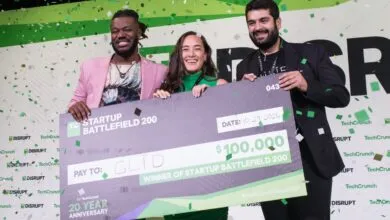
More than 10,000 startup, technology, and venture capital leaders are expected to gather in San Francisco for three days of insights, the Startup Battlefield competition, networking opportunities, and access to the exhibition floor.
(Source: TechCrunch)