Chinese Automakers Emulate Tesla’s Robot Profit Strategy
▼ Summary
– Chinese automakers are heavily investing in humanoid robotics, with Xpeng raising over $900 million to advance its Iron robot development.
– The surge in funding is driven by advancements in AI and the belief that embodied AI can solve complex physical tasks commercially.
– Xpeng follows Tesla’s lead closely, with executives personally investing in the robotics unit due to perceived higher profit potential in robots than cars.
– Other major Chinese manufacturers like BYD, Chery, and Changan are also developing their own humanoid robots or preparing for IPOs in the sector.
– Global competitors such as Hyundai-owned Boston Dynamics are accelerating deployment plans using partnerships with AI labs like DeepMind.
Chinese automakers are aggressively pivoting toward humanoid robotics, mirroring the strategic playbook of Tesla to secure future profit streams. While public fascination with bipedal machines has been fueled by high-profile demonstrations from Elon Musk’s Optimus and Boston Dynamics’ Atlas, the underlying technological momentum is substantial. Advances in physical engineering, combined with AI techniques derived from large language models, have enabled researchers to equip complex robots with the ability to learn diverse tasks rapidly.
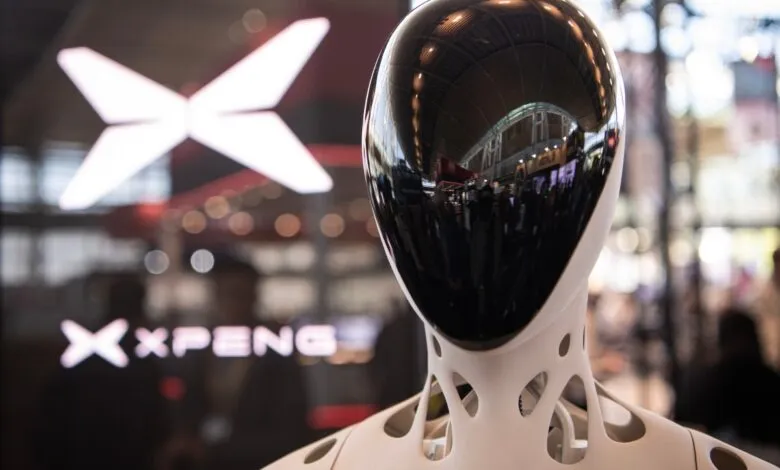
This convergence of hardware maturity and software intelligence has attracted a wave of new investors and developers. Leading this charge are major Chinese vehicle manufacturers who view humanoid robots as a critical growth avenue. Xpeng Motors recently announced that its robotics division secured over $900 million in funding, achieving a post-money valuation exceeding $6.3 billion. This investment round, spearheaded by IDG Capital with contributions from tech giants Tencent and Alibaba, marks the largest single private financing event in China’s “embodied AI” sector, which focuses on integrating artificial intelligence directly into physical machinery.
The competitive landscape in China is intensifying quickly. AiMOGA, the robotics arm of Chery Automobile, is reportedly preparing for an initial public offering. Meanwhile, BYD has introduced its own humanoid robot, Xiao Di. Other industry heavyweights such as Changan, GAC, Li Auto, SAIC, and Seres are also actively developing their own robotic solutions.
Among these rivals, Xpeng stands out for its close alignment with Tesla’s approach. Michael Dunne, CEO of the advisory firm Dunne Insights, notes that Xpeng is uniquely positioned due to its deep focus on autonomy. “It’s the most focused on autonomy, it’s the first to commit in a big way to humanoid robots,” Dunne stated. He highlights that Xpeng founder He Xiaopeng recognizes diminishing margins in the traditional car market. “He sees razor-thin profit in cars on the near horizon. Robots look much more promising.”
Confidence in this pivot is so strong that company leadership has invested personal capital into the venture. According to reports, Xpeng co-president Brian Gu and He Xiaopeng contributed approximately $100 million to the latest fundraising round. Their primary asset is Iron, a commercially viable humanoid robot designed with realistic human proportions.
While Chinese firms possess significant manufacturing advantages, challenges remain in the software domain. Dunne observes, “They have all the hardware to get the job done.” The critical question remains whether they can match Tesla’s capabilities in the AI side of the equation.
Global competition is equally fierce. Startups like Agility Robotics, Apptronik, and Figure are all vying for dominance in scalable commercial deployment. Even established players are accelerating efforts. Hyundai, which owns Boston Dynamics, plans to deploy the Atlas robot at its Georgia facility later this year, with broader implementation for parts sequencing targeted for 2028. To support this, Hyundai is opening a U. S. facility known as a Robot Metaplant Application Center, developed in partnership with Google’s DeepMind, to train robots on complex movements.
The automotive supply chain is also reshaping itself through acquisition. Mobileye purchased humanoid robot startup Mentee Robotics earlier this year for $900 million. Additionally, electric vehicle maker Rivian has entered the space via its Mind Robotics spinout, although its designs diverge from the traditional humanoid form factor seen elsewhere.
(Source: TechCrunch)