Cop Takes Down Flock in Bold Operation

▼ Summary
– Officer Noel Pichardo discovered solar-powered cameras on utility poles in Pawtucket’s District Five in fall 2023, recognizing them as Flock Safety license plate readers.
– In 2021, police were briefed on Flock’s system, which identifies vehicles by plates and features like bumper stickers, allowing cross-jurisdictional tracking and route reconstruction.
– Pichardo worried the cameras would create a detailed record of residents’ lives—locations, contacts, and routines—since most travel in Pawtucket uses a few main roads.
– The initial Flock proposal was dropped due to cost, but cameras later appeared throughout his district despite that.
– Flock’s network is the largest fixed license-plate-reader system in the U.S., processing billions of sightings monthly and enabling cameras in one area to be searched by agencies far away.
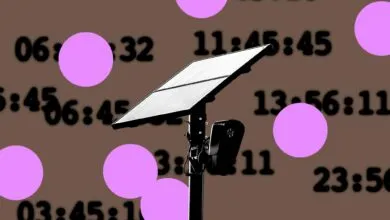
On a crisp September afternoon in 2023, Pawtucket police officer Noel Pichardo was working a routine shift in District Five when something unusual caught his eye: a compact, solar-powered camera mounted on a utility pole above West Avenue.
At 28 years old and five years into his policing career, Pichardo was used to the steady rhythm of radio calls, the endless loop of domestic disputes, petty complaints, and welfare checks. But this particular detail pulled him out of that routine. He swung his cruiser around, drove beneath the device a second time, slower this time, and studied it closely.
What followed was a quiet reconnaissance mission. Pichardo began scanning the streets near highway ramps, major intersections, and the main arteries feeding into and out of the city. The cameras were everywhere. By the time he had looped through the district, the pieces clicked into place.
Two years prior, Pichardo had sat through a presentation at a small police substation in Pawtucket. A senior official walked officers through a new surveillance platform from Flock Safety. The pitch centered on automatic license plate readers that could identify vehicles not just by plate numbers, but by bumper stickers, roof racks, and other distinctive features. Investigators could track a specific car across multiple jurisdictions, piecing together its route camera by camera.
On paper, the system sounded like standard-issue law enforcement technology. It was framed as a practical tool for recovering stolen vehicles, tracking suspects, and locating missing persons. But something about the presentation unsettled Pichardo. He found himself thinking less about the cars police were hunting and more about every other vehicle on the road. In a compact city like Pawtucket, where a few main roads carried nearly all traffic, a log of a car’s movements was effectively a log of a person’s daily life. The places they went, the people they visited, the patterns they kept. All of it captured.
At the time, Pichardo assumed the proposal had stalled. The city couldn’t afford a permanent installation, so he filed the information away and moved on.
That afternoon on West Avenue proved him wrong. The Flock cameras had arrived, and they were watching his district.
Pawtucket’s network is a small but significant node in a much larger web. Flock Safety now operates what it calls the largest fixed license-plate-reader system in the country, processing billions of sightings every month. The architecture is built for sharing. One municipality’s cameras can be opened up to agencies far beyond its borders, meaning a single device installed in a small city can become a searchable data point for investigators hundreds or even thousands of miles away.
(Source: Wired)