Nvidia builds AI safety team with a business motive

▼ Summary
– Nvidia is hiring a senior AI safety and security engineering team, with the goal of vetting AI agents before deployment and building AI-powered tools to patch software flaws.
– The company argues that open-weight models, transparency, and broad scientific scrutiny are foundational to American AI leadership and cybersecurity defense, contrasting this with the closed systems of OpenAI and Anthropic.
– CEO Jensen Huang publicly urged US policymakers to back open models, and Nvidia became a founding member of the Open Secure AI Alliance, a 120-company group including Microsoft, Palantir, and SpaceX.
– Nvidia’s push for open models is tied to its business: wider adoption of AI requires more hardware, and safety is the key to unlocking that adoption by building trust in autonomous agents that access sensitive data.
– Critics contend that open-weight models give capable tools to bad actors and note a safety gap where open models match frontier capability but lag on safeguards; Nvidia did not comment on the report.
Nvidia’s approach to AI safety is written into its job postings. The chipmaker is quietly standing up a new AI safety and security engineering team, according to Business Insider, and the job ads reveal a clear commercial logic. This is not about warning against the dangers of artificial intelligence. It is a calculated wager that trust is the commodity that will drive adoption, and adoption is what sells chips.
The unit is compact but carries serious weight. Nvidia is searching for a distinguished engineer to serve as the “founding technical leader,” alongside roles for a security research engineer, an evaluation engineer, and a senior manager. Their mandate, as outlined in the listings, is to vet AI agents before they reach production and to develop AI-driven tools capable of patching software vulnerabilities.
The company’s stance on open models is explicit. One posting argues that open-weight models, transparency, and broad scientific review are “foundational to American AI leadership and cybersecurity defense.” Open-weight models release the trained parameters that dictate behavior while keeping training data and source code proprietary. This stands in direct contrast to the closed architectures favored by OpenAI and Anthropic.
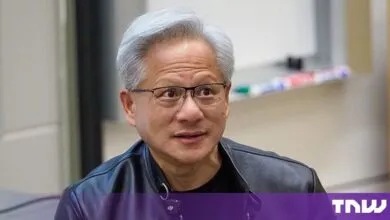
Nvidia has amplified this message recently. In his first post on X last month, CEO Jensen Huang shared a letter urging US policymakers to champion open models, claiming they “strengthen safety and cybersecurity.” Shortly after, Nvidia joined as a founding member of the Open Secure AI Alliance, a 120-company coalition that includes Microsoft, Palantir, and SpaceX, focused on building open-source security tools. The safety-team listings appeared just before that launch and describe overlapping objectives.
There is a balance sheet behind this philosophy. Open models distribute AI capabilities to a far wider audience than closed services ever could. Each new adopter requires silicon to run those models. That is precisely why competitors like AMD are pursuing the same open-source trajectory, and Nvidia has no intention of surrendering that ground. Broader adoption translates directly into more hardware sales.
Safety is the lever that makes adoption possible. The industry is moving from conversational chatbots to autonomous agents that can access sensitive corporate data and take action on it. At this juncture, capability is no longer the bottleneck; trust is. A business will not grant an autonomous agent access to its core systems unless it is convinced the system is secure. That is why enterprises now test agents for unauthorized behavior before deployment.
The debate over open models remains unresolved. Critics contend that publishing weights gives malicious actors the same powerful tools it gives defenders. Research has identified a safety gap, where open models rival frontier systems on performance but lag on protective measures.
Nvidia declined to comment to Business Insider, so its rationale rests on the job advertisements themselves. Yet it is worth considering who stands to benefit if the argument prevails. The company advocating for safe, open AI to spread everywhere also happens to sell the hardware that makes it run.
(Source: The Next Web)