Facial recognition smart locks finally deliver on the promise
▼ Summary
– The article reviews hands-free smart lock technologies, comparing facial recognition and UWB (ultrawideband) unlocking for frictionless entry.
– UWB unlocking, using a phone or watch, is described as faster and more reliable than geofencing, but currently expensive and limited in availability.
– Facial recognition smart locks use 3D infrared sensors to map faces, preventing photo spoofing, and offer a device-free unlocking option.
– The Eufy FamiLock E40 is recommended as the best facial recognition lock, with sub-second unlocking, sunglasses compatibility, and a built-in video doorbell.
– The Lockly Visage Zeno is highlighted as the best Apple Home Key option, though slower and with a fiddly keypad, while the SwitchBot Lock Vision Pro had reliability issues.
Hands-free unlocking has long been the holy grail of smart locks, and facial recognition technology is finally making that vision a reality. The best smart home innovations eliminate friction, and nothing beats the convenience of your door unlocking automatically as you approach , no fumbling for keys, remembering codes, or tapping screens. You already unlock your phone with your face, so why not extend that seamless experience to your front door?
Geofencing-based hands-free unlocking has been available for years, but it suffers from sluggish performance and unreliability, requiring a constantly running app on your phone. Newer solutions like facial recognition and ultrawideband (UWB) radio offer far superior performance. In testing, UWB delivers the most seamless experience , it only needs your phone or watch nearby to identify you as you approach, and it works quickly and dependably. However, UWB-equipped locks remain scarce and expensive.
My perspective on facial recognition shifted while reviewing the Schlage Sense Pro, a UWB lock. My husband frequently leaves his phone inside when working outdoors or in the garage, making geofencing useless for him. For anyone who wants hands-free unlocking without relying on a mobile device, facial recognition smart locks provide an ideal alternative.
These locks use infrared sensors to create a 3D map of your face, employing technologies like structured light, stereo infrared cameras, or time-of-flight sensing. The depth-sensing capability is crucial , it prevents photos from fooling the system.
I tested all four currently available facial recognition locks: the Eufy FamiLock E40 ($300), Lockly Visage Zeno ($350), Lockin Veno Solar Face ($199), and Switchbot Lock Vision Pro ($230). An upcoming Kickstarter model launches next month, and Switchbot offers additional variations.
The best facial recognition smart lock: Eufy FamiLock E40
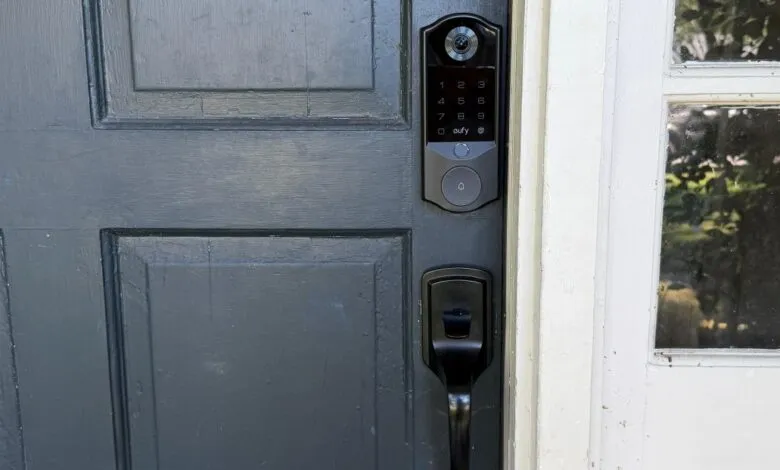
For those going all-in on high-tech door security, the Eufy FamiLock E40 from Anker is the standout choice. It combines excellent facial recognition with a fingerprint reader, keypad, physical key, and a built-in 2K video doorbell , making it a complete solution for your front door.
The E40 unlocked in under a second during testing, faster than any competitor. It was also the only lock that consistently recognized me while wearing sunglasses, while others handled hats fine but struggled with eyewear. A backup battery keeps the keypad active even if the main battery dies, and the lock supports Matter, the smart home standard, for ecosystem compatibility. Recorded footage from the doorbell requires no subscription.
The downsides include its large size, high price, and a lithium-ion battery that takes nine hours to fully charge (though the lock remains usable during charging). The main battery drains quickly , dropping 40 percent in a week. Despite these issues, the E40 offers substantial value with its stylish design and reliable performance, provided you’re prepared for regular charging.
Best for Apple users: Lockly Visage Zeno
The Lockly Visage Zeno is the only lock combining facial recognition with Apple Home Key support. Home Key serves as a convenient backup when facial unlock feels slightly slow , just tap your phone or watch. In testing, the Lockly took about two seconds to unlock, slightly slower than the Eufy, and also struggled with sunglasses.
Launched in 2024, this lock is the sleekest and smallest with excellent build quality. Its battery life impressed, lasting around nine months during a year of testing. It includes a spare battery, helping offset the high price. However, the PIN Genie keypad shuffles digit positions each use, which frustrated my dad when trying to enter my house. Thankfully, a standard keypad version is now available.
The category still has room to grow
The Lockin Veno Solar Face features a built-in solar panel for extended battery life, but its facial unlocking was slower and failed with sunglasses. It also includes an animated emoji that dances upon unlocking , a feature I could live without.
The SwitchBot Lock Vision Pro was the slowest, requiring several seconds of staring at the reader. Its fingerprint and palm-vein unlocking were more reliable, but it struggled with sunglasses and frequently detected people who weren’t there. One night, while alone, the lock suddenly announced, “Please stand closer to the door and try again,” causing understandable alarm. I had to disable sounds in the app to stop the false triggers.
Is facial recognition worth it?
After testing these locks, I still believe facial recognition is more technology than most people need. Keypads and fingerprint readers work excellently, are widely available, and cost significantly less. They are slightly slower and require hand use, but they avoid the premium price and complexity.
Facial recognition locks aren’t as expensive as UWB models, but they’re still pricey, and the selection remains limited. Once UWB technology becomes more widespread , aided by the new Aliro smart lock standard , we may see fewer facial recognition options.
There are other considerations: these locks look unapologetically high-tech, and every household member must register their face. Additionally, some people may be uncomfortable storing facial biometrics in a door lock, though all tested models claim to process data locally for improved privacy and security.
Facial recognition felt strange at first, but it works and carries undeniable sci-fi appeal. After living with both technologies, I still prefer UWB for its “unlocking in stride” magic , the door is already open when you reach for the handle. But until UWB becomes more affordable and widespread, facial recognition smart locks offer a compelling hands-free solution for those who want it today.
(Source: The Verge)