China Nears Booster Landing Test; Rocket Lab Executes Rapid Response
▼ Summary
– The 2026 Rocket Report notes that several new US rockets, including Neutron, Nova, Terran R, and Rocket 4, may not launch, with an over/under estimate of 0.5.
– Rocket Lab launched the Victus Haze mission just 16 hours and 42 minutes after receiving the launch notice, beating the previous record by over 10 hours.
– The mission was scarcely announced, with only a pilot and sailor warning as public indication, and no livestream provided.
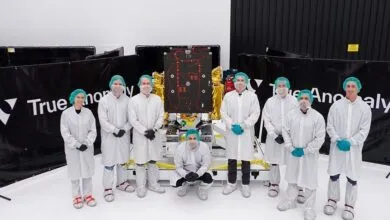
– The Space Force selected Rocket Lab and True Anomaly in 2024 for the mission, which involves launching a satellite posing as an adversary for inspection.
– Victus Haze aims to demonstrate the military’s ability to quickly launch a satellite to assess a potential orbital threat.
We are now just past the halfway mark of 2026, a year that was supposed to feature the debut of several new American rockets. The question now is whether any of them,Rocket Lab’s Neutron, Stoke Space’s Nova, Relativity Space’s Terran R, and Astra’s Rocket 4,will actually fly this year. If I had to set an over/under, I’d put it somewhere around 0.5 launches. Let me know your predictions in the comments.
As always, we welcome reader input, and if you want to make sure you never miss an edition, subscribe using the box below (the form will not appear on AMP-enabled versions of the site). Each report covers small-, medium-, and heavy-lift rockets, along with a preview of the next three scheduled launches.
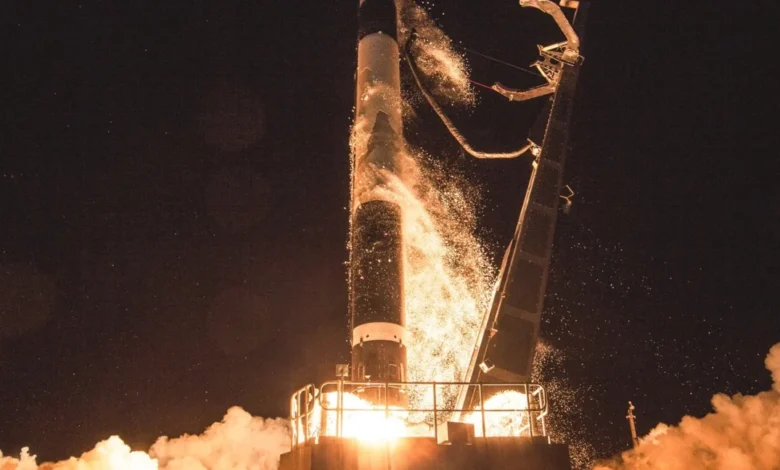
Rocket Lab pulls off a rapid-response mission. Last Friday, the company launched the Victus Haze mission just 16 hours and 42 minutes after receiving the US Space Force’s Notice to Launch. That beats the previous record by more than 10 hours, according to Rocket Lab. The launch was barely announced in advance, as Ars reports. The only public signal that something was happening was a warning for pilots and sailors to stay clear of the rocket’s flight path. Unlike most of its missions, Rocket Lab did not provide a livestream.
Getting to orbit in record time. The Space Force first announced plans for this mission in 2024, when it selected Rocket Lab and True Anomaly to build and launch two satellites into low-Earth orbit. The concept was straightforward: True Anomaly would launch a small satellite first, posing as a spacecraft from a potential adversary like China or Russia. Rocket Lab was then to have a satellite on standby, ready to go up and inspect True Anomaly’s spacecraft on short notice once military officials gave the order. The goal of the Victus Haze mission is to demonstrate how the military and its commercial partners could quickly respond to and assess a threat already in orbit.
(Source: Ars Technica)