Expert says Microsoft’s quantum breakthrough has basic Python errors
▼ Summary
– A peer-reviewed critique published in *Nature* by Dr. Henry Legg argues that Microsoft’s 2025 claims of a quantum computing breakthrough using Majorana particles are flawed.
– Legg states that Microsoft’s tune-up software contained coding errors, including a filter that only displayed the largest topological region and an array index mistake, which concealed negative data.
– Legg concludes that Microsoft is likely “centuries, not decades” away from a topological quantum computer, if it works at all, and that the prerequisites for its claims are not met.
– Microsoft stands by its results and roadmap, dismissing Legg’s analysis as a selective examination and citing independent evaluation by DARPA and its own rebuttal published in *Nature*.
– Legg criticizes Microsoft’s subsequent Majorana 2 announcement, noting it provides no evidence of qubit functionality or X-measurements, and suggests the device shows only disorder physics.
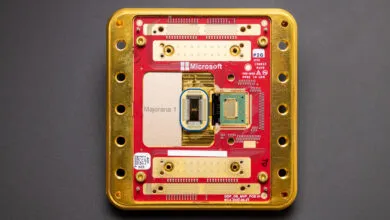
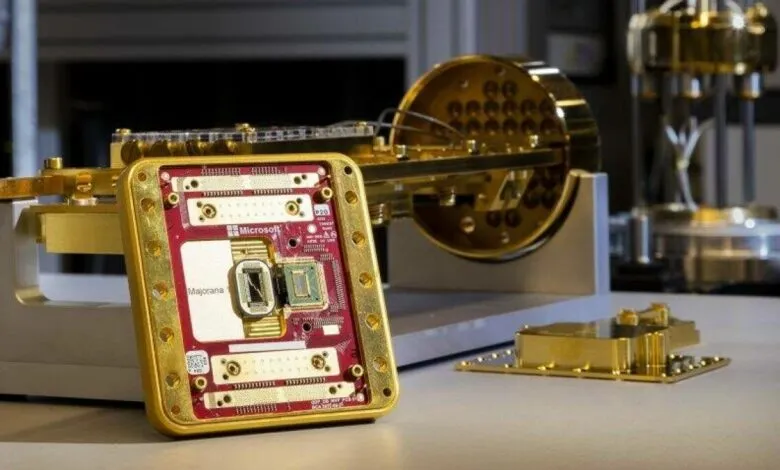
When Microsoft unveiled its Majorana quantum breakthrough in February 2025, the company promised a truly meaningful quantum computer would arrive “in years, not decades.” But a newly published peer-reviewed critique in Nature argues that the software giant’s claims are fundamentally flawed , and that basic Python programming errors may have obscured the truth.
Dr. Henry Legg, a lecturer at the University of St Andrews, authored the critique after analyzing the data Microsoft used to support its topological quantum computing approach. His paper, titled “On the robustness of topological gap detection via transport,” was accepted by Nature on April 20 and published on June 24. Legg’s conclusion is blunt: Microsoft’s core claims about detecting and controlling Majorana particles , elusive subatomic particles never directly observed by scientists , do not hold up under scrutiny.
“Last year they claimed to be years, not decades from a ‘topological quantum supercomputer,'” Legg told The Register. “My feeling is that they are centuries, not decades away. If it works at all , and, based on what I have seen, the most likely scenario is that it doesn’t work.”
Microsoft’s Majorana 1 announcement in 2025 was met with immediate skepticism. Some researchers described the work as “unreliable” and even “fraudulent.” The company stood by its results, and in June 2026 announced Majorana 2, a “next-generation topological quantum chip” developed with its own agentic AI.
Legg’s analysis focuses on Microsoft’s Topological Gap Protocol (TGP), a software method designed to detect the phase transition necessary for quantum calculations using Majorana particles. He argues that the TGP software contained two critical Python coding errors that skewed the results.
“The code antisymmetrized bias voltage based on array index rather than physical value,” Legg explained. In simpler terms, Microsoft’s researchers evaluated the array index , a number identifying a value’s position in an array , instead of the actual value it referenced. This led to incorrect statements to peer reviewers.
Legg also found that the plotting software was hardcoded with a filter , `zbpclusternumbers=[1]` , that forced it to display only the single largest region, concealing other successful results from phase maps. Changing the filter to `[1,2]` revealed a second region. Additionally, the TGP software transformed data by simply reversing a Python array (`x[::-1]`) based on its index position, ignoring the actual physical bias voltages.
“I demonstrate that Microsoft’s tune-up software is flawed and that coding errors resulted in incorrect statements to peer reviewers,” Legg said. “Raw data, which was omitted from the original paper, also appears to indicate Microsoft’s devices contain considerable disorder and are not compatible with the existence of a topological gap.”
Microsoft disputes these findings. Dr. Chetan Nayak, technical fellow and corporate vice president of Microsoft’s quantum hardware group, provided a statement: “We stand by our results and our roadmap. At the end of the day, success is the delivery of a scalable quantum computer. We are confident in our ability to execute against our roadmap and proud of our continued engagement with DARPA, which moved Microsoft into the final phase of its Quantum Benchmarking Initiative after independently evaluating our results.”
Microsoft’s rebuttal, also published by Nature, argues that Legg’s analysis is based on a “selective examination of transport tune-up procedures and narrow interpretations of isolated phrases.” The company dismisses the coding errors as a “minor off-by-one-pixel bug” that is inconsequential to the overall findings.
But Legg disagrees. “They attempt to dismiss these issues as minor bugs, and retrospectively adjust their evidence hierarchy,” he said. “Microsoft’s reply essentially argues that because they observed a specific capacitance measurement, the prerequisites to do so must have been met. I hope, despite the complexity of the topic, their circular reasoning is clear.”
The announcement of Majorana 2 has not changed Legg’s assessment. “Majorana 2 is not available to customers and it is not proven to even be a single qubit,” he said. “Their claim of ‘1,000 times more reliable’ refers to the lifetime of a classical bit , the parity of the state. There is no evidence this is a qubit and can hold a superposition. The classical bits in my computer have very long lifetimes, but it does not make them good qubits.”
Legg added that Microsoft’s failure to report an X-measurement for Majorana 2 , a measurement it performed for Majorana 1 , is telling. “One has to ask why they do not report the X-measurement, since Microsoft were obviously aware it was so important for their claims last year. I think it’s very reasonable to assume that they did attempt the same supposed X-measurement with their Majorana 2 device and it didn’t work out.”
(Source: Theregister.com)