Snap’s $2,000 Glasses: Can Anyone Wear Them and Look Cool?
▼ Summary
– Snap released $2,195 Spectacles glasses, which CEO Evan Spiegel said aim to make computing more human and reduce screen time.
– The Spectacles have a chunky, angular design with heavy arms, making them look goofy on Spiegel and more like a bold fashion statement than everyday wear.
– Snap is marketing the glasses as high-fashion, using a campaign by photographer Steven Meisel and models like Kaia Gerber, targeting niche style icons.
– The glasses’ weight (132–136g) is nearly double that of other smart glasses like Meta Ray-Ban (69g), likely causing discomfort and preventing them from being a primary pair.
– Snap appears aware the Spectacles are not for mainstream use due to price, weight, and bold design, aiming instead at early adopters to build momentum for future models.
Snap officially unveiled its long-anticipated Specs glasses yesterday, priced at a steep $2,195. In an interview with CNBC, CEO Evan Spiegel explained that the company has been developing the device for over 12 years, with a mission to “bring computing into the world” and “make it more human.” He framed the Specs as a tool to help people stay present and connected to their surroundings, rather than glued to their phone screens. People, he argued, are simply tired of screens.
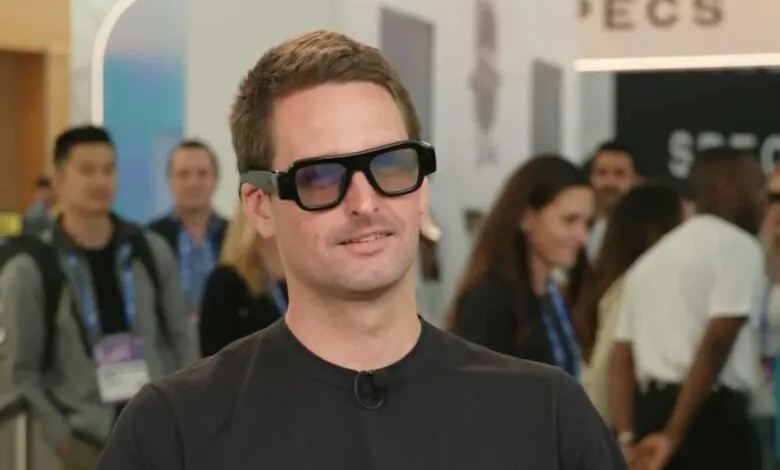
Yet as Spiegel spoke, I couldn’t help but notice a glaring irony. Every time he moved his head, the light caught the lenses just so, revealing the faint outline of the Specs’ built-in display. Here was a man preaching about screen fatigue, all while his own product placed a visible screen directly between him and the person he was talking to.
But the bigger distraction? How goofy the Specs looked on him.
Fashion is subjective, sure, but there’s no denying that the Specs are bold and distinctive. They feature chunky frames and an angular design that loosely echoes aviator sunglasses. The arms are enormous and look uncomfortably heavy perched on Spiegel’s ears. If these were just a fashion accessory with no tech inside, I’d call them a statement piece , the kind of thing you’d see on icons like Iris Apfel, Karl Lagerfeld, or even Edna Mode from The Incredibles.
Snap is clearly positioning the Specs as an aspirational, high-fashion gadget. The company’s global advertising campaign was shot by renowned fashion photographer Steven Meisel, whose portfolio includes work for Vogue and luxury houses like Versace, Valentino, Dolce & Gabbana, Balenciaga, and Loewe. The models? Big names like Kaia Gerber, Hoyeon, basketball star Jimmy Butler, and musicians Jack Harlow and Imogen Heap. These are people known for their unique or eclectic style. The problem is that the golden rule of wearable tech is that a device must be comfortable and stylistically versatile enough for everyday use. On that front, Snap has designed these glasses for a very narrow audience.
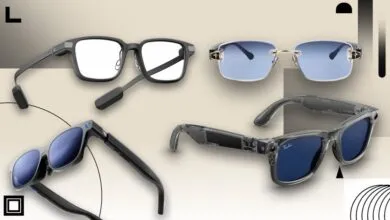
I genuinely believe that anyone can pull off bold fashion with enough charisma and confidence. But after nearly a decade covering smart glasses, I’ve seen a consistent pattern: the bolder the design, the less comfortable the average person feels wearing it. The original Google Glass failed in part because it looked like a Dragon Ball Z scouter or something out of a cyberpunk dystopia. It made you easy to spot and easy to mock as a “glasshole.” Similarly, one of the most common complaints about the Meta Ray-Ban Display glasses was that the design was too chunky , and those borrowed a classic, familiar Wayfarer silhouette. The reason the Ray-Ban Meta glasses work so well now is that they’re discreet and look like ordinary eyewear. That’s also likely why the upcoming Google and Samsung Android XR glasses are partnering with both Warby Parker and Gentle Monster. Warby Parker offers stylish but understated options, while Gentle Monster caters to those with more avant-garde tastes.
With the Specs, there’s no way to be discreet. From a privacy standpoint, that might actually be a good thing , you’ll spot someone wearing these from a mile away. But for self-conscious consumers, it’s a major turnoff. (The price tag of $2,195 doesn’t help either.) There’s also the vanity factor. These glasses sit right on your face and obscure your eyes , the so-called windows to the soul. If you even suspect you’ll look goofy in them, you’re unlikely to buy them, no matter how revolutionary the tech is. And if there’s even a chance that wearing these on a first date might ruin your chances for a second, why would you risk it?
Practical concerns also weigh heavily against the Specs. The 47mm version tips the scale at 132 grams, while the 52mm version comes in at 136 grams. For comparison, the Meta Ray-Ban Display , which I found started hurting my face after a few hours , weighs just 69 grams. As someone who has worn glasses my entire life and has grilled opticians about ideal frame weight for decades, I can tell you that lightweight frames are essential for avoiding headaches, especially with strong prescriptions. Most opticians say the ideal weight for lightweight glasses is between 15 and 25 grams. Acetate frames (the classic Brooklyn hipster look) typically weigh 20 to 35 grams. Smart glasses usually range from 40 to 70 grams, and you definitely feel the difference after a few hours. At roughly double that, I can’t imagine the Specs are comfortable for more than a couple of hours at a time. That means for prescription wearers, these cannot be your primary pair , and you’d be spending over two grand for a secondary set of glasses.
It’s hard to believe Snap isn’t fully aware of these limitations. That’s likely why the company is leaning so heavily into the haute couture, high-fashion aesthetic. They know that at this price and weight, the Specs aren’t designed for mainstream success. They’re for early adopters , a crowd that’s often more willing to embrace bold looks and stand out. And with momentum building in the consumer smart glasses space, Snap seems eager to strike while the iron is hot, hoping enough people will come along for the ride to justify a second- or third-generation model that’s closer to what the average person actually wants.
Look, some people are going to look cool in these. The Meisel campaign photos are proof of that. But the cold, hard truth is that most of us will end up looking more like Spiegel , a bit dorky, somewhat goofy, and undeniably conspicuous.
(Source: The Verge)