Steam Next Fest Drowns in Low-Quality AI Games
▼ Summary
– The author found Steam Next Fest depressing after installing a tool that warns about generative AI content, as more than half the games they checked included such disclaimers.
– Out of 16 games clicked on the event’s main hub page, 10 triggered the AI-content warning extension, though results vary due to algorithmic personalization.
– Some small developers use generative AI and justify it by citing limited resources, while others claim AI is used only for minor, human-reviewed elements.
– The author expresses sadness about a future where human-made games become rare, despite sympathizing with indie devs facing pressure to use AI due to resource constraints.
– The prevalence of AI warnings during Steam Next Fest suggests a growing trend of AI-generated content in games, leaving the author relieved to have a large backlog of older games.
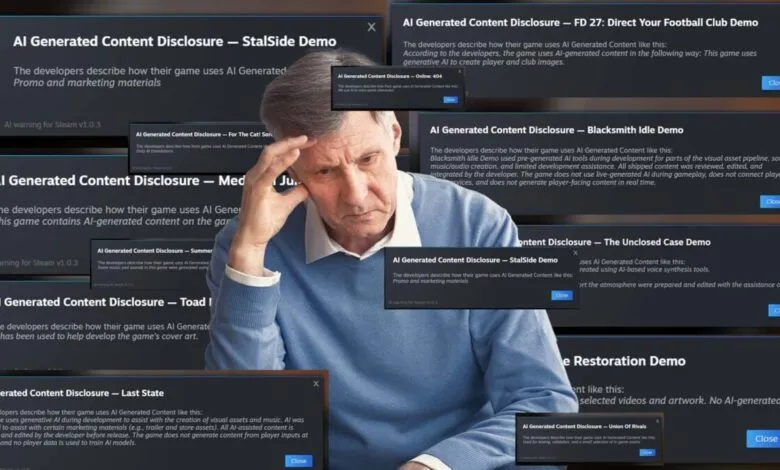
I usually look forward to diving into the demos during Valve’s recurring Steam Next Fest. It’s a chance to uncover hidden gems and quirky games that often end up on my wishlist. But this time, with a tool installed that flags games or demos containing generative AI content, the experience has turned profoundly disheartening. More than half of the games I explored now carry an AI content disclaimer.
As soon as the main hub page for Steam Next Fest went live this morning,right after my inbox filled with PR reminders about the event,I was eager to start browsing. However, my excitement quickly faded as I encountered numerous games with developer disclaimers confirming the use of generative AI tools for certain aspects of development or marketing.
The frequency of these warnings piqued my curiosity. I started wondering how much of the event’s hub page, which algorithmically promotes demos based on my past gameplay and preferences, would be flagged. The answer was staggering. I clicked on 16 different games featured on the Steam Next Fest main hub page, and 10 of them triggered my extension with generative AI disclaimers. Your mileage may vary, since many hub slots are personalized, but my reaction was immediate: Yikes. Even scanning the most popular demos, I kept hitting AI warnings, so it’s not just my algorithm serving up low-quality content.
Reading through some of these disclaimers reveals a troubling pattern. Smaller teams and solo developers often cite limited resources as a justification for using generative AI. Some warnings almost seem to plead for sympathy, asking me to overlook AI-generated cover art, visuals, or textures just this once. Others go to great lengths to insist that genAI tools are only used for minor, specific tasks, with all content reviewed and edited by a human before reaching players. Yet, as we’ve seen repeatedly, AI-generated material that was supposedly temporary often ends up in the final product, leading to apologies and rushed updates to remove the slop.
I genuinely feel for indie developers trying to craft something special, only to spend even more of their scarce time and resources on a demo that might go unnoticed because Steam is flooded with new releases every hour. It’s a tough spot. The temptation to use generative AI is becoming harder for some to resist. And even if you land a job at a major studio, you’re increasingly likely to be pressured into using or at least tolerating genAI tools while watching colleagues get laid off.
The whole situation leaves me feeling sad. I don’t want developers to struggle for their art, yet I dread a future where it’s nearly impossible to play a game,big or small,made solely by humans. If the wave of AI warnings popping up as I browse Steam Next Fest is any indication of what lies ahead, I suppose I’m grateful for my massive backlog.
(Source: Kotaku)